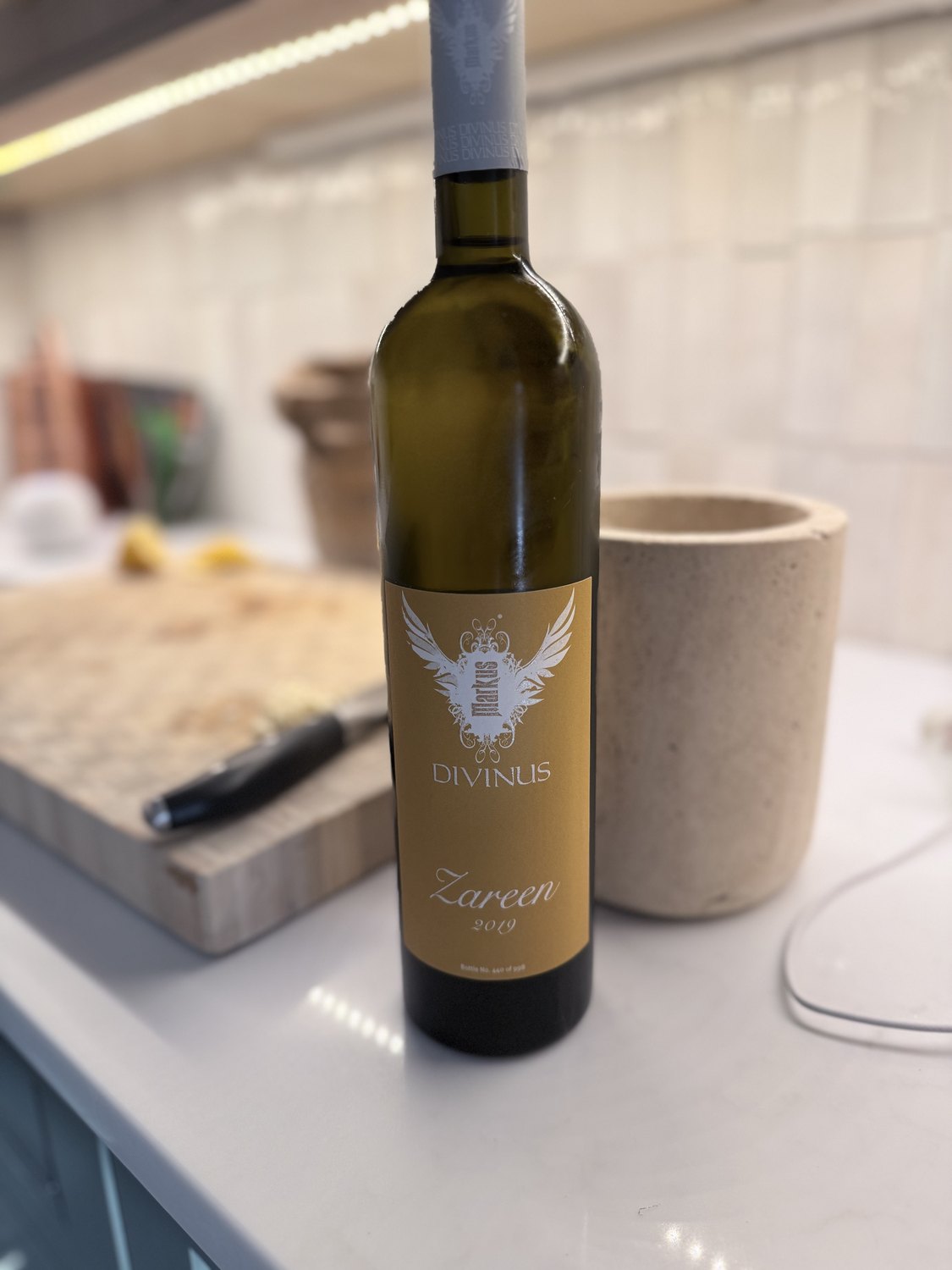
We came home from Malta in the spring with five bottles in the luggage, all of them from the same very small winery. They have been sitting in the house since May waiting for occasions that never quite arrived. This is the first one opened, on an ordinary weeknight, alongside a meal kit — which turned out to be exactly right.
Where it came from
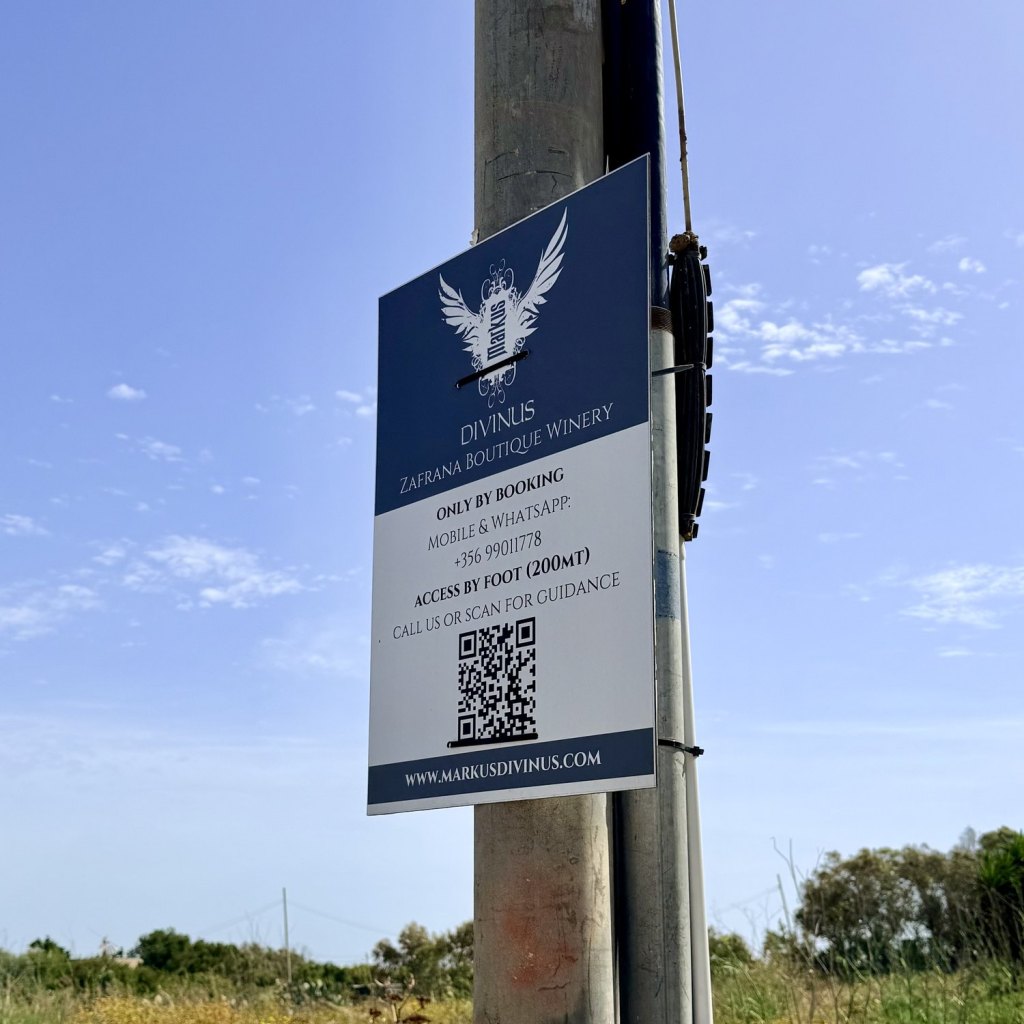
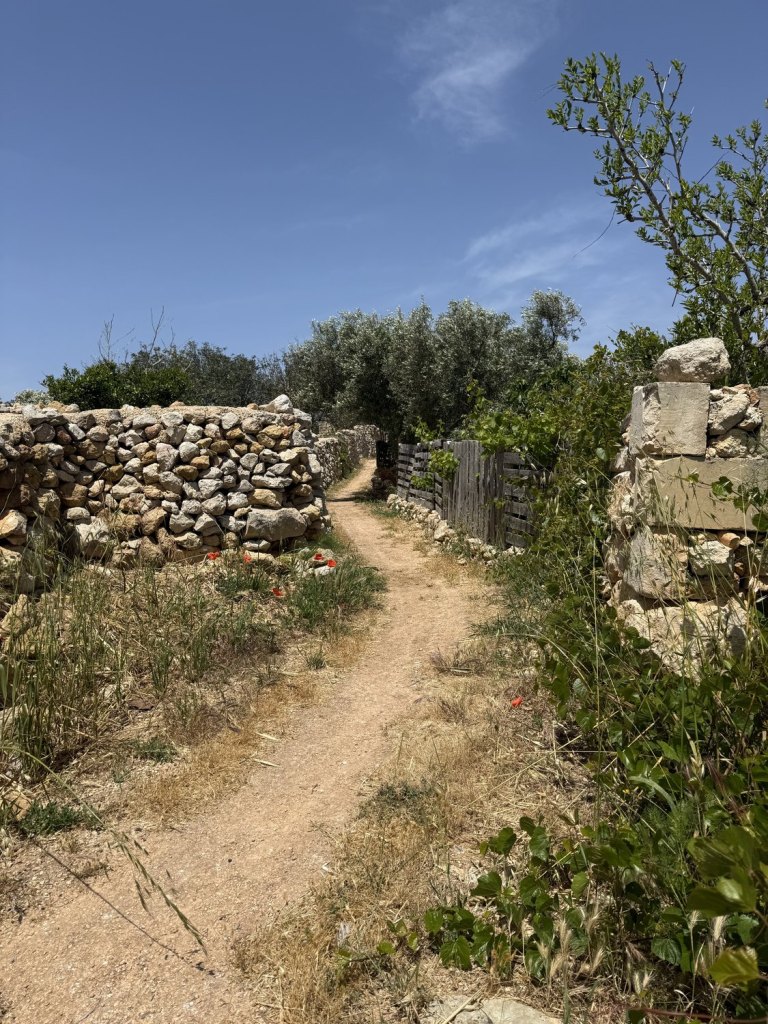
In May we went to Markus Divinus, a boutique winery at Dingli on Malta’s west coast, on the last full day of the Málaga to Malta voyage. It is not a grand operation. The sign at the roadside is a board cable-tied to a utility pole: the winged Markus crest, Zafrana Boutique Winery, a mobile number, a QR code, and two lines that tell you most of what you need to know — only by booking, and access by foot, 200 metres. They grow the indigenous Maltese grapes, Girgentina and Ġellewża, alongside Merlot, on limestone.
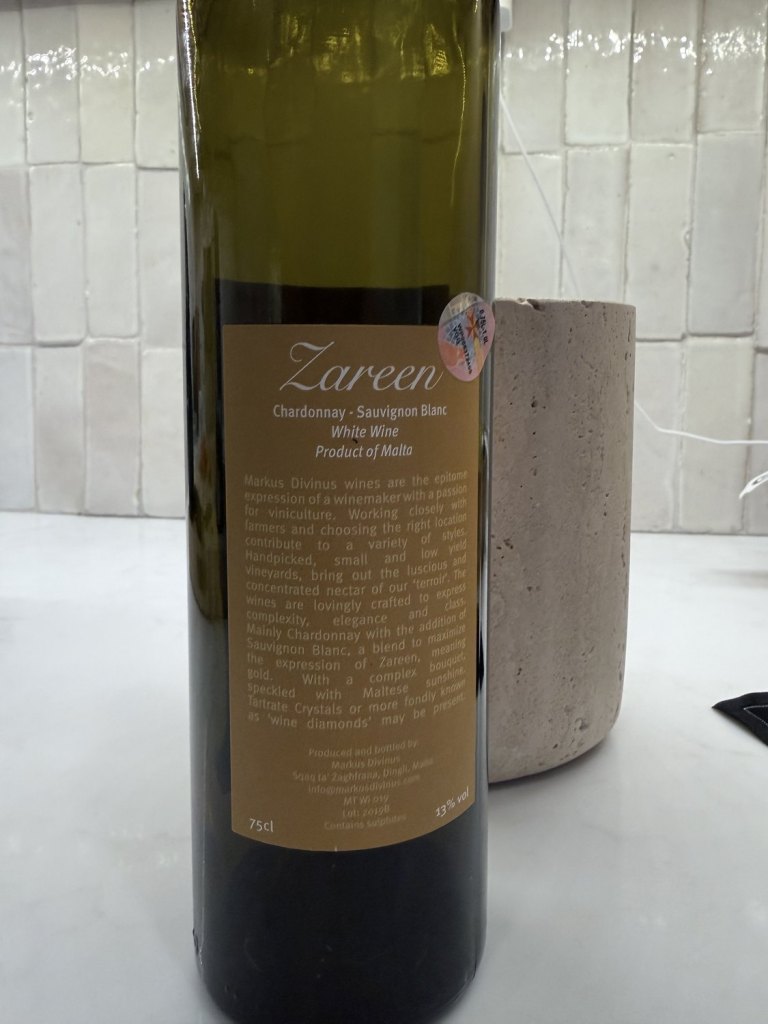
Zareen is the one that is not any of that. It is mainly Chardonnay with Sauvignon Blanc added. Ours is bottle number 440 of 998.
Zareen means gold
Our notes: a lot of golden fruit, pear, honeydew, even golden raisin.
The back label, read afterwards, says the blend is built “to maximise the expression of Zareen, meaning gold.”
A coincidence, obviously. A tidy one.
What it is actually like
Here is the thing worth telling you, because it is the thing we would have wanted told: it tastes sweet and it is not sweet. Thirteen per cent, dry, no sugar in it — but the fruit is ripe enough that the impression is of sweetness. Nothing like a Sauternes, in our notes, and that is the useful comparison to make: a Sauternes is sweet, this one only sounds like it.
The golden raisin is the interesting note, because that one is about age rather than grape. A 2019 opened now is seven years old, and seven years is roughly where a white grown on a hot island starts moving from fresh fruit towards dried fruit. It has not gone over. But this was the wine at the top rather than on the way up, and if you have a bottle, our advice is to drink it rather than save it for something.
Two other things off the label that are worth knowing, because almost everything written about Markus Divinus online refers to a later vintage. There is no mention of oak anywhere on this bottle — and nothing we tasted argued with that. And it warns that tartrate crystals may be present, which the label calls “wine diamonds.” If you find glitter on the cork, that is not a fault.
What we drank it with
Pork chops in lemon and brown butter, with mashed potatoes and green beans. This was not a considered pairing. It was what turned up in the box that week, and the bottle happened to be standing next to the chopping board.
It worked anyway, and not for the reason we expected. Brown butter and very ripe golden fruit get along, which was predictable enough. What was not predictable is that the lemon turned out to be doing the work. At seven years this wine has lost some of its edge, and the lemon on the plate put back the freshness the bottle could no longer supply on its own. The dish was propping up the wine, rather than the other way round — which is the reverse of how pairing is usually explained to you, and worth remembering the next time you open something older than you meant to. If you are ever choosing on purpose: this is a wine for something rich. It would flatten a piece of white fish.
Four to go
Fifteen days, seven ports, one small French ship, and five bottles that came home in the luggage. This was the first of them. Still in the rack: a rosé, a skin-fermented orange, and two of the red — and we will write each one up as it gets opened, because nobody else appears to be doing it. Search any of these names and you get shop listings and very little else.
The winery is in the film, if you want to see the place rather than the bottle — it is the Dingli chapter, at 10:32.
Next one is Lisbon, Morocco and the Canaries in the autumn — and we are asking for help with that one in advance, including where to drink.


Leave a Reply