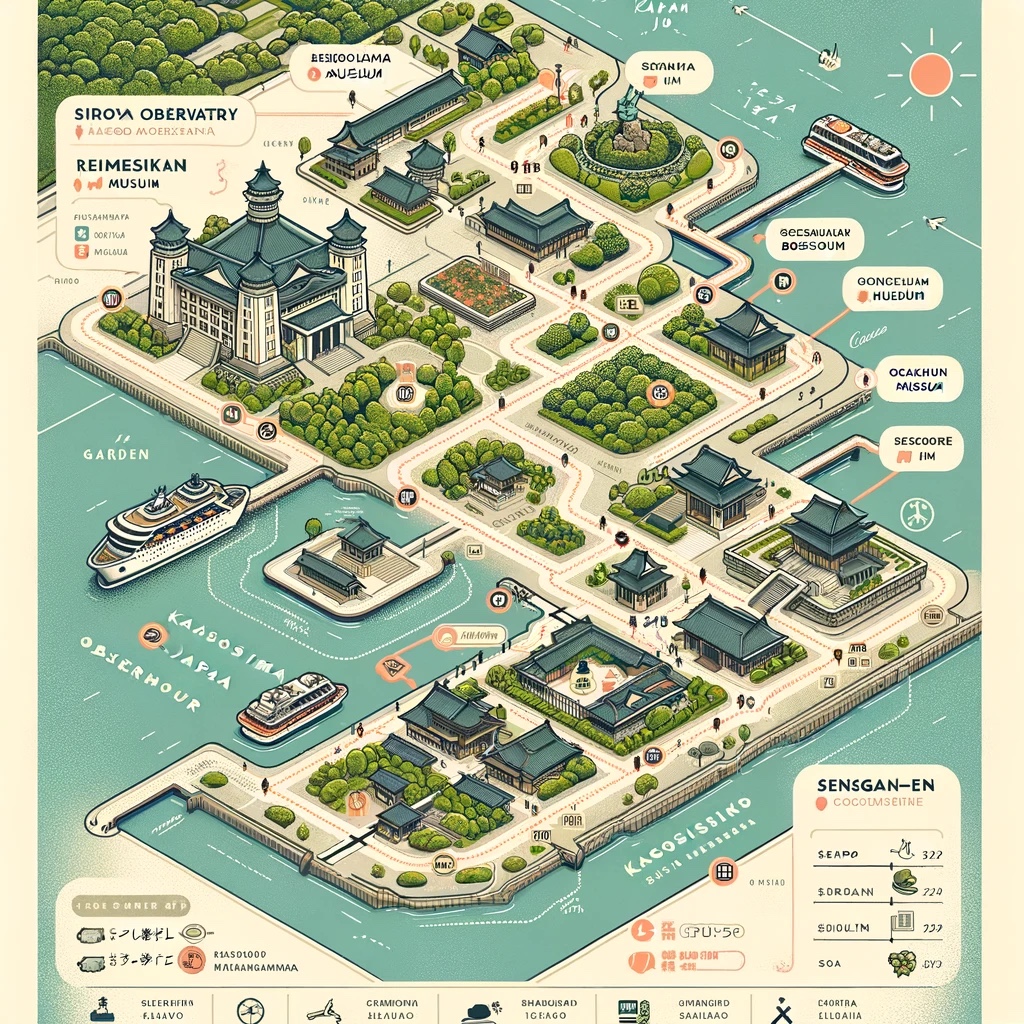
Kagoshima sits at the bottom of Kyushu with an active volcano parked across the bay from it, which tells you most of what you need to know about the place. We started at the Shiroyama Observatory, up on the hill, where the whole city lays itself out below and Sakurajima does the rest of the work. Down in the streets stands the bronze of Saigo Takamori, who led the Satsuma Rebellion in 1877, lost, and is still the most admired man in the prefecture. The Last Samurai was about him.
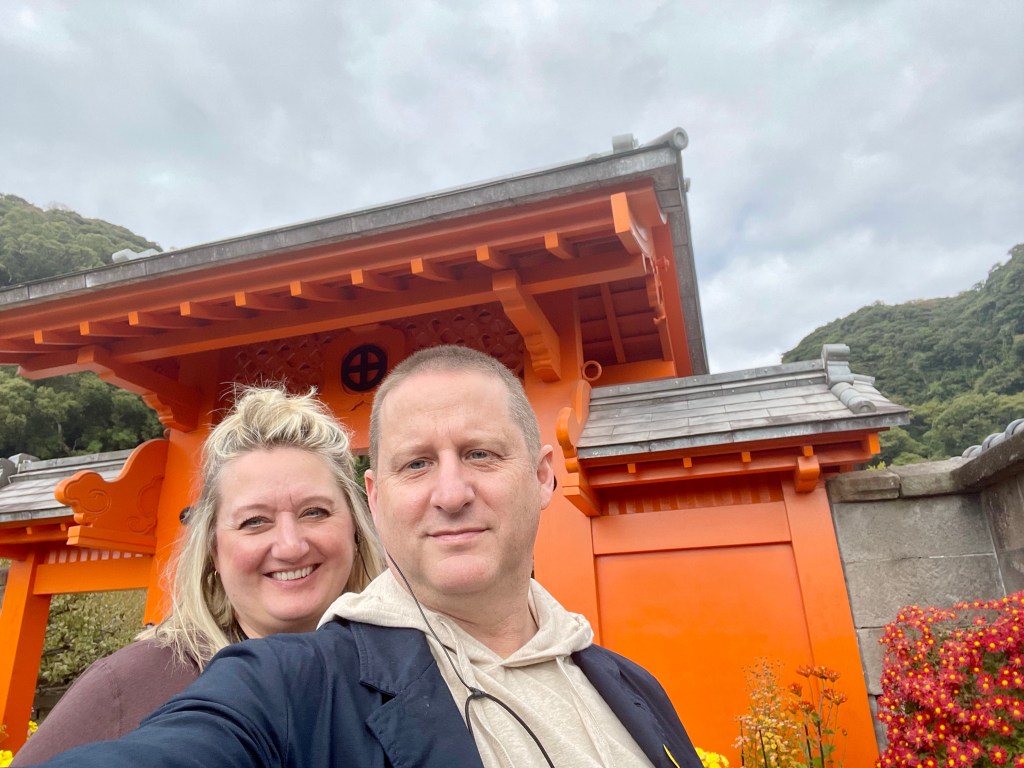
Then the Shoko Shuseikan, which is the old Shimazu family industrial works and now a museum. The Shimazu ran this corner of Japan for seven hundred years, and in the 1850s they put up furnaces, a glassworks and a shipyard here — a good part of the reason Japan industrialised as fast as it did. The Sengan-en garden next door was laid out for the family in 1658, and it is arranged so that Sakurajima reads as part of the garden. Borrowed scenery, and a fairly unfair advantage.
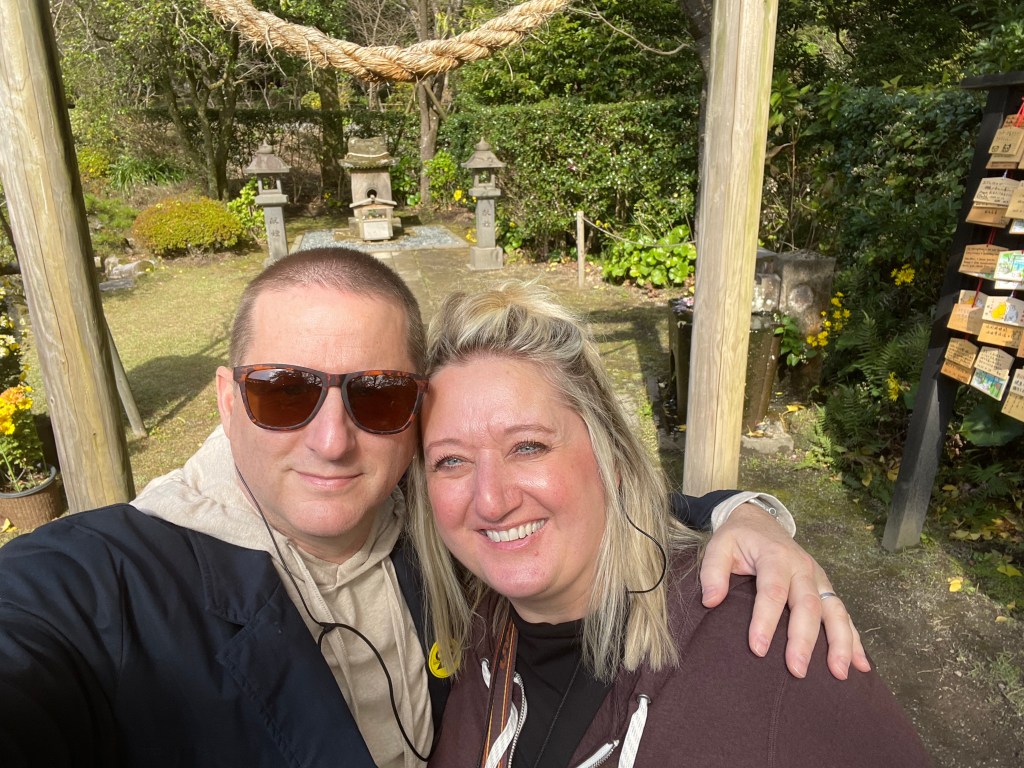
Halfway round the garden there is a shrine to two cats. The story goes that Yoshihiro Shimazu took seven of them to Korea on campaign in the 1590s and read the time off their pupils — wide at dawn, narrow at noon. Two came home. The shrine is theirs, and people still come and leave things for cats of their own. With two of our own waiting at home, this landed harder than a shrine to a pair of sixteenth-century cats probably should.
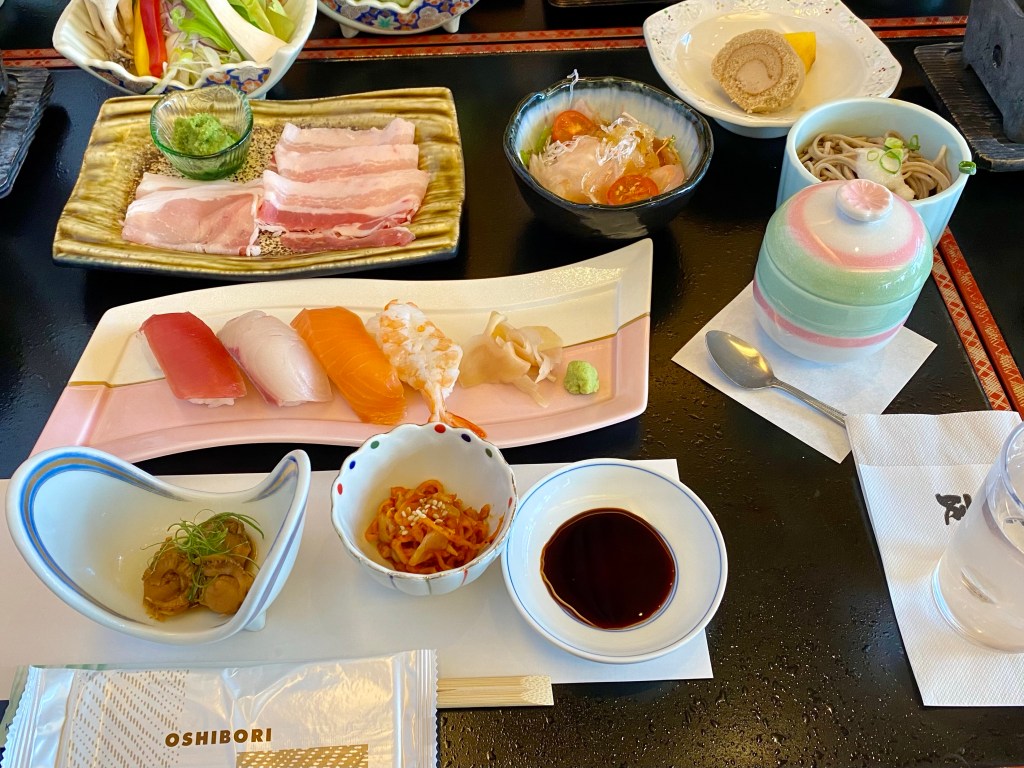
Lunch was sushi and Kagoshima pork, which is what you eat here — the local black pig, and it is very good.
The last stop was the Reimeikan, the prefectural museum, built inside the walls of the old castle. Three floors of Kagoshima history, and by then we were doing the thing where you read every caption on the first floor and none at all on the third.
Sakurajima was in the frame most of the day. It is properly active — it puts up ash hundreds of times in a bad year, and the city hands out bags for sweeping it off the pavements the way other places hand out grit. Nobody local gave it a second look.

Sun and cloud all day and a good sunset on the way out of the bay. Nagasaki tomorrow.
Side Note
A word on packing for twelve nights that begin in Japan in November and end more or less on the equator. Sweaters and shirts, a light jacket for the just-in-case, summer clothes for the back half, and formal night sitting on top of all of it.
There was no strategy. There was a suitcase, and hope.


Leave a comment