After years of dreaming, months of meticulous planning, and childhoods steeped in the adventures of Indiana Jones, our Egyptian odyssey commenced on May 21 with a transatlantic journey that transported us from the sunny shores of Florida to the land of pharaohs. Our journey was facilitated by Air Canada, with connections through Toronto and Frankfurt. The flight itself was not only comfortable but also efficient, setting the stage for an unforgettable journey through time. On May 22, we arrived in Cairo, immediately enveloped in the city’s vibrant and intricate tapestry of culture and history.
Cairo is a city of striking contrasts and relentless energy. The streets teem with a mix of modern vehicles and traditional modes of transport—donkey carts laden with goods, families of four balancing on a single scooter, and pedestrians weaving through the traffic. Side streets are alive with activity: vendors selling their wares, children playing amidst the trash, and residents navigating daily life amid the clutter and chaos. The city’s infrastructure struggles to keep pace with its burgeoning population, leading to congested roads and a patchwork of urban development. Yet, amidst the disorder, there’s a palpable sense of resilience and community. The juxtaposition of ancient history and modern-day challenges makes Cairo a fascinating place to explore.
Economically, the disparities are stark. And make no mistake, as progressive and modern as Egypt may look from your hotel, Egypt (including Cairo) is not considered a “developed” country. As of 2024, the average monthly salary in Egypt is approximately 9,200 EGP (around USD 303), though this varies significantly based on occupation and location. The national poverty rate stands at 29.7%, with many Egyptians living below or just above the poverty line.
Inflation and currency devaluation have further strained household budgets, making daily life a constant challenge for many. For many Egyptians, selling a t-shirt for 1 USD or receiving a $2 tip for helping you with your bags, or tipping $1 for every bathroom break starting at the airport, excluding in our hotels, is their entire sources of income.
Despite these challenges, the spirit of the Egyptian people shines through. Their warmth, hospitality, and determination are evident in every interaction, making our journey not just a tour of ancient wonders, but also a profound insight into the resilience of a nation.
Normally, we enjoy documenting our travels daily—capturing moments as they unfold through posts and photos. But this trip was different. Egypt was immersive, physically demanding, and rich with nonstop exploration. The itinerary was packed, the pace relentless, and beginning in Luxor, Chris came down with a lingering illness that added another layer of exhaustion. As a result, we chose to set aside our usual posting rhythm in favor of staying present. The moments we had to simply reflect, absorb, or quietly marvel at where we were felt too rare and too precious to interrupt with screens or captions. This post is our attempt to recapture and share that experience in one full breath.
Cairo: Settling In and Stretching Out
We eased into our arrival with a night at the Fairmont Nile City, a modern hotel perched along the riverbank. After a full day of travel, we indulged in a couples massage, then spent the afternoon at the rooftop pool with a DJ providing the soundtrack. A poolside lunch and a breezy evening dinner at Saigon, the hotel’s pan-Asian restaurant, marked a gentle start to what would soon become a whirlwind tour.

Giza: The Great Ones
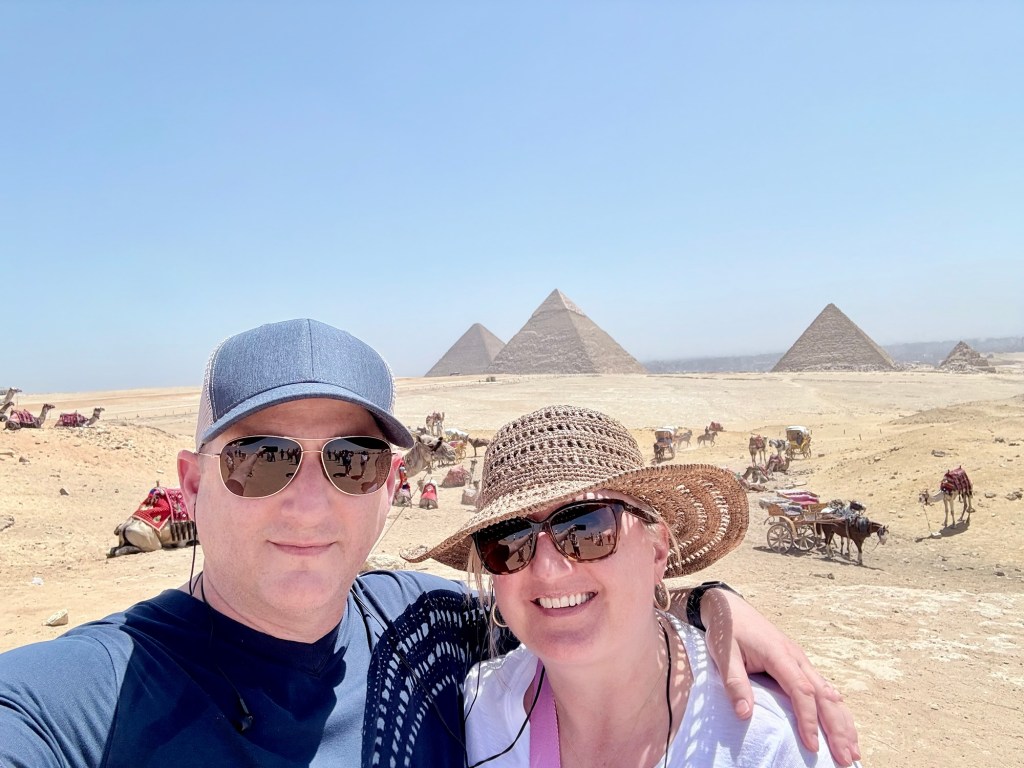
May 24 was our first full day with the Avalon group. We began with a visit to Tahrir Square and the Egyptian Museum, where Tutankhamun’s treasures—including his iconic golden mask—offered a breathtaking introduction to ancient craftsmanship. After lunch at a local restaurant (and a humorous run-in with an “Egyptian hotdog”), we made our way to the Giza Plateau.

Seeing the Great Pyramid up close is a humbling experience. No amount of photos prepares you for its scale. Nearby, the Sphinx sat in dignified silence, keeping watch as it has for thousands of years. We ended the day with a Sound and Light Show—dramatic, slightly campy, but undeniably atmospheric.
Old Cairo and Saqqara: Layers of Civilization
The next day took us into Old Cairo, where we visited the Citadel of Saladin and the Alabaster Mosque of Mohammed Ali, then continued south to Memphis and Saqqara.

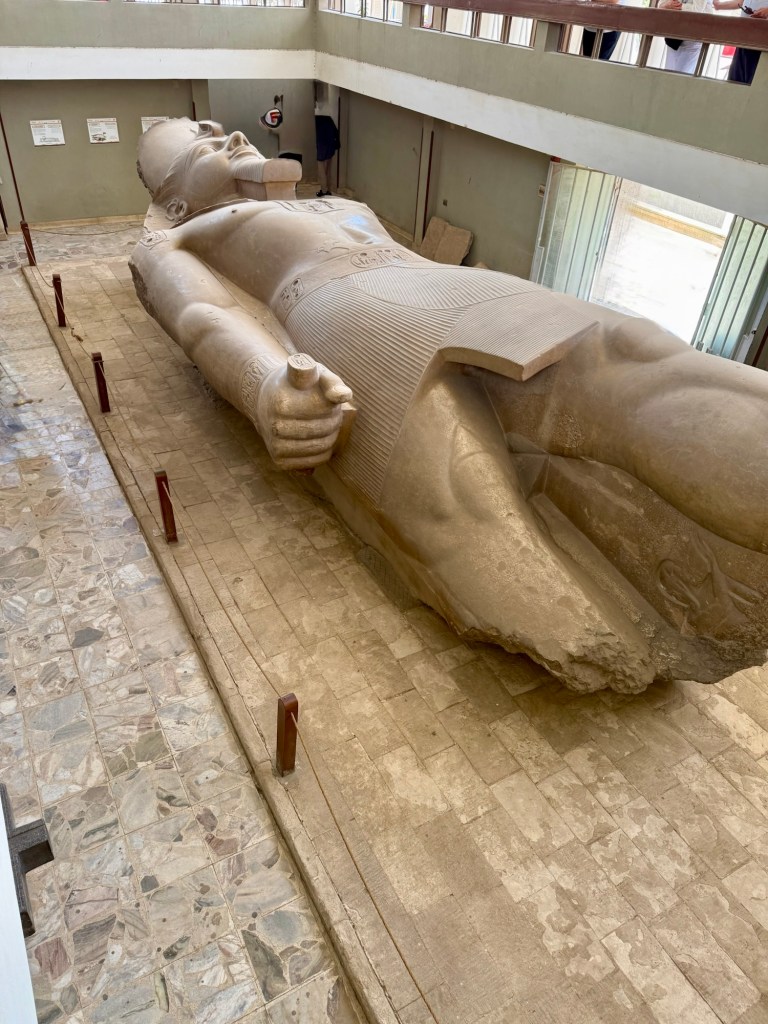
Our visit to Memphis, the ancient capital of Lower Egypt, began with a look at one of its most iconic relics—the colossal statue of Ramses II. Reclining in a protected pavilion, the limestone figure is astonishing in both scale and detail, offering a striking impression of the grandeur of ancient Egyptian kingship. Afterward, we headed to a nearby countryside restaurant for what was billed as a traditional Egyptian country lunch. The setting was charming—open-air, rustic, and authentically local—but in hindsight, it may have been the beginning of a less enjoyable chapter. Within 24 hours, all but two people in our group had developed a stomach bug, with Chris getting hit the hardest. He spent the better part of the next two days sprinting between tour stops and the nearest bathroom. Let’s just say Ramses left a lasting impression—but so did lunch.
There, we saw the Step Pyramid of Zoser, the oldest known pyramid, and the richly adorned tomb of Mary Roca. The architectural transitions from mastabas to pyramids told their own story of experimentation and ambition.

To close out the afternoon, we visited a local carpet school, where young students are taught the intricate art of hand-weaving traditional Egyptian rugs. Watching them work was a quiet, humbling moment amid the whirlwind of touring. We left with a beautiful woven piece—small enough to carry, meaningful enough to hang on our wall at home as a lasting memory of the day.
South to Luxor: Where the Nile Journey Begins
On May 26, we boarded a short flight to Luxor and stepped aboard the MS Farah, our home for the cruise portion of the trip. The ship itself was elegant and comfortable, with panoramic windows and excellent service. That afternoon, we explored the Karnak-Luxor Temple, bathed in golden light that seemed to stretch the shadows of the massive columns into eternity; despite the fact it was 110F & we all started dropping like flies! That evening, we enjoyed onboard entertainment and our first dinner on the Nile.

Valleys of Kings and Queens: The Weight of Legacy
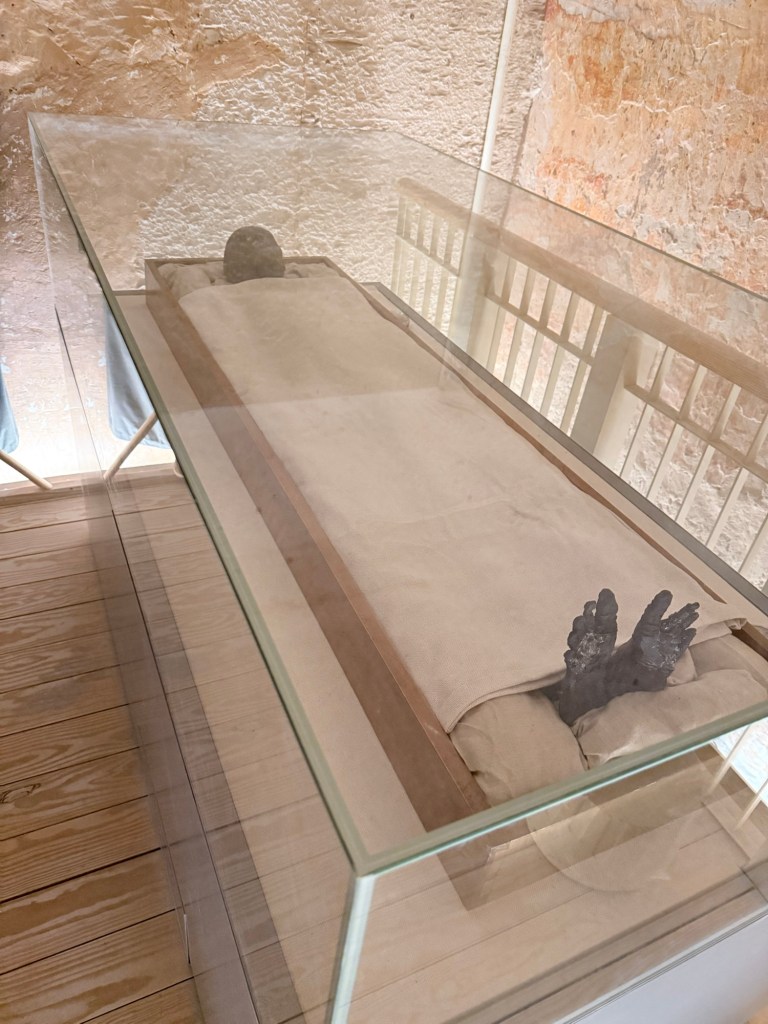
May 27 began with a visit to the Valley of the Kings and Valley of the Queens, where we toured multiple tombs including that of Tutankhamen. The painted walls, still vivid after centuries, whispered of rituals and afterlives.
We also stopped at Queen Hatshepsut’s Temple, carved directly into the cliffs, and posed with the towering Colossi of Memnon.

Though the heat hovered near 110°F, the awe was enough to carry us through.
Edfu and Kom Ombo: Gods of Stone and Sky
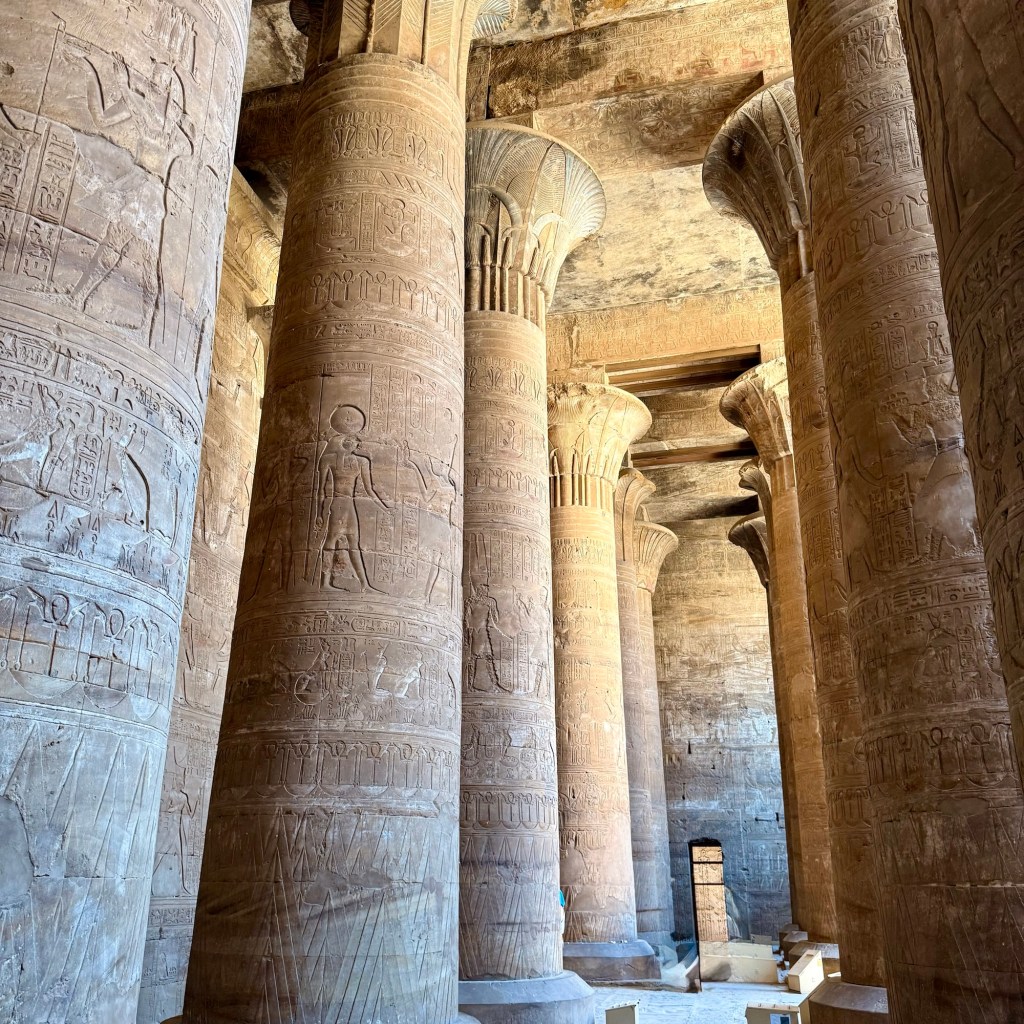
On May 28, we docked at Edfu, home to one of Egypt’s best-preserved temples—dedicated to Horus. Its massive pylons and black stone falcon statues left a strong impression. After a relaxed sail to Kom Ombo, we explored the twin temples—one for the crocodile god Sobek, the other for Haroeris. The temple’s asymmetry and crocodile mummification room made it one of the more curious stops on the trip.
That evening, we enjoyed a beautifully prepared meal on the upper deck with grilled meets, delicious Egyptian sides, and beautifully prepared deserts.

Aswan: Feluccas and Philae
May 29 brought us to Aswan, where out of necessity (exhaustion and a gastro bug) we decided to skip the optional tour to Abu Simbel in favor of sleeping in and lounging on the sundeck, with lunch and dinner at the restaurant.
Leaving Aswan and Back to Cairo: Closing the Loop
Friday in Aswan was one of our fullest days yet—and a fitting finale to our time in Upper Egypt. We began with a papyrus demonstration, where local artists showed us how the ancient material is still made and painted today. From there, we boarded a scenic boat ride along the Nile, enjoying the peaceful views and a relaxed lunch stop on the riverbank, which offered a quiet moment to take in the landscape we’d been sailing through for days.
In the afternoon, we visited the stunning Philae Temple, dedicated to Isis and beautifully relocated to Agilkia Island after the construction of the Aswan High Dam. Accessible only by boat, the temple’s lakeside setting and graceful colonnades made it one of the most atmospheric stops of the entire trip.

We made quick visits to the Unfinished Obelisk—a massive monument still embedded in the quarry—and the Aswan High Dam, which earned unexpected favorite-status from Chris thanks to its scale and historical impact on Egypt’s modern development.

Our flight back to Cairo was delayed, but eventually we returned to the capital and checked in once again at the Hilton Heliopolis, ready for the final leg of the journey.
Saturday in Cairo
Saturday we started the day with a visit to the Coptic Cairo, including the Hanging Church, Abu Serga, and Cairo’s oldest synagogue.

We then made our way to visit to the National Museum of Egyptian Civilization, a modern and beautifully curated institution that houses the extraordinary Royal Mummies Hall. Walking through the dimly lit gallery and standing just feet from the preserved remains of pharaohs like Ramses II and Seti I.
Interestingly, after visiting the two major museums of Cairo: the Egyptian Museum in Tahrir Square and this newer National Museum of Egyptian Civilization (NMEC). They couldn’t have felt more different — and surprisingly, we both found ourselves favoring the older, grittier one.
The Egyptian Museum is an absolute maze of artifacts. It’s hot, dusty, and definitely showing its age, but it’s packed to the rafters with ancient treasures. You’re up close to massive statues, piles of sarcophagi, and the unmatched splendor of Tutankhamun’s golden mask — all without much signage or interpretation. It felt less like a curated experience and more like we were rummaging through the attic of the ancient world… and we loved it. There’s something raw and authentic about it, even if the air conditioning leaves a lot to be desired.
On the flip side, the NMEC is sleek, modern, and beautifully laid out. It’s air-conditioned (praise be), filled with interactive exhibits, and the lighting and labels are on point. The highlight is the Royal Mummies Hall, where you walk quietly through a dimly lit corridor lined with the actual remains of Egypt’s most famous pharaohs.
But if we’re being honest? As impressive as the NMEC is, it felt a bit sterile. We missed the sense of discovery and chaos that made the Egyptian Museum so memorable. Give us dust, cracked labels, and a little sweat any day — it somehow felt closer to the history we came to see.
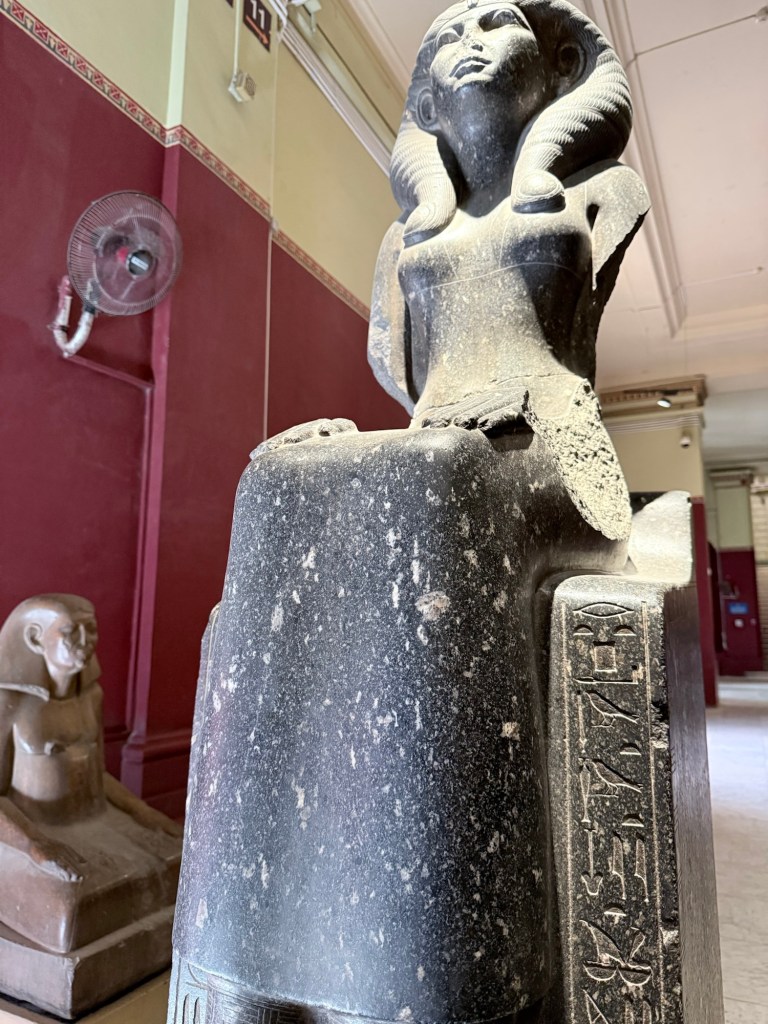
We finished our sightseeing in Cairo with a walk past the Khan el-Khalili Market, we opted for a cold drink at a nearby café instead of wading into the maze of shops—sometimes, rest wins.
Our Egyptian Farewell
June 1 marked the end of our official tour, though we stayed on for an extra night of well-earned rest. That final day gave us space to reflect, repack, and enjoy one last quiet evening before our return flight home on June 2.
Final Thoughts
This trip was more than a vacation. It was an immersive dive into 5,000 years of human history. We saw wonders of the world, floated past palm-lined shores, stood in echoing tombs, and tasted Egyptian life in all its complexity. The heat was real, the pace was fast, and the itinerary was full—but the memories will last a lifetime.
If Egypt has been on your list, make it happen. Just pack the sunscreen, stay flexible, and be ready to feel small in the best possible way.
Trip Summary:
✈️ Itinerary: MCO → YYZ → FRA → CAI → LXR → ASW → CAI → FRA → YYZ → MCO
🛳 MS Farah (via Avalon Waterways)
🏨 Fairmont Nile City + Hilton Heliopolis
📅 10 days, 2 internal flights, 4 cruise stops, 12 temples, 1 mummy hall, countless memories
📷 #TasteOfEgypt #TravelEgypt #NileCruise #AncientWonders #AvalonInView


Leave a comment