The Algarve almost everybody has seen is a strip of beaches. This is a post about what sits behind it: four and a half hours in the hills with a driver called Miguel Ângelo.
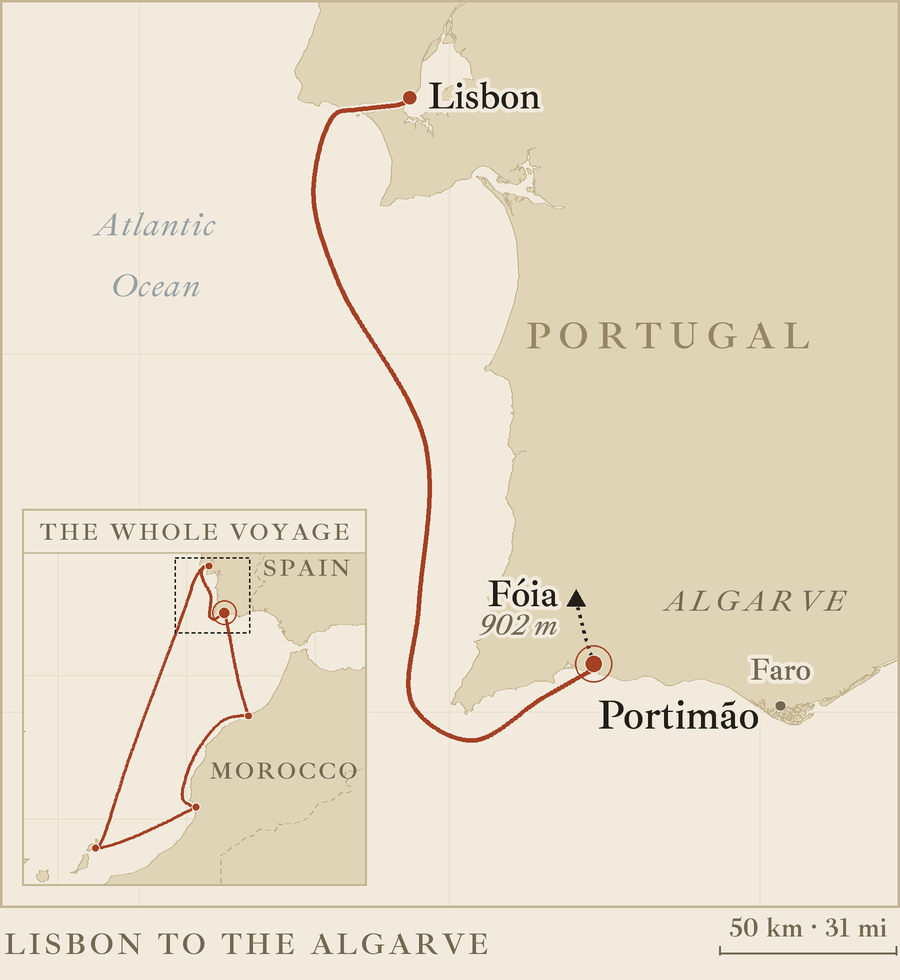
First, the answer: Portimão is a tender port
This was the very first thing we asked on the preview post, and we could not find a straight answer anywhere. So, for anyone planning: the ship anchors off and you go ashore by tender.
Ours was painless. Breakfast at seven, about twenty minutes on the tender, and the excursion left at eight. Tenders add time at both ends of the day, though, so do not cut anything fine.
Into the hills
We book the ship’s excursions more often than not. The only time we go it alone is when the city centre is an easy walk, or taxis are plentiful and we already know exactly where we are going. Portimão fails both tests — it is a tender port, and the good part is up in the hills — so the ship’s tour was the right call.
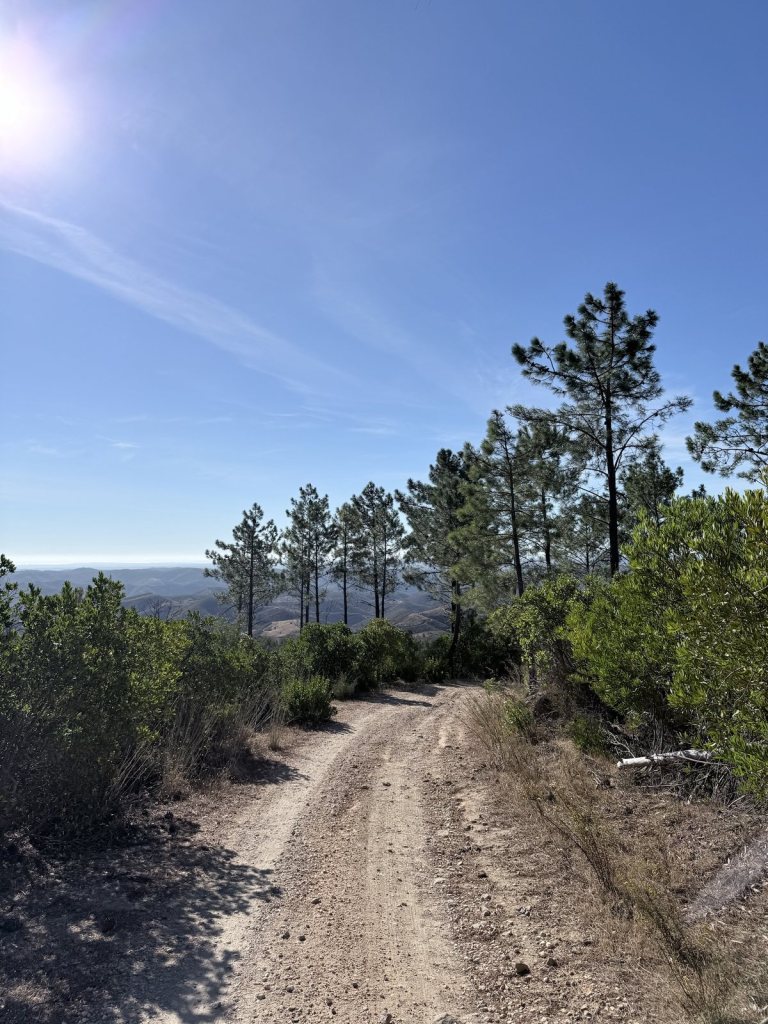
The jeep was a white PORTITOURS Land Rover Defender, with Miguel Ângelo at the wheel. Before long we were off the paved roads and climbing gravel tracks into the hills behind Portimão. The ship grades it moderate, and that is fair: bumpy, not an ordeal.
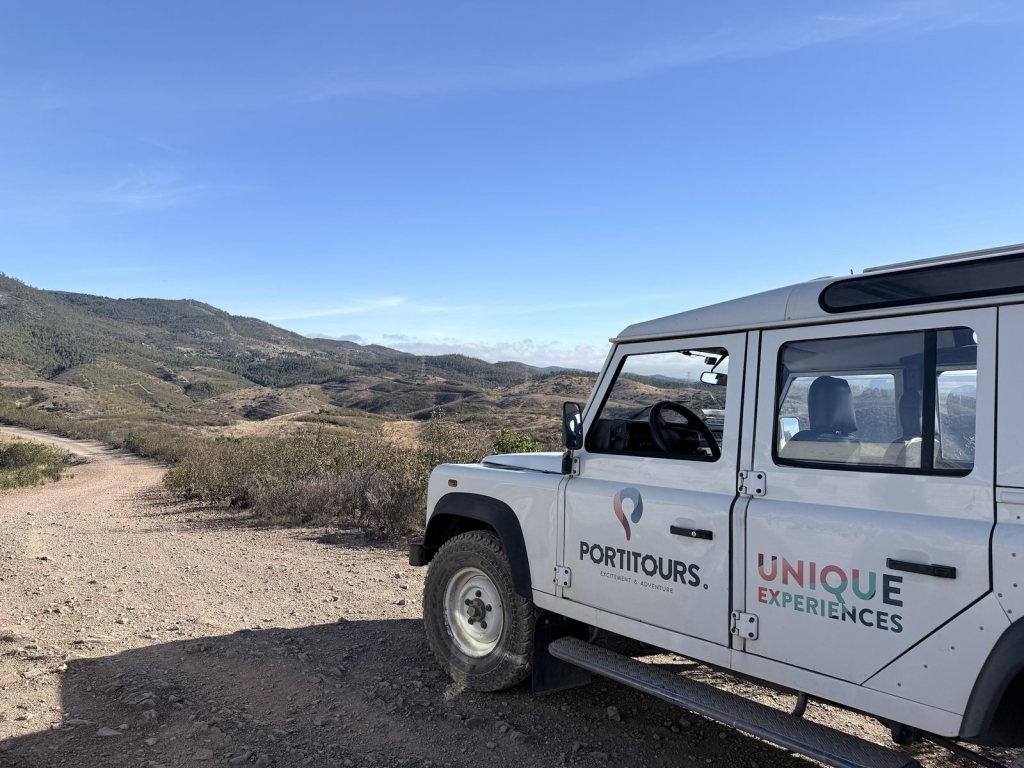
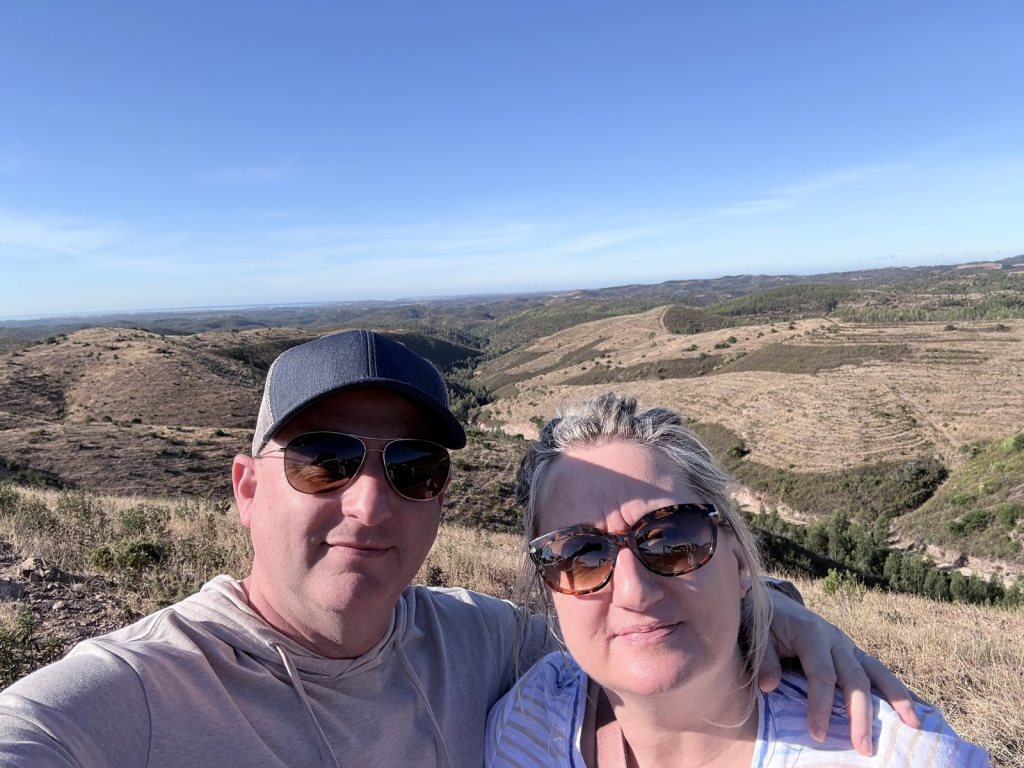
Inland, the Algarve is a different place altogether: hills, terraced farms and cork oaks, and not a beach umbrella in sight.
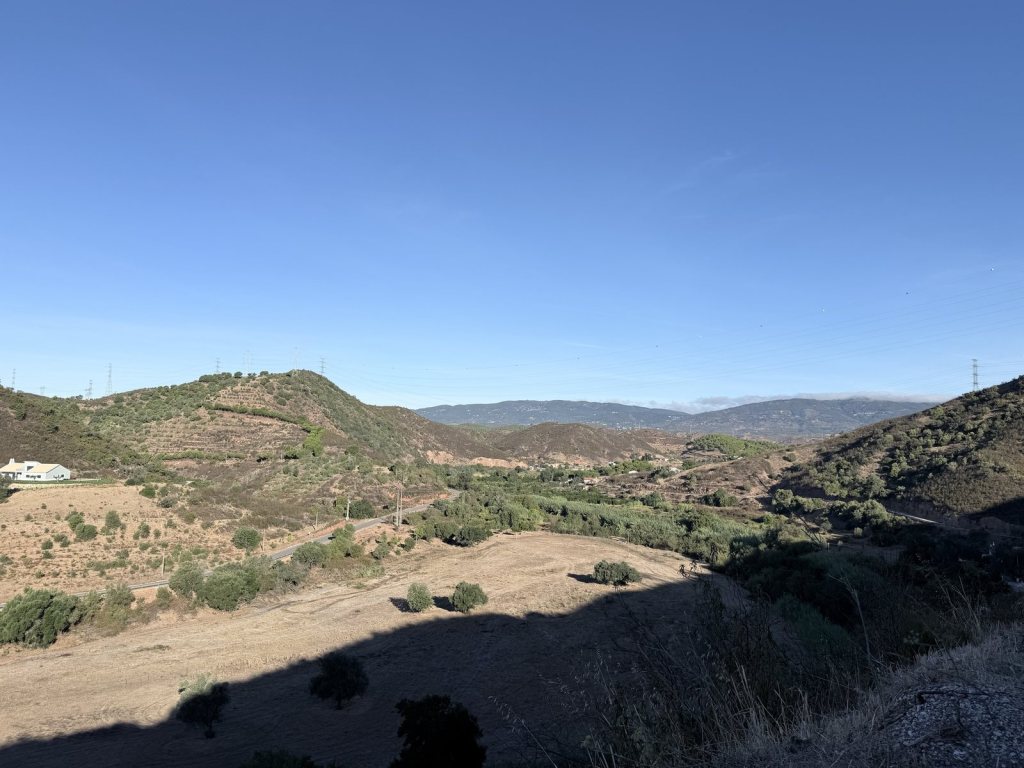
The hills are still recovering from fire. The big one was in August 2018, when the Serra de Monchique burned for a week — the largest wildfire anywhere in Europe that year. Eight years on the regrowth is coming, but you can still see where it went through.
The tree with a number painted on it
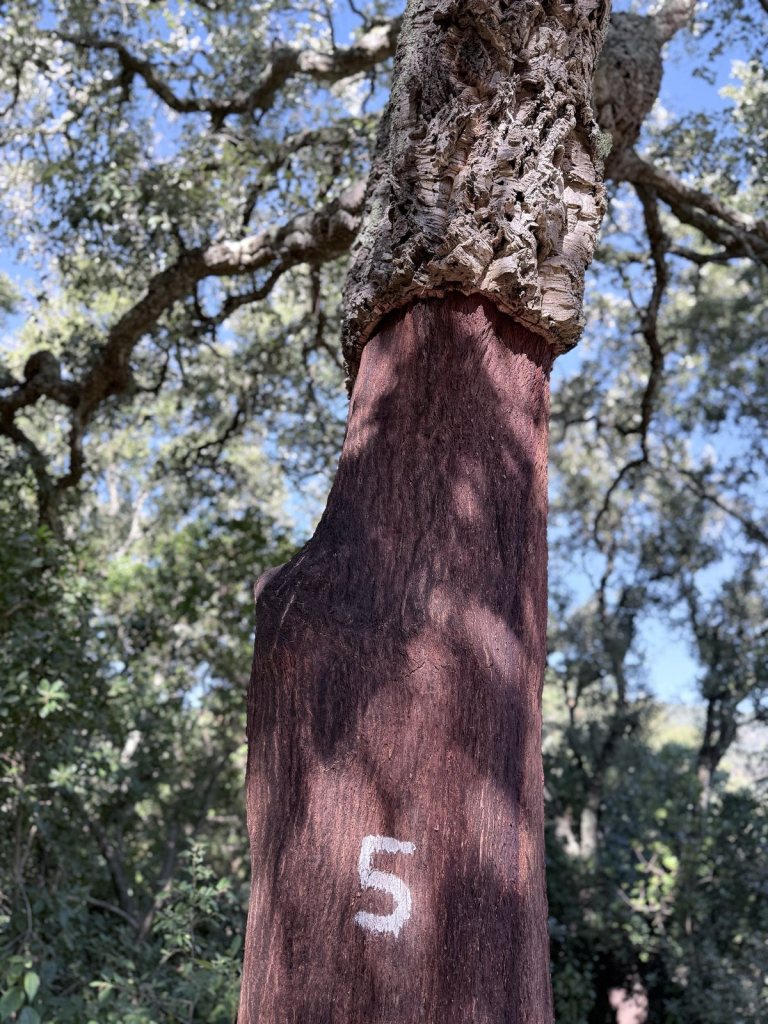
Miguel Ângelo stopped to show us a cork oak that had been stripped of its bark, with a white 5 painted on the bare trunk.
The number is the last digit of the year the cork was taken. It comes off by hand, and in Portugal a tree cannot be stripped again for nine years, so this one was done in 2025 and is due again in 2034. Portugal produces more cork than anywhere else in the world, and once you know what the numbers mean, you start looking for them.
Honey and firewater
We also stopped at a working farm in the hills that makes two things: honey and medronho. The honey was delicious, and we did not bring a jar back to the ship. If you go, do.
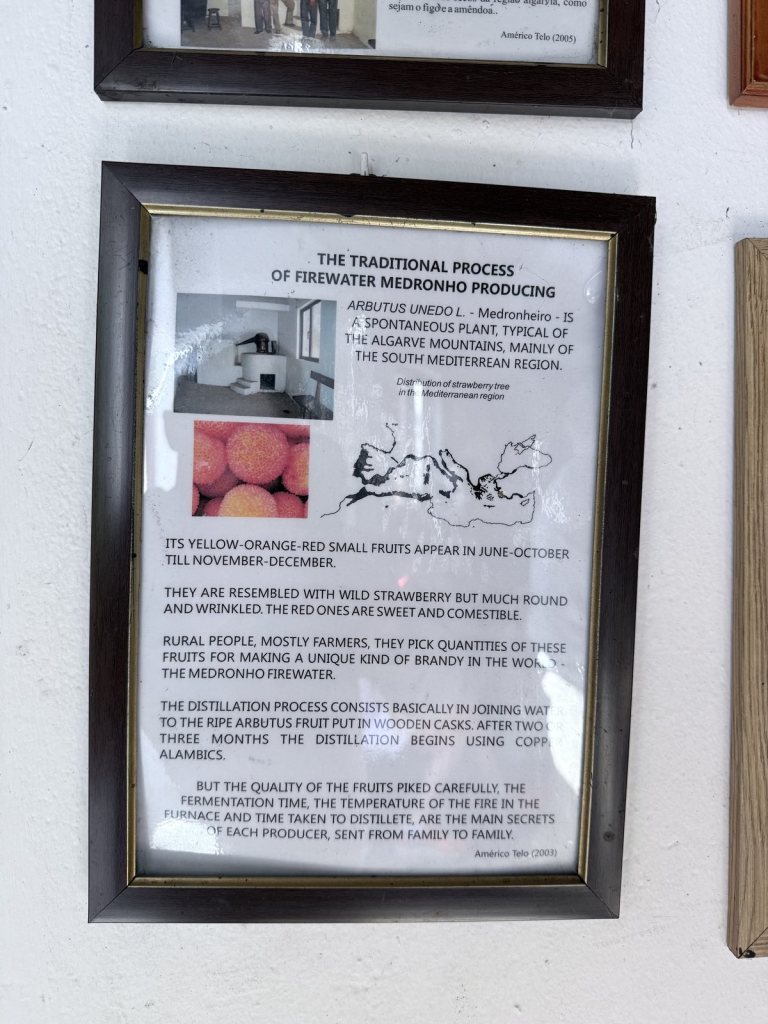
Medronho is the local firewater, distilled from the fruit of the strawberry tree that grows wild all over these mountains. The board on the farm’s wall explains it: ripe fruit and water sit in wooden casks for two or three months, then go through a copper still, and every family has its own way of doing it.
Fóia
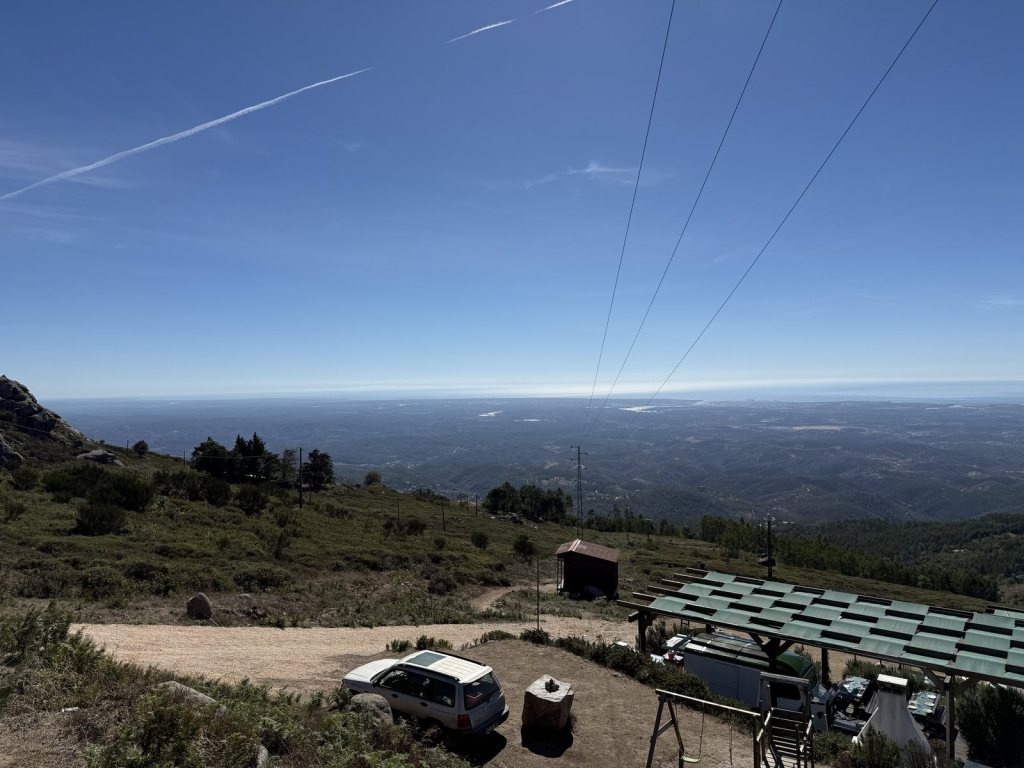
Fóia is the highest point in the Algarve, at 902 metres. From the top we could see right across the hills to the coast. Our ship was down there somewhere, at anchor.
The afternoon
We did not go back ashore. Chris spent the afternoon by the pool with a book — Isadore Sharp’s account of building Four Seasons, as it happens — while Jen napped and read in the cabin. So whether Portimão town is worth tendering back in for is a question for somebody else’s blog.
What we’d tell you
- Portimão is a tender port. Ours took about twenty minutes, and breakfast at seven covered an 08:00 excursion.
- Take the ship’s excursion here. On a tender day it takes the logistics off your hands, and if it runs late that is the ship’s problem rather than yours. This one was worth every minute.
- Go inland. If your only Algarve is the coast, you have seen the least interesting part of it.
- Taste the honey, and bring a jar back. We did not.
Two questions down from the original list. Casablanca next, and that is the day everyone has an opinion about.


Leave a Reply