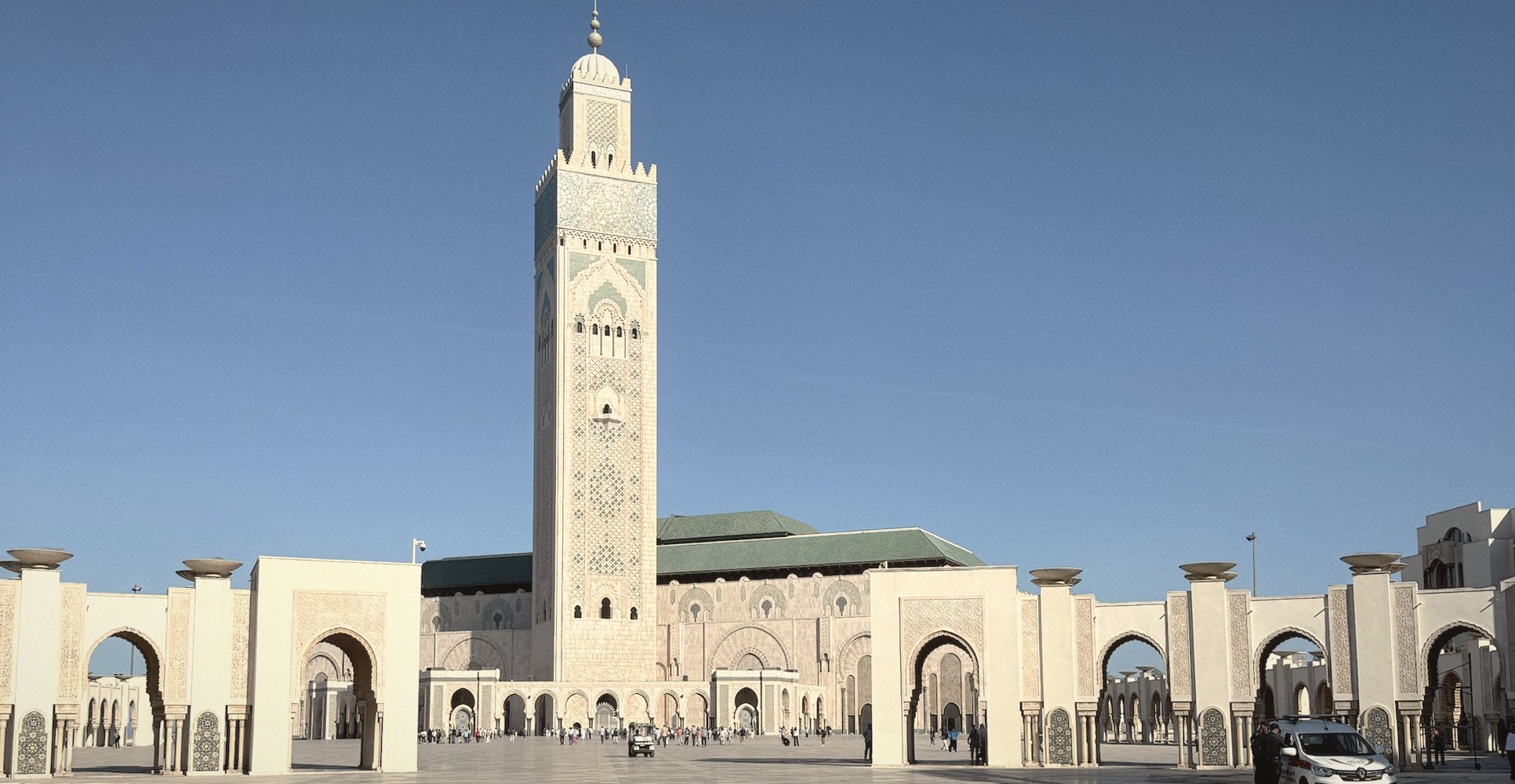
On the preview post we asked whether everyone was right that the thing to do in Casablanca is leave it and spend the day in Rabat. We stayed, on the ship’s Casablanca In Depth tour, and it started at the Hassan II Mosque.
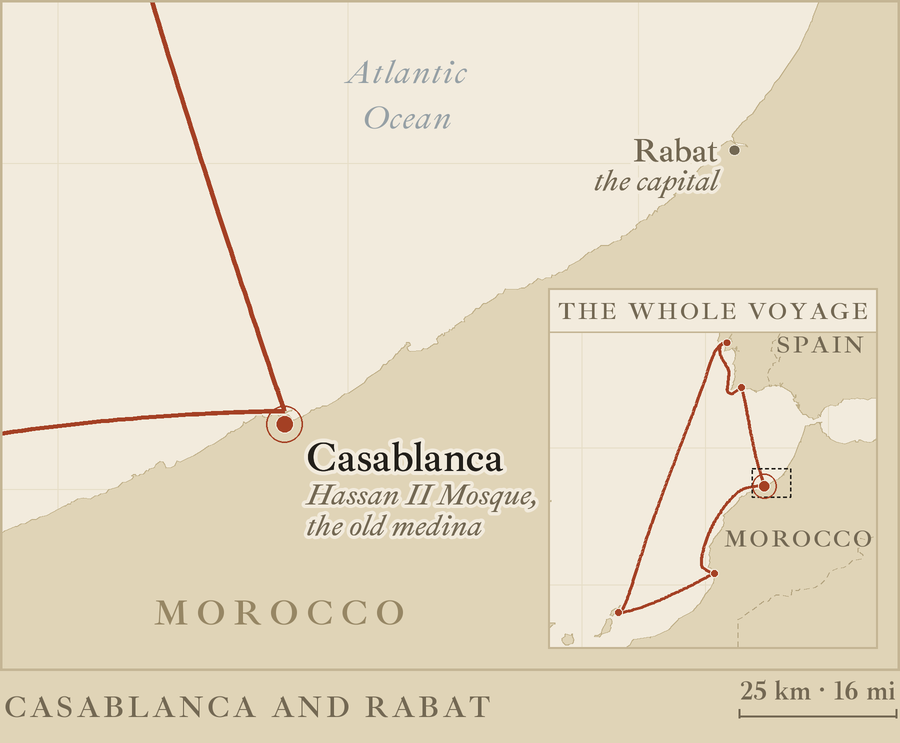
The Hassan II Mosque
The mosque was the first stop. The minaret is 210 metres tall, the second tallest in the world, and the building stands partly out over the Atlantic on land reclaimed from the sea. The esplanade around it holds eighty thousand people. The prayer hall inside holds another twenty-five thousand.
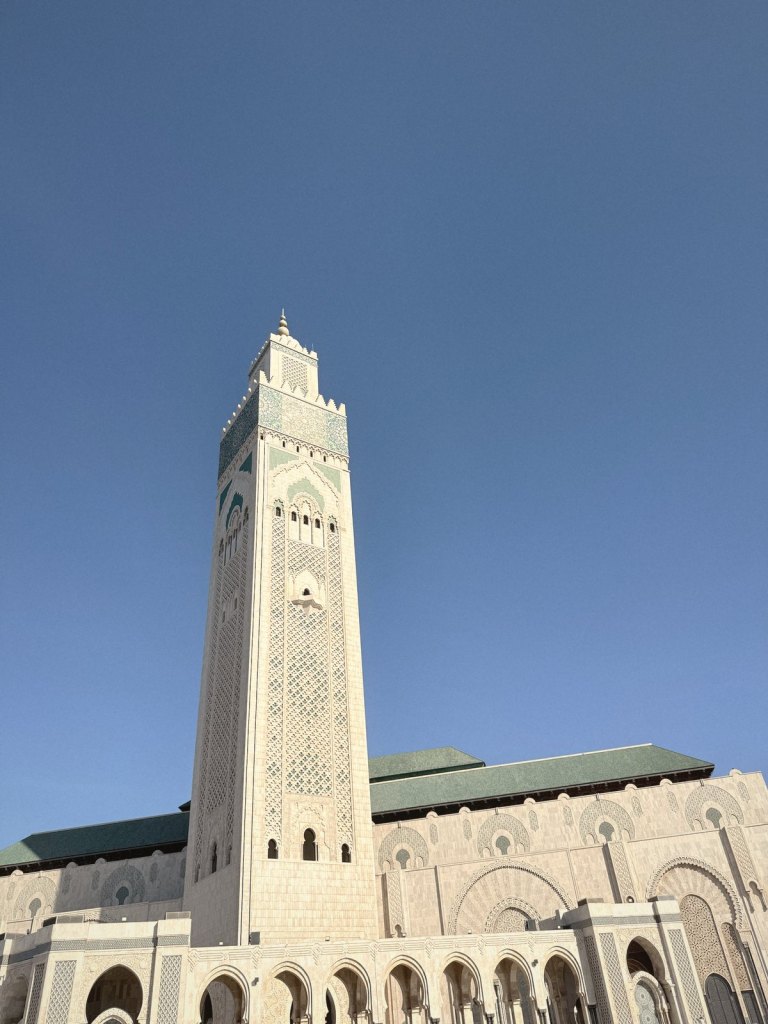
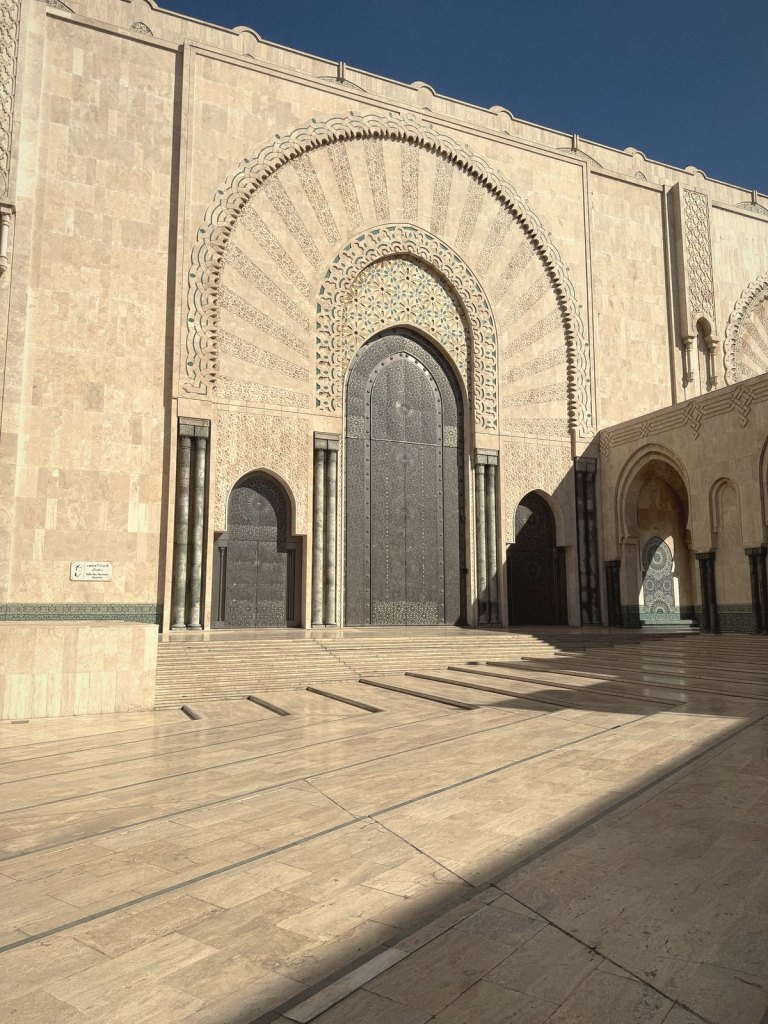
It is not old. It took seven years to build, from 1986 to 1993, to a design by the French architect Michel Pinseau for King Hassan II, and it was paid for largely by public subscription: something like twelve million Moroccans gave towards it. The cedar is from the Middle Atlas, the marble from Agadir and the granite from Tafraoute, and thousands of Moroccan craftsmen spent years on the carving, the plasterwork and the tiles.
Go inside
Non-Muslims can go in, but only on a guided tour, and this is the reason to take one. We went in. Jaw-dropping is the only word for it.
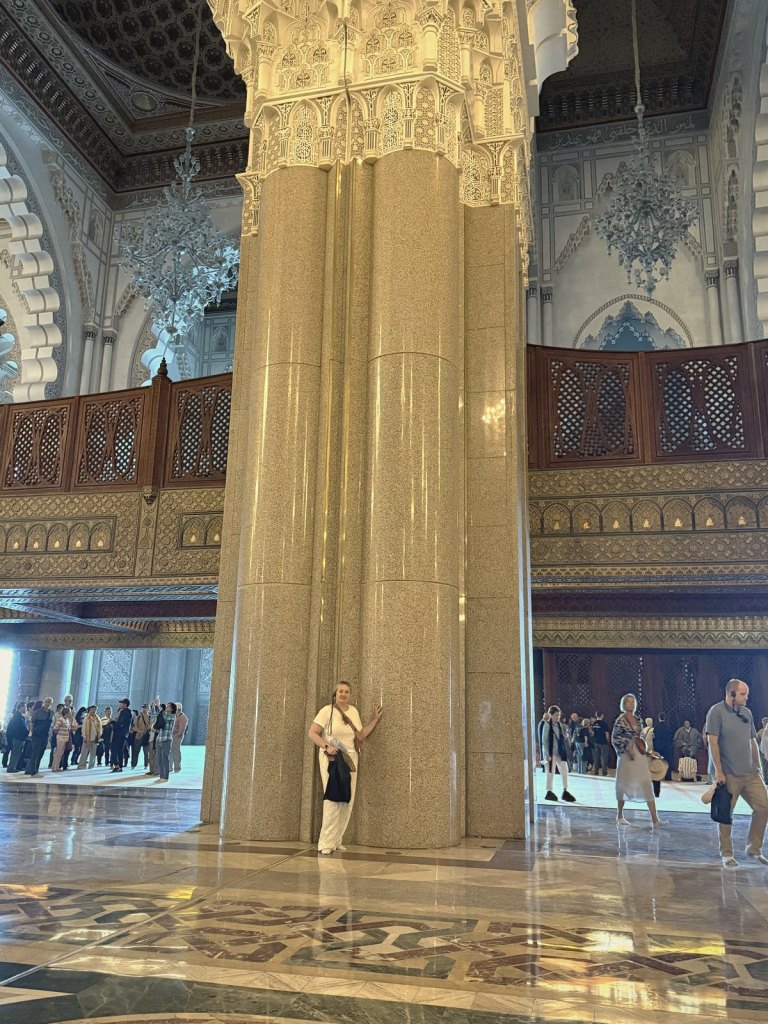
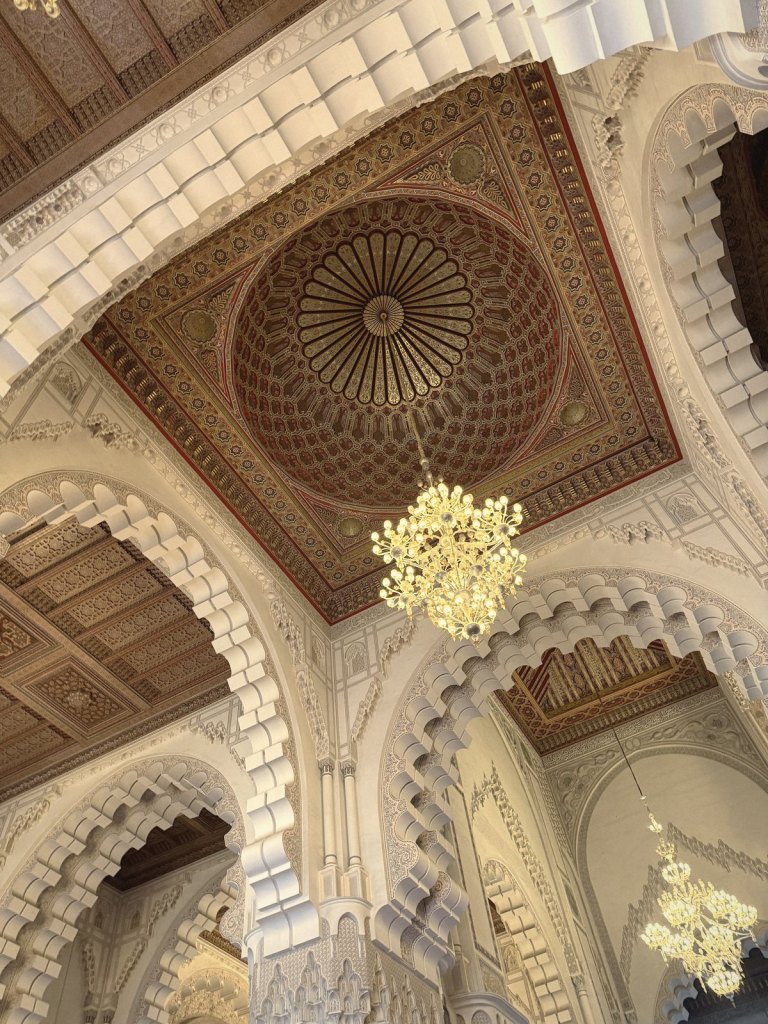
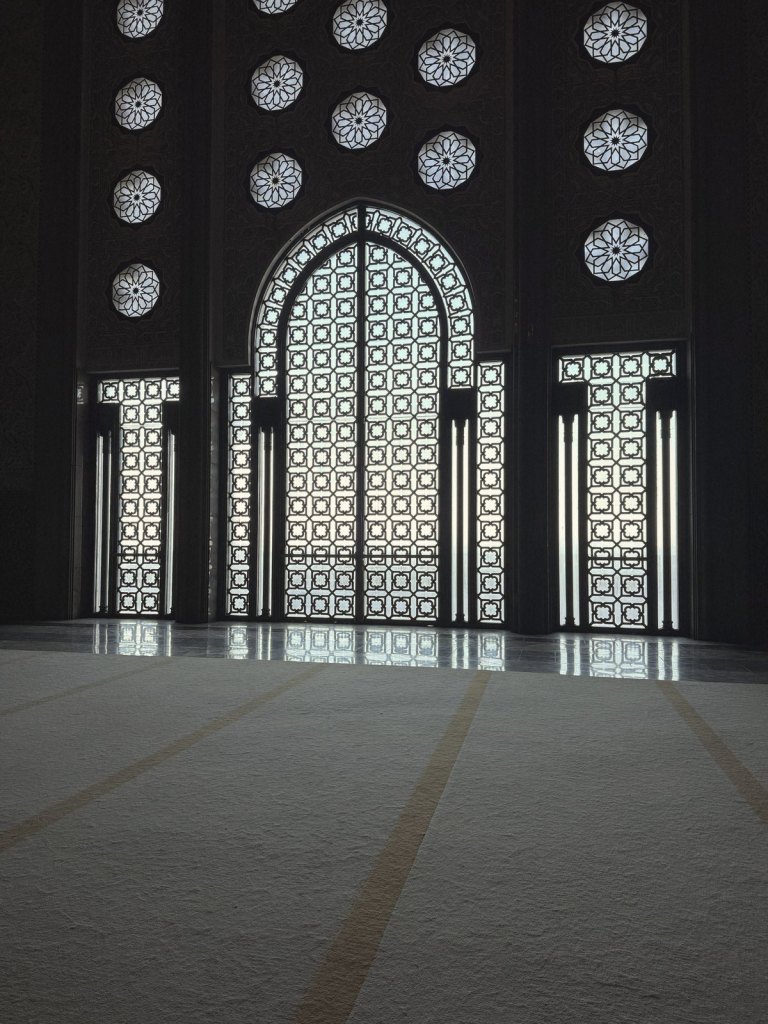
The building is meant to take in the elements. Water is the obvious one: Hassan II wanted it built on the water, “because God’s throne is on the water”, which is why it stands out over the Atlantic. Air comes in through the roof over the middle of the prayer hall, which slides open to the sky. It weighs 1,100 tonnes and opens in about five minutes. Fire is the light: the chandeliers are Murano glass, from Venice. At night a laser at the top of the minaret points towards Mecca.
The New Medina
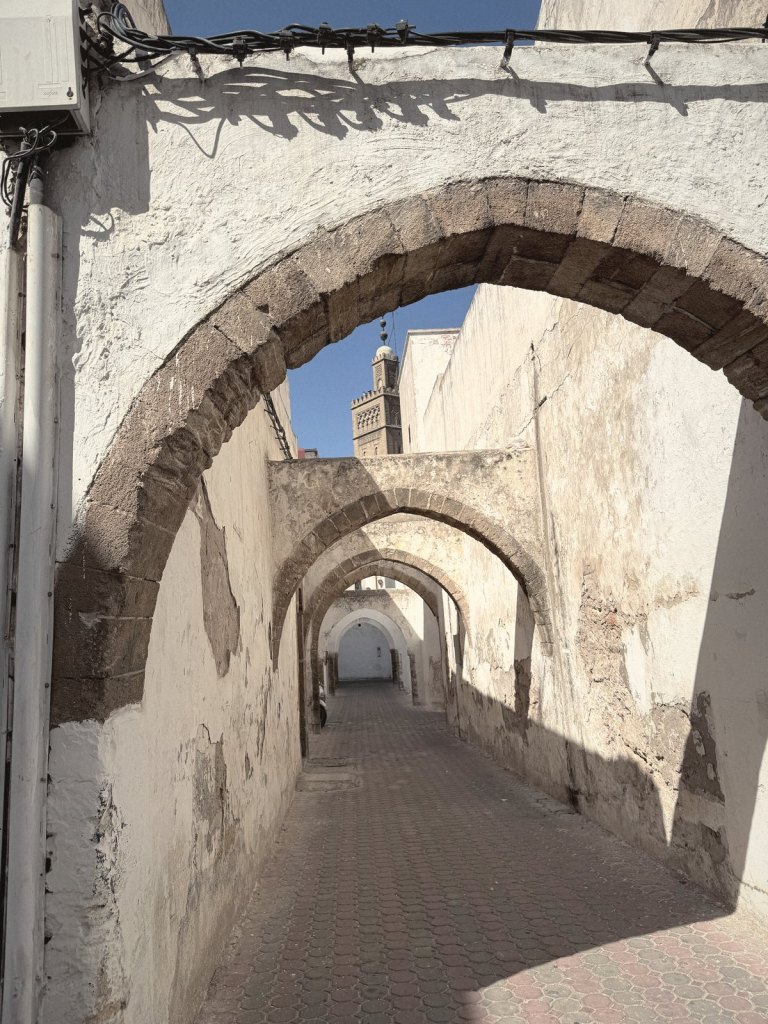
After the mosque came a walking tour of the Habous quarter, which everyone calls the New Medina. It is not old either. French architects laid it out between about 1917 and the 1930s to house Casablanca’s fast-growing Moroccan population, in the traditional style, on land given to the habous, the religious endowments, which is where the name comes from.
The guide’s theme was the five things every Moroccan neighbourhood has: a mosque, a source of water, a communal bakery, a hammam and a Koranic school. We came away remembering three of them and had to look up the other two.
The tour also took in a synagogue and a Catholic church. We are still not sure why they were on it; neither struck us as remarkable.
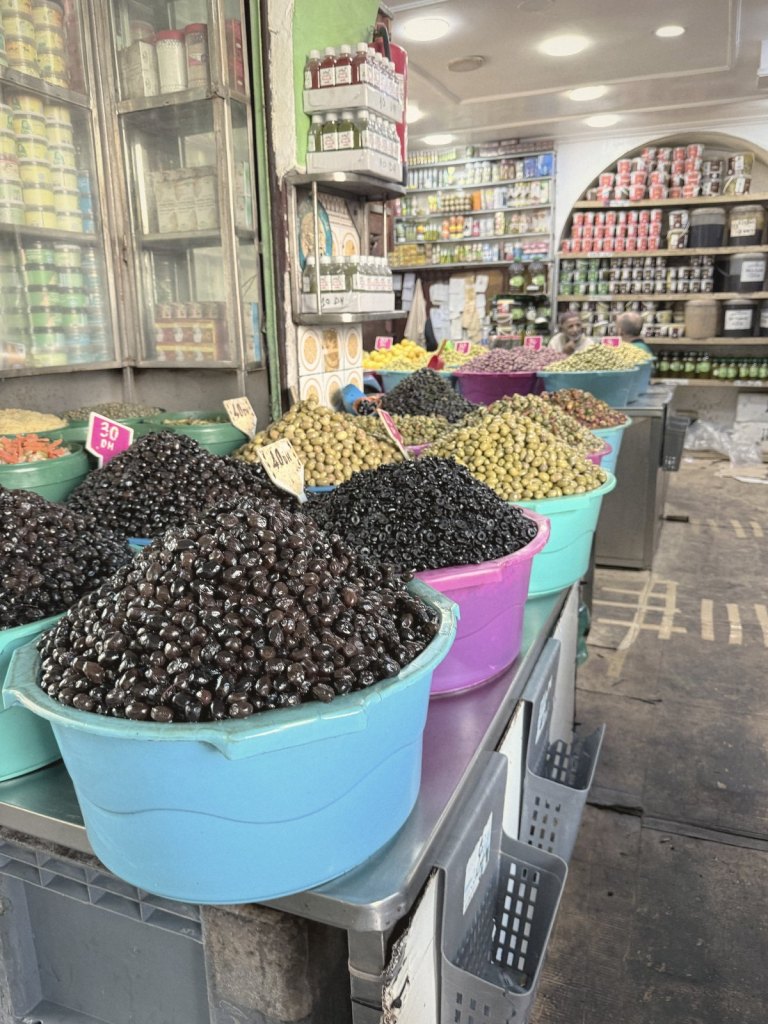
Lunch at Dar Dada
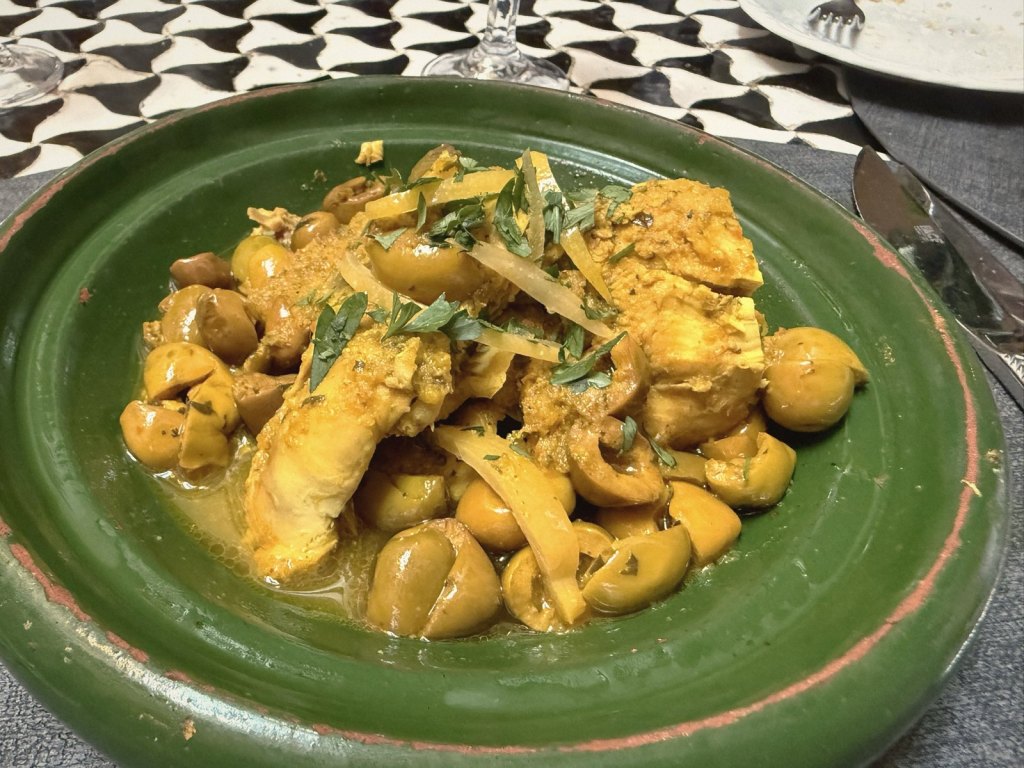
Lunch was included, at Dar Dada in the old medina: a restored house built around a tiled courtyard. When it opened in 2019, a Moroccan paper ran it under the headline “Casablanca finally has a good, beautiful Moroccan restaurant.”
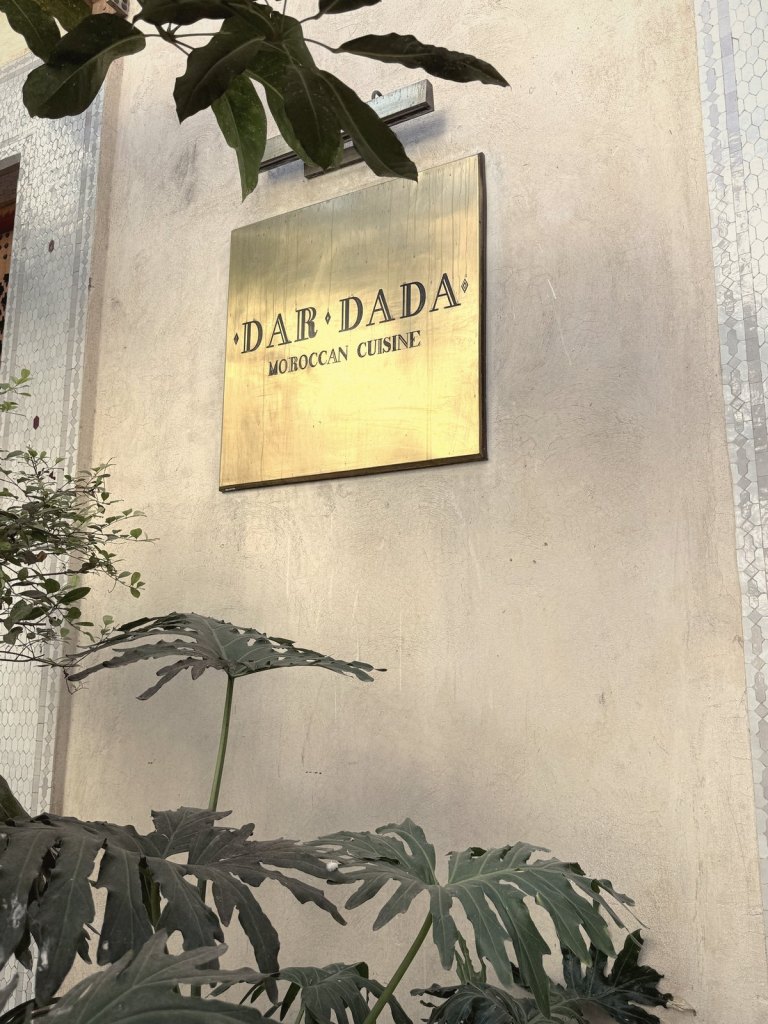
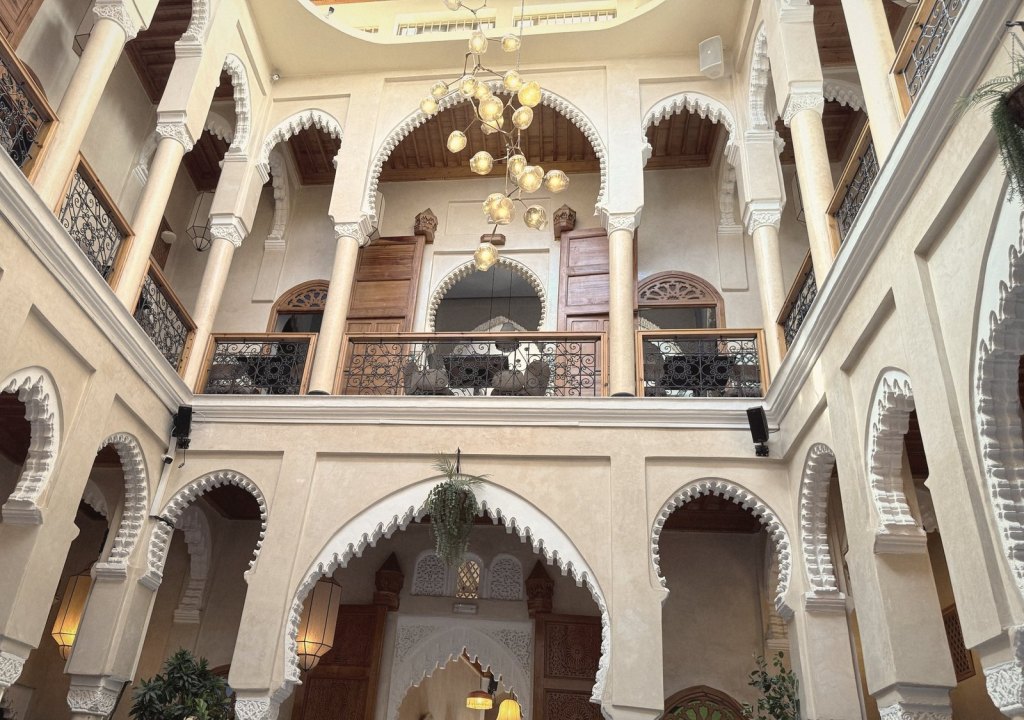
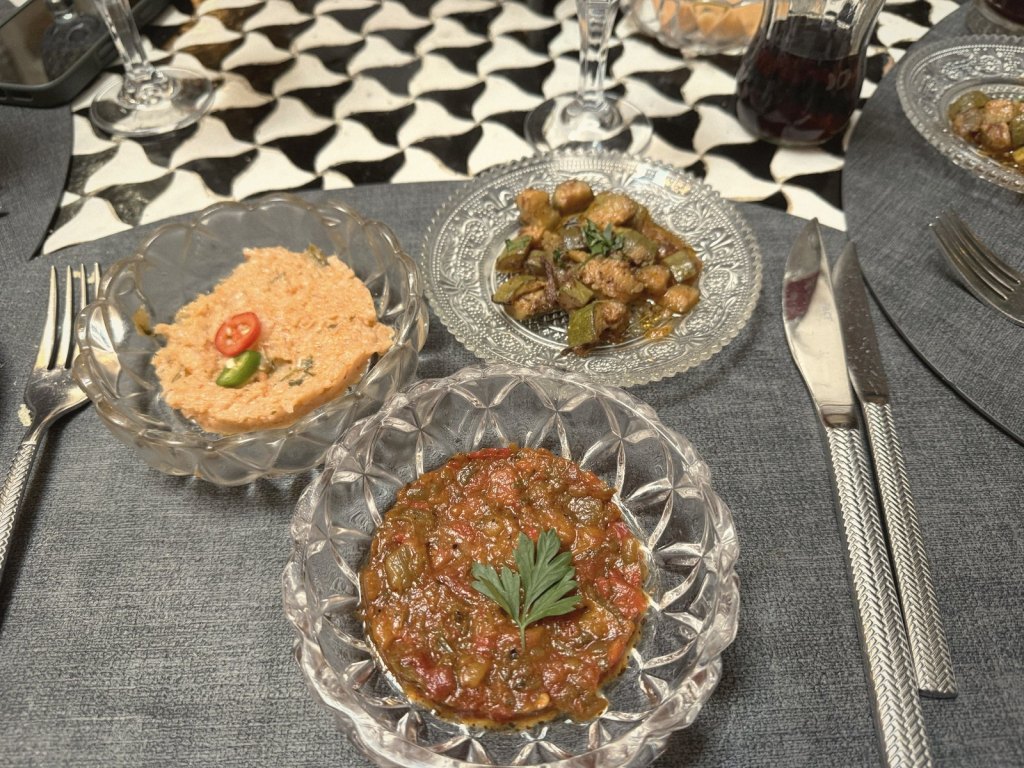
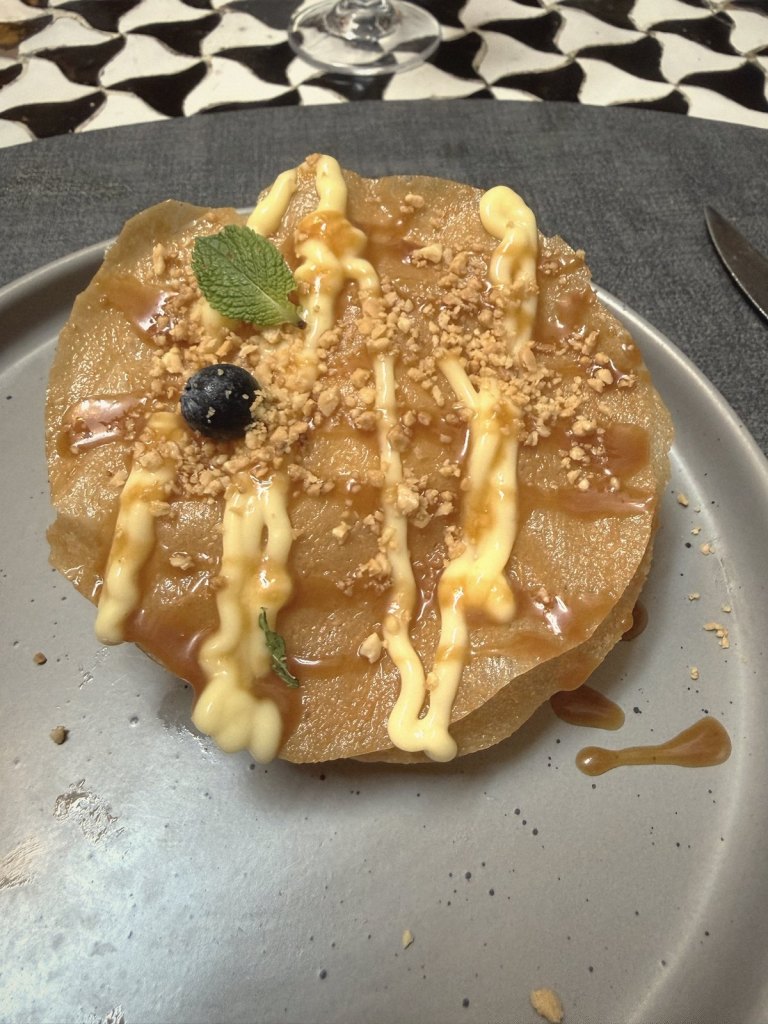
It was good, and a little bewildering. Half a dozen small dishes arrived first, then the chicken tagine with olives and preserved lemon, then dessert.
Casablanca or Rabat
A split verdict. The mosque is a show-stopper, and on its own it is a reason to come to Casablanca. The rest of the tour was not overly exciting. If we did this port again, we would look hard at Rabat, and at whether there is a way to fit the mosque into the same day.
What we’d tell you
- Go inside the Hassan II Mosque. You can only do it on a guided tour, and it is the reason to come.
- The rest of the tour was the weak part. If you can see the mosque some other way, Rabat may be the better day.
- The ship docks in the commercial port, among the cranes and containers. That is normal for cruising, but here the port adds nothing to the day.
- You will not need dirhams on the ship’s tour. Lunch was included, and we did not need money for anything all day.
- It is a full day. The tour used every one of its seven and a half hours.
- The finish is tight. The tour gets back thirty minutes before all-aboard, and it felt rushed.


Leave a Reply