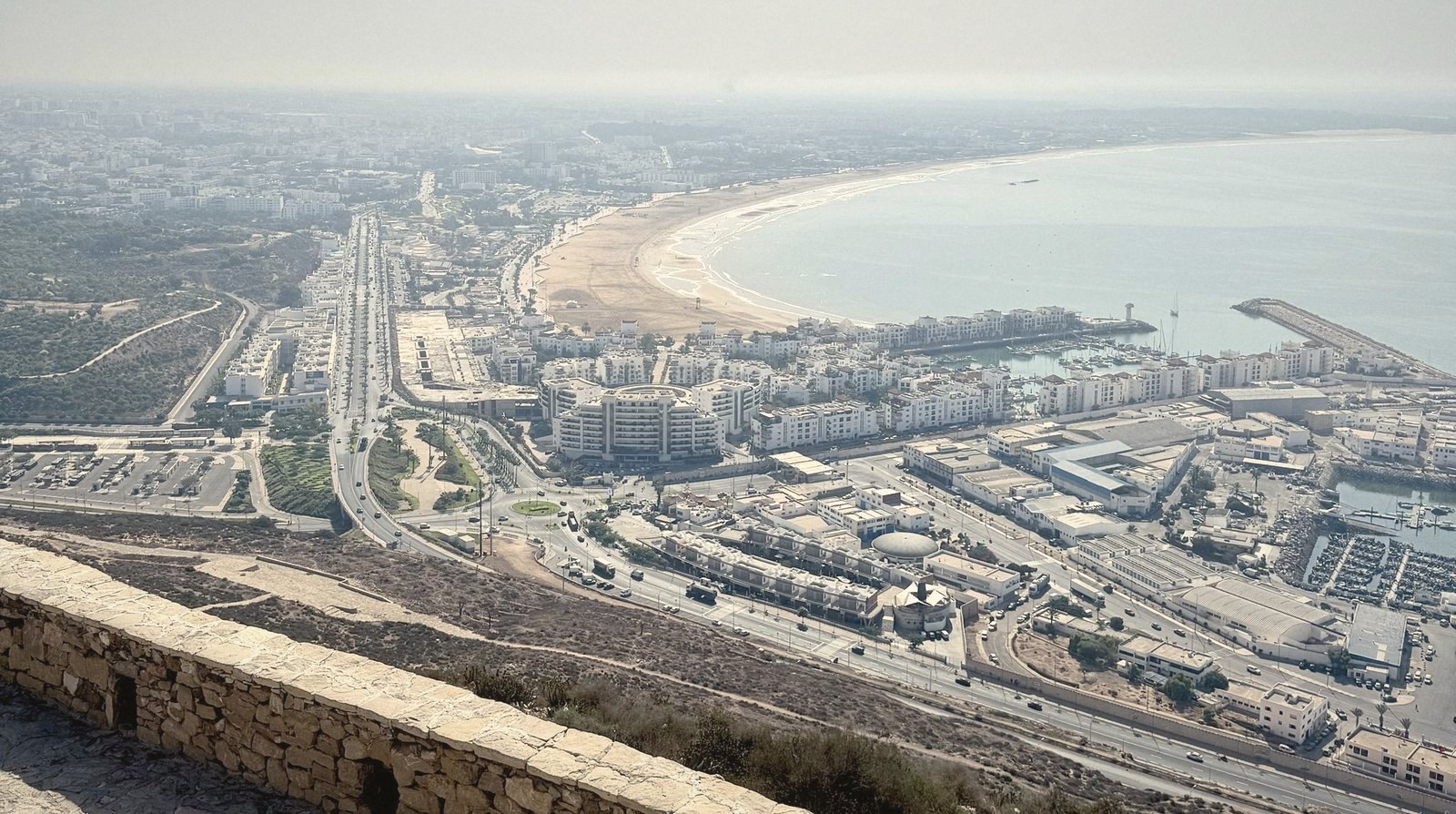
On the preview post we admitted we did not know what an Agadir day is for. We took the ship’s Agadir Highlights and the Berber Heritage tour to find out. It took in the kasbah on the hill, an argan cooperative, Souk El Had and a Berber heritage stop, and finished at the beach.
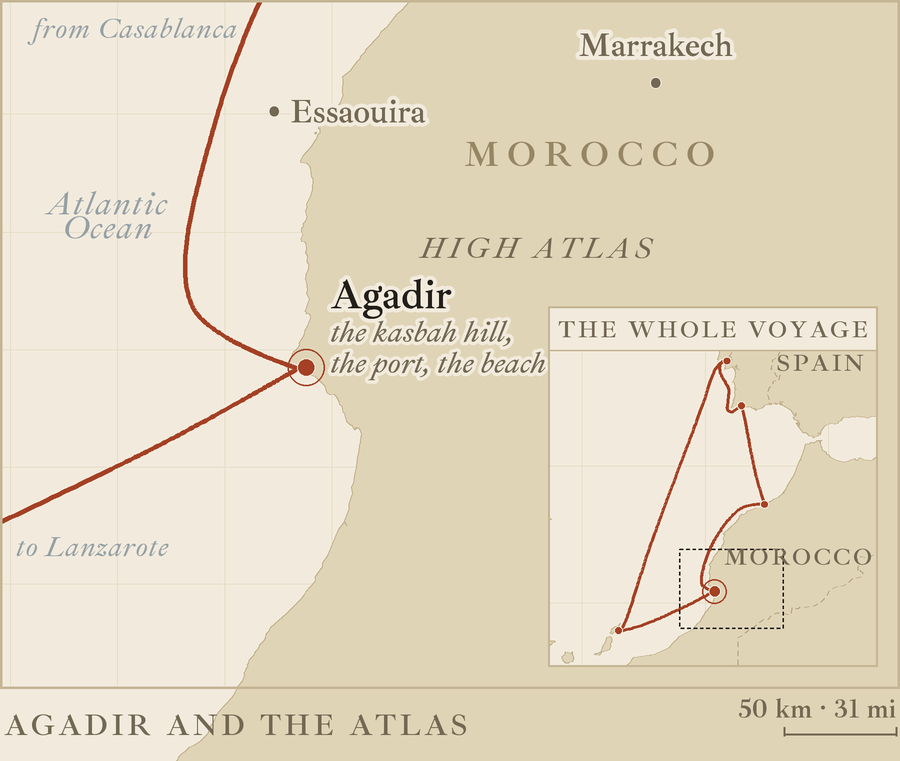
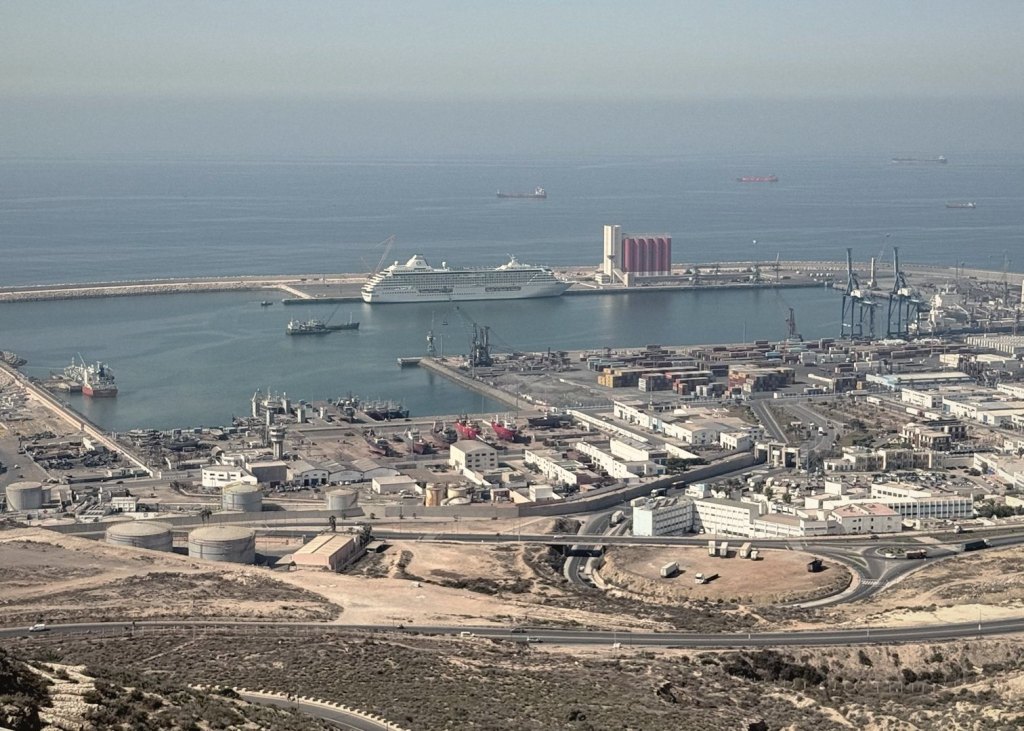
We woke up in the commercial port, among the cranes, the containers and the fishing boats. As in Casablanca, that is normal for a cruise, and not much to look at. The difference here is the hill above it.
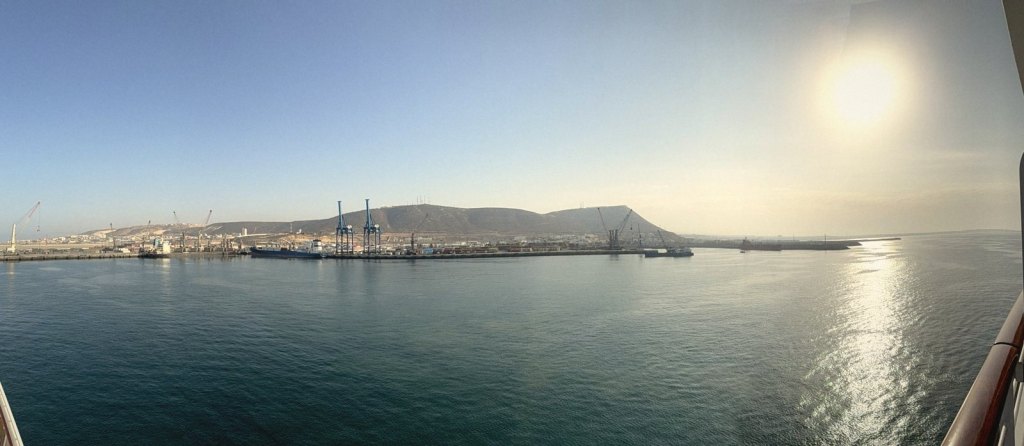
The hill
Agadir Oufella, the old kasbah, sits on a hill 236 metres high, right above the port. A fortress has stood up here since the sixteenth century.
Just before midnight on 29 February 1960, an earthquake struck Agadir. It killed between twelve and fifteen thousand people, about a third of the city, and left most of it in ruins. The kasbah collapsed, and so did the old quarters of the city. Agadir was rebuilt, and almost everything you can see from up here dates from after 1960. That is why it has no old town.
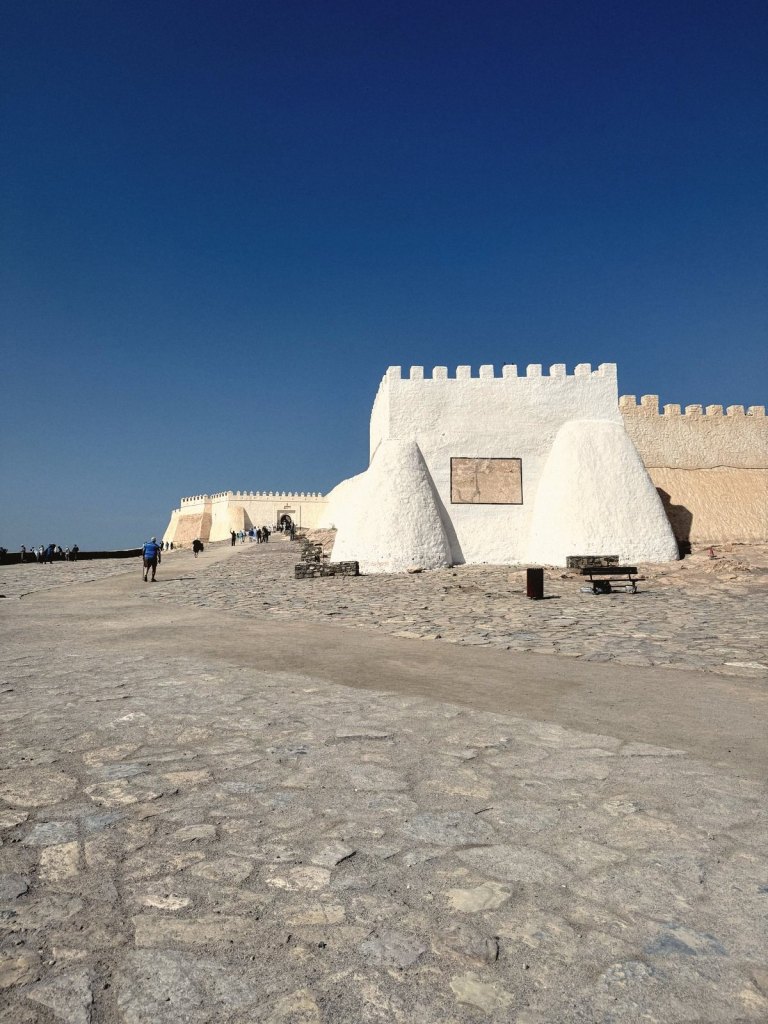
Not all of the wall is new. There is a visible crack in it: below the crack is the old wall, and only the part above it was rebuilt, in the last few years, in stone and timber laid the traditional Atlas way, so that the next earthquake shakes it rather than brings it down.
From the top, Agadir splits in two. On one side is the working port: the container quays, a huge fishing harbour, and our ship. On the other is the long curve of the beach, with the new city behind it.
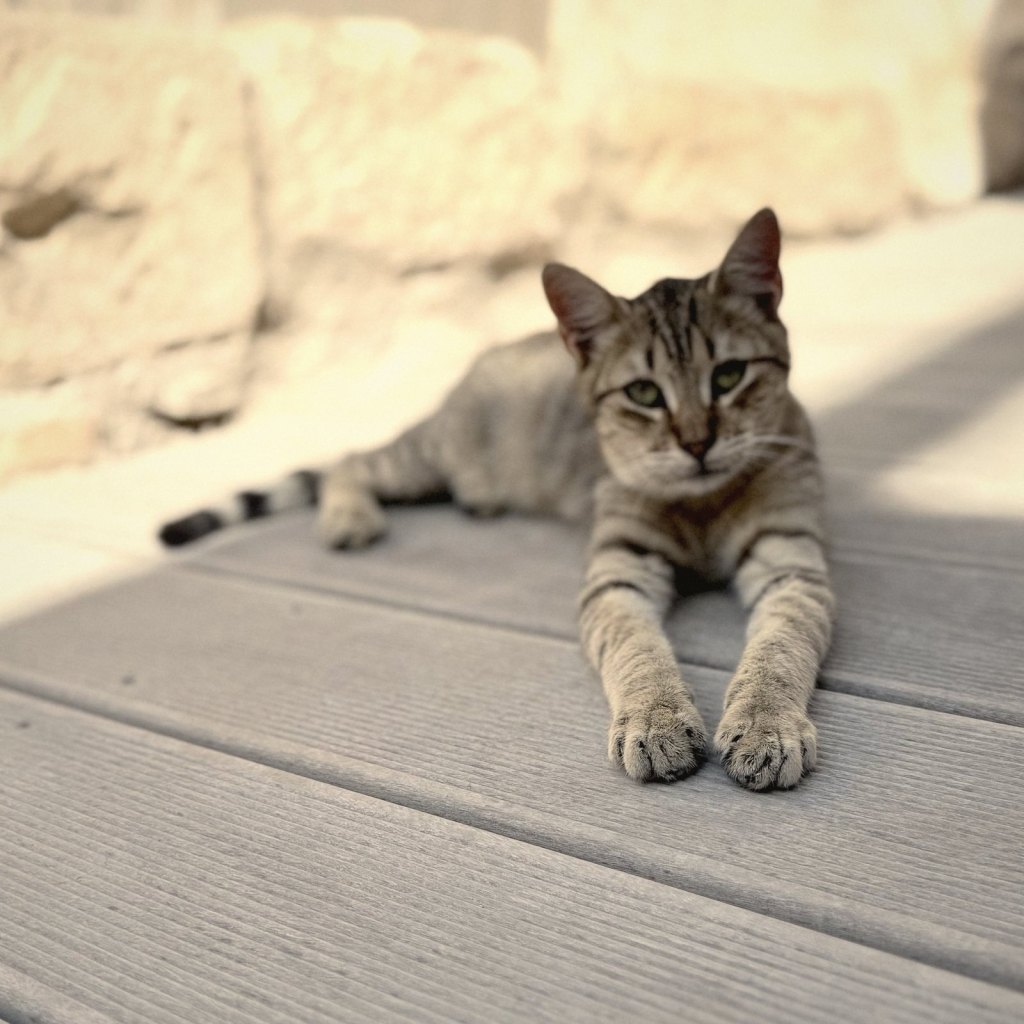
Argan, and a water seller
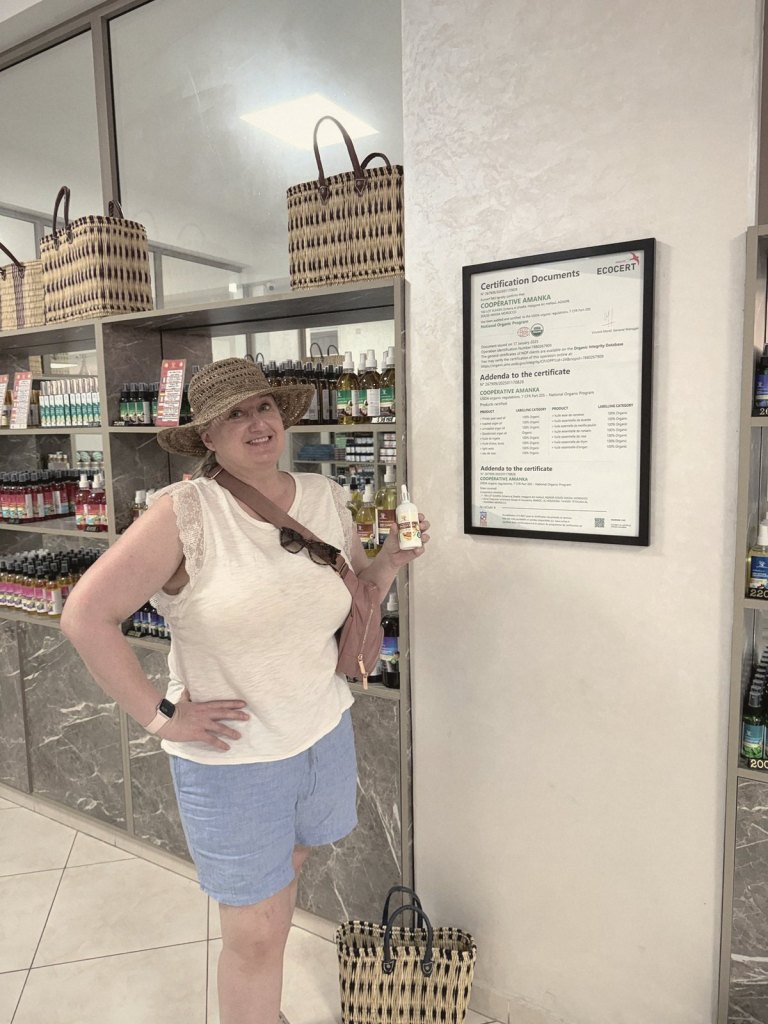
Next was an argan cooperative. The argan tree grows almost nowhere outside this corner of Morocco, and its oil, for cooking and for skin, is what the region sells. We came away with an anti-aging cream.
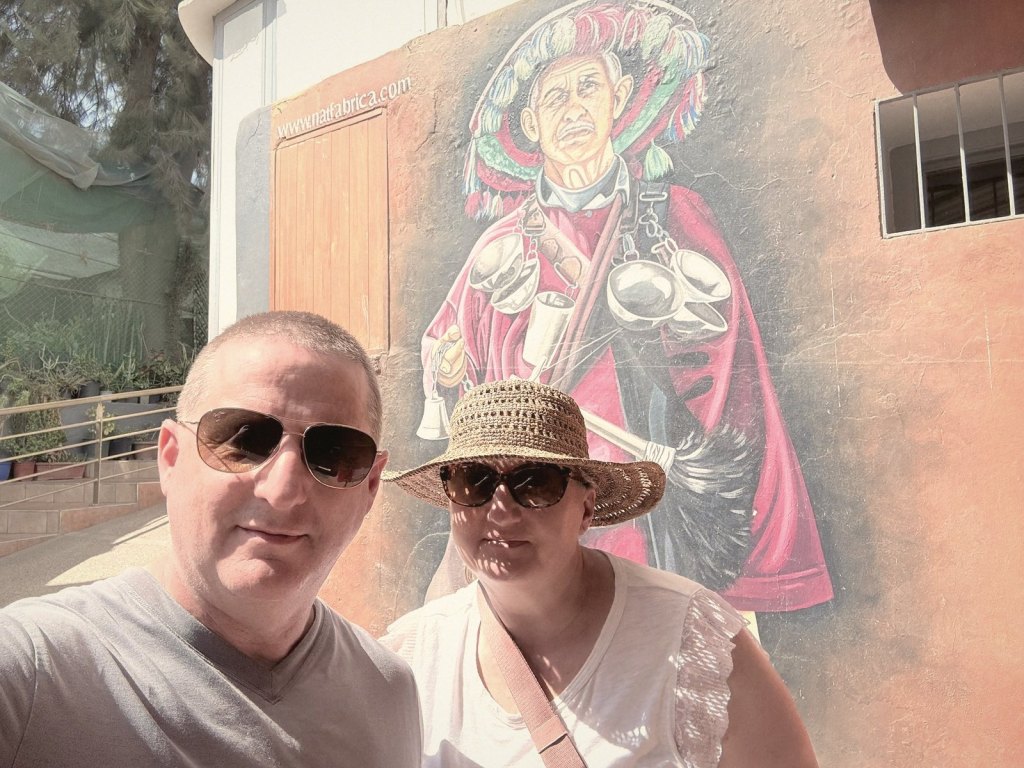
On the wall outside was a mural of a water seller in the traditional red robe, with a wide fringed hat and brass cups.
Souk El Had
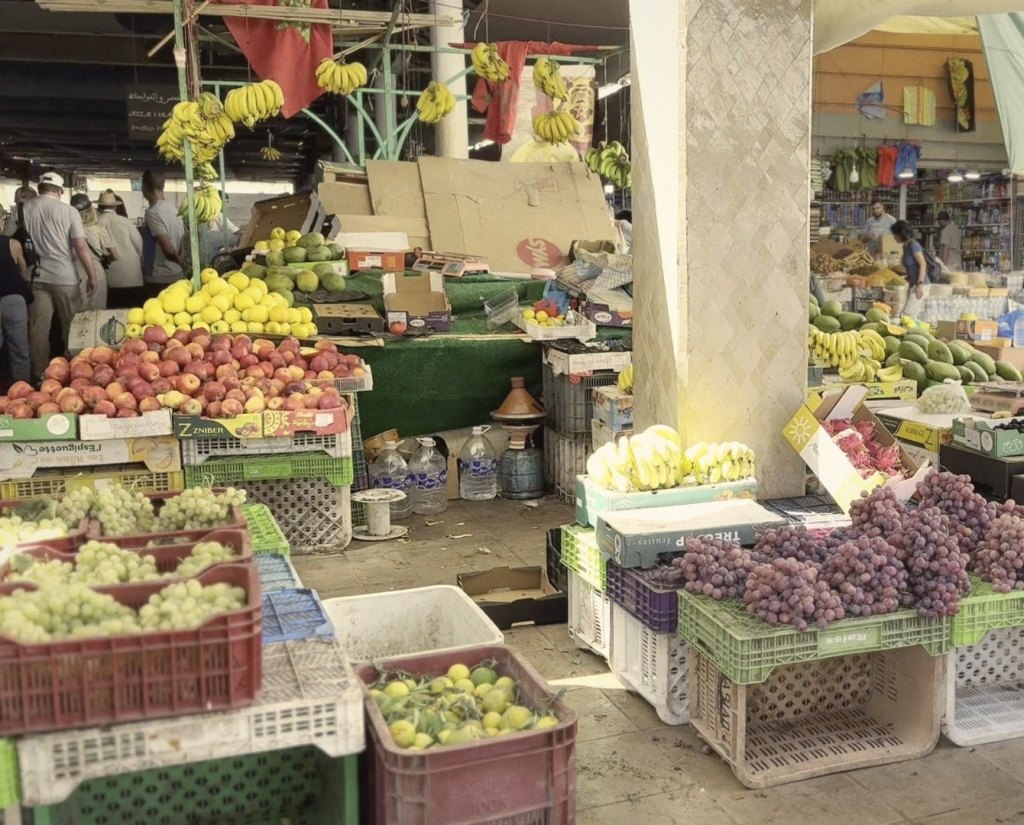
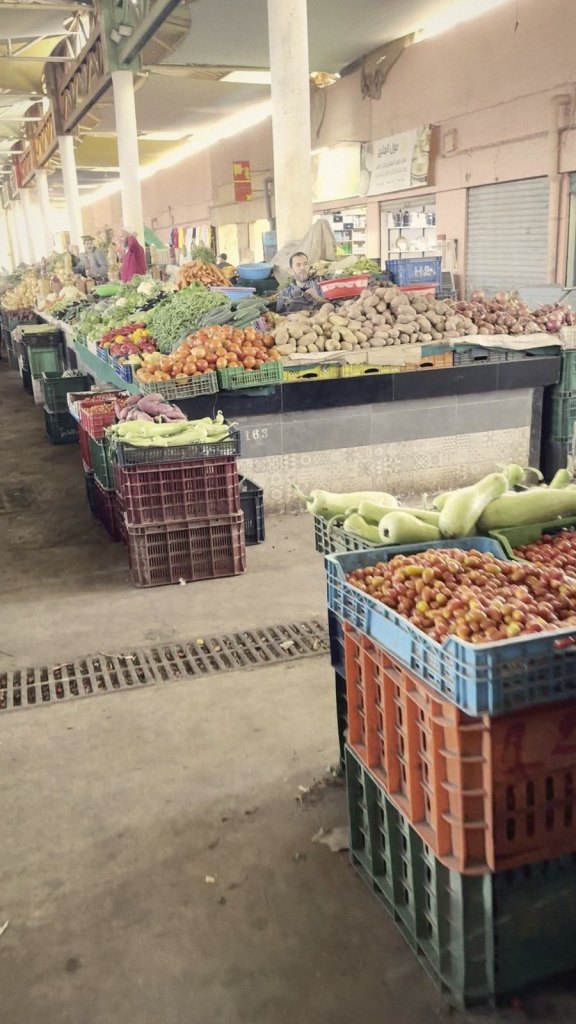
Souk El Had is Agadir’s great walled market. The name means Sunday market, but it is open every day except Monday, when it closes for cleaning. Before 1960 it stood in Talborjt, one of the quarters the earthquake destroyed. Like the rest of the city, it moved and started again.
We walked the fruit and vegetable halls and kept to looking. No tastes this time.
The Berber heritage
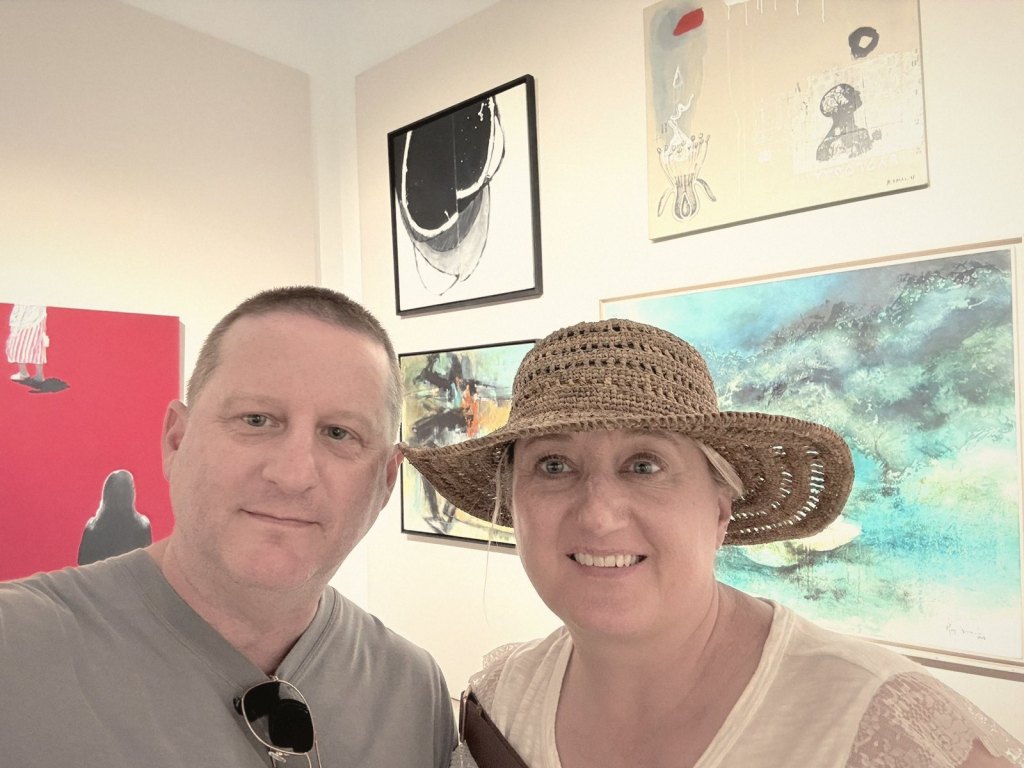
The country around Agadir, the Souss, is Amazigh country (Berber, in the older word), and this is the stop the tour is named for. It included a gallery, and the art was better than we expected.
The beach
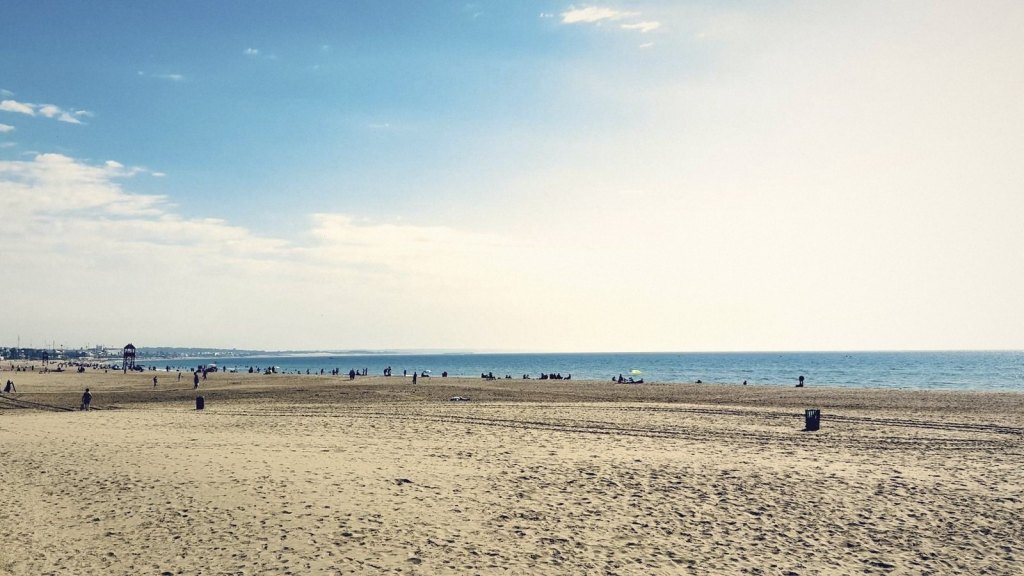
The tour finished at the beach, with refreshments. Agadir is Morocco’s big beach resort, and this is why: a wide, flat curve of sand running round the bay from the marina.
Back on board, we had a well-earned sandwich from the grill and spent the rest of the afternoon by the pool. Dinner was at Nobu, which belongs in the ship post.
What an Agadir day is for
Agadir was fine. Our suggestion, though, would be to get inland. The city is new by necessity; the older Morocco is out in the valleys and the mountains behind it. Taroudant, the walled market town up the Souss valley, and Paradise Valley in the Atlas foothills are the obvious choices from here.
What we’d tell you
- The ship docks in the commercial port. Cranes, containers and a huge fishing harbour, as industrial as Casablanca, but the kasbah hill is right above it.
- Agadir is a new city. The 1960 earthquake took the old town, so do not come expecting a medina.
- The Berber heritage stop was the surprise. The art was better than we expected.
- Get inland. Agadir was fine, but if we came again we would book a tour that leaves the city.


Leave a Reply