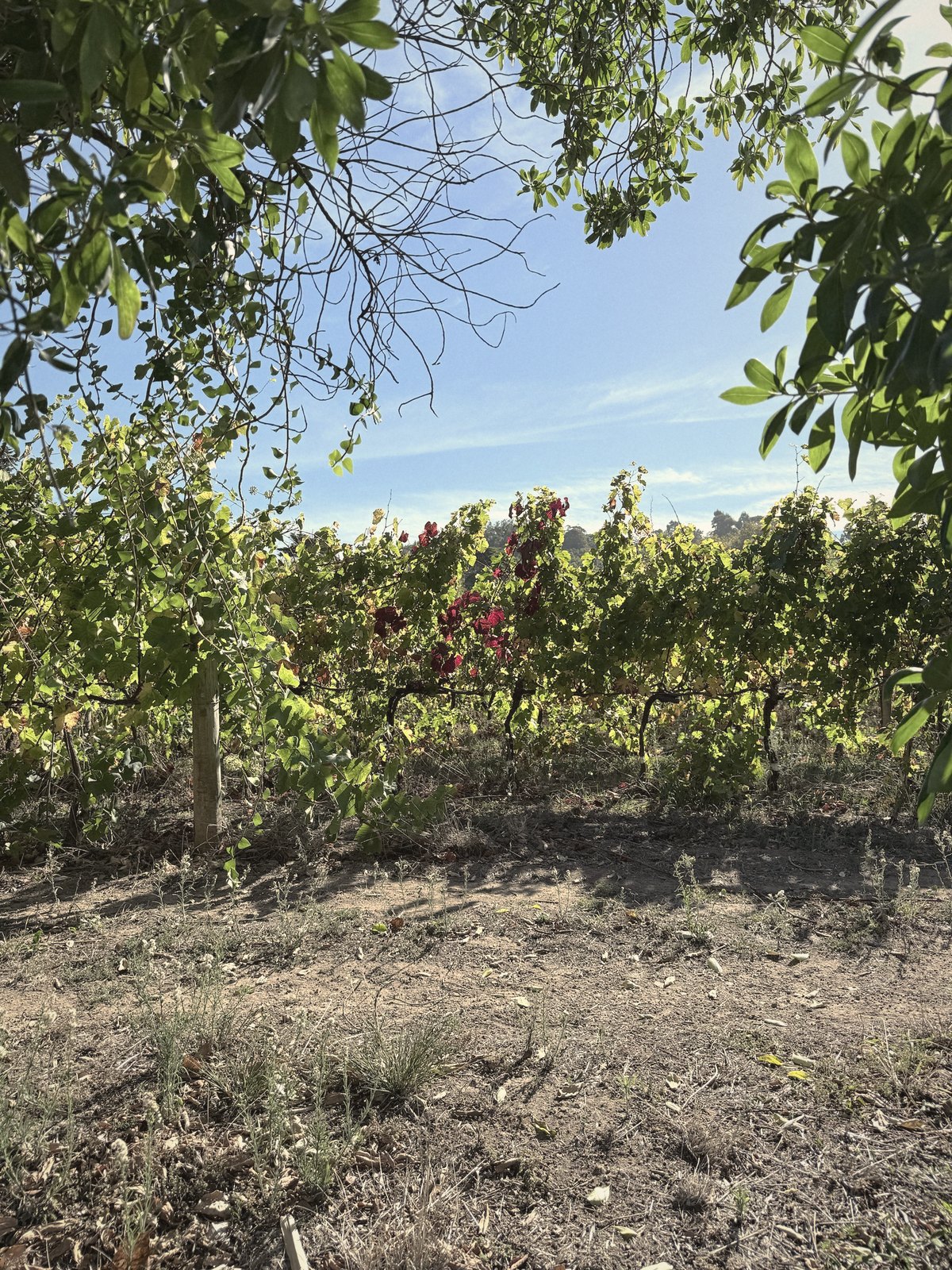
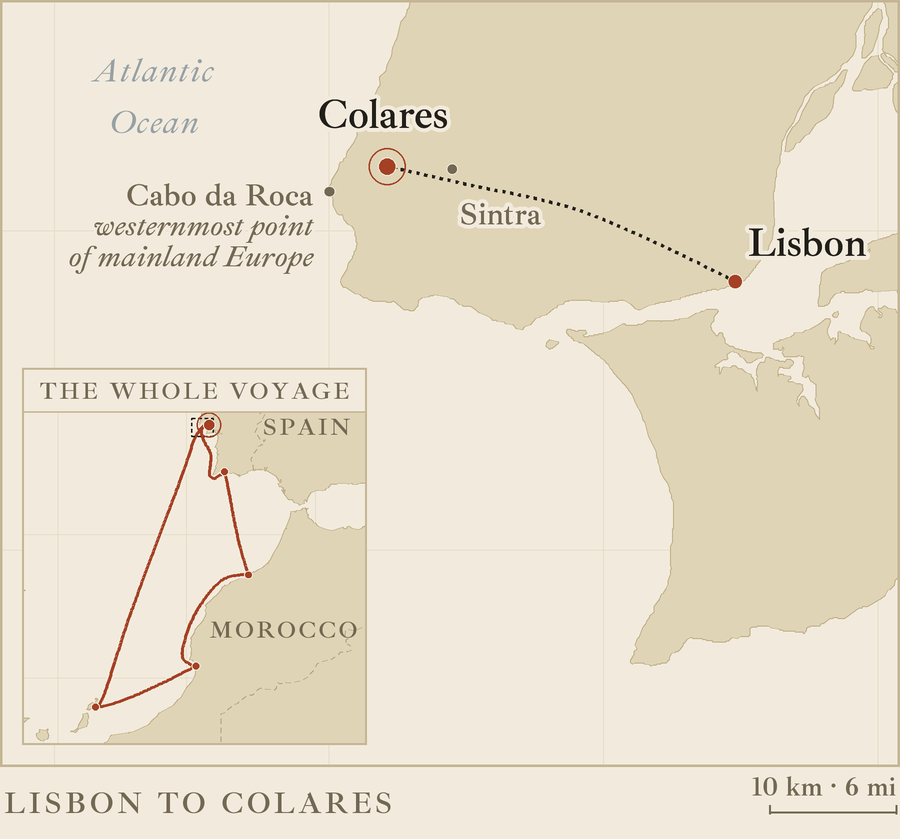
A few weeks ago we put up a list of things we could not find out about this voyage, and the first one was which of the four small wine regions near Lisbon was worth a whole day. We said Colares. We were right, and not for the reason we thought.
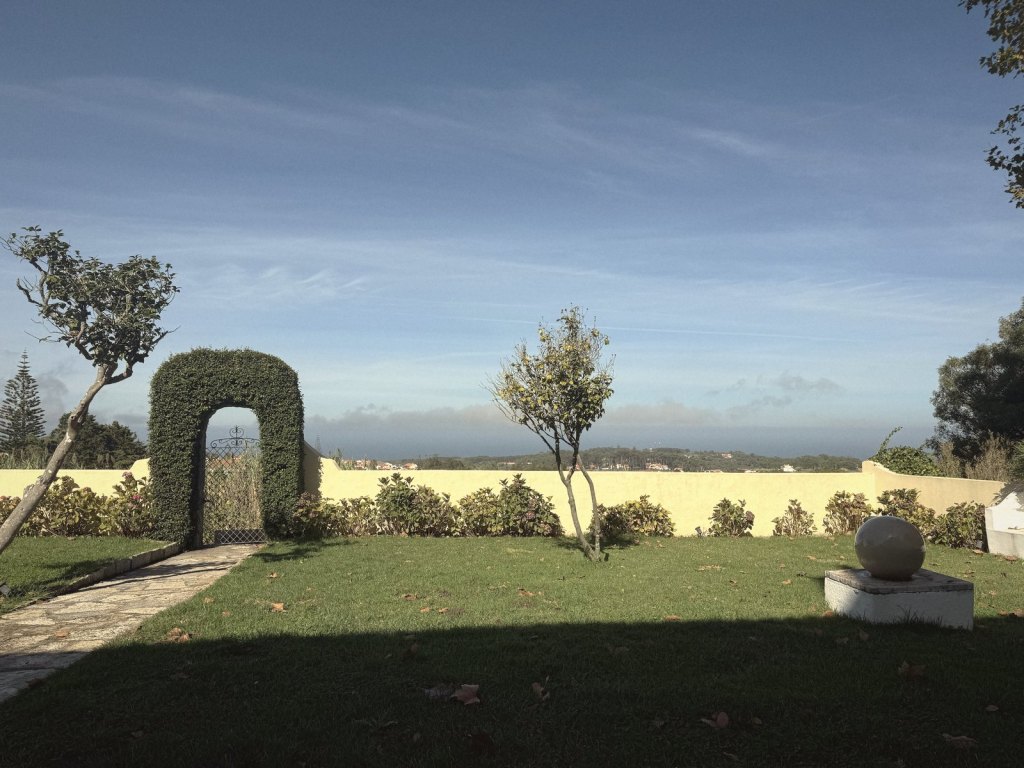
The most western vineyards of Europe
That is not our line. It is printed across the top of their own price list, under the crest, and standing in the garden it stops sounding like marketing. The lawn runs out to a low yellow wall with a topiary arch cut into it and an iron gate hung in the gap. Past the arch the land falls away through pines and red roofs, and then there is nothing between you and America. It is a working estate rather than a show one, but somebody has spent a great deal of care on the few hundred square metres a visitor actually stands in, and it pays off the moment you walk through that arch.
What the driver told us
The hotel arranged a car and a driver for the day, and that turned out to matter more than we expected. It is forty-five minutes each way, and he talked for most of both. By the time we came over the last rise we knew more about the man who started this place than anything we had read beforehand had told us.
Casal Sta. Maria was founded in 2006 by Baron Bodo von Bruemmer, who was ninety-six years old. Ninety-six. There had been other things on this land before the vines — horses, for one, an earlier ambition that never quite became what he wanted it to be. And roses. Thousands of roses, planted here for his wife.
We cannot vouch for a word of it. It is what a driver told us on the road out of Lisbon and we have checked none of it. We are passing it on because it is the story the place tells about itself, and because a man looking at a hillside at ninety-six and deciding it is not too late to start something is the best thing we have heard all year.
The vines were never grafted
This is the part we came for, and the part that is genuinely different from a nice afternoon at any other winery.
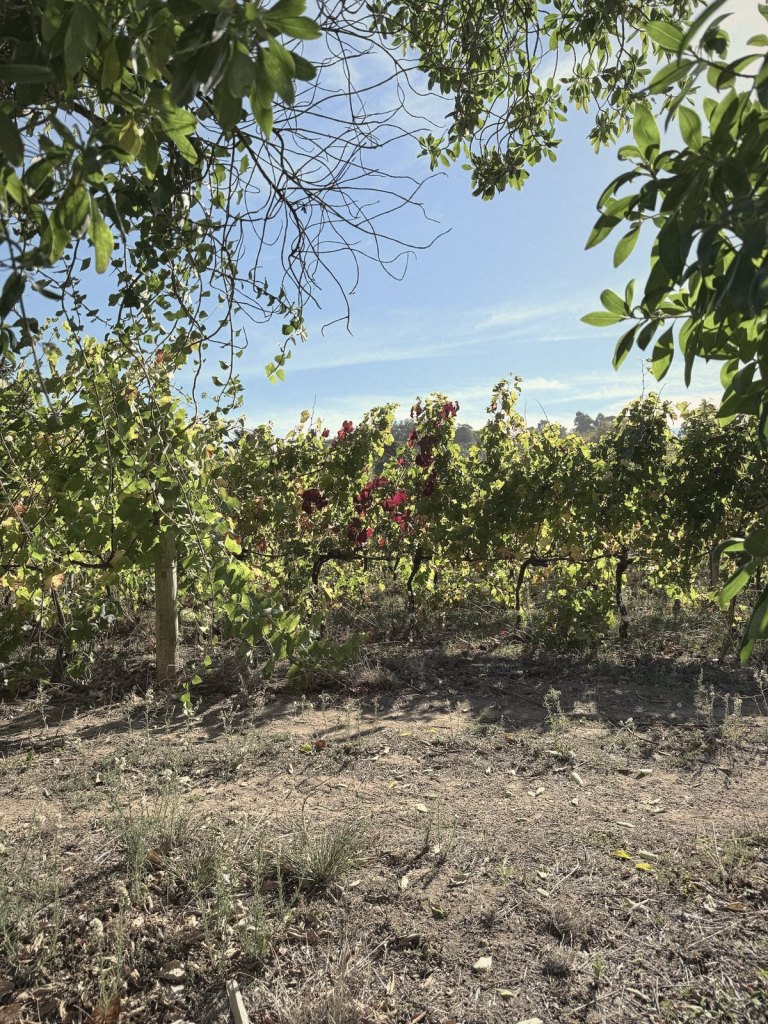
When phylloxera went through Europe in the late nineteenth century it destroyed almost everything, and the fix — the only fix — was to dig up the vineyards and replant them grafted onto American rootstock. Essentially all of European wine is still grown that way today. Colares escaped, because the louse cannot travel through deep sand, and the old vineyards here are still standing on their own roots. There are very few corners of the continent where that sentence is true.
We had read all of that before we booked. Reading it and standing in it are not the same thing. One honest caveat, though: that is the story of Colares, and we are not going to stretch it over every row on this particular estate. Casal Sta. Maria is a modern operation, replanted this century and growing Chardonnay and Pinot Noir alongside the local grapes, so assuming every vine on the property predates the blight would be our invention rather than their claim. The regional fact is solid. The estate-by-estate detail is the thing to ask about, and we will pin it down before we write the wines up.
What they actually make, which surprised us
We had assumed a tiny, defensive list of the two traditional Colares grapes and little else. Not so. There is a Reserva in white and red, and a Malvasia, which is the white grape the region is known for. Then it gets interesting: a Sauvignon Blanc, a Chardonnay, and a Pinot Noir with a Grande Reserva above it. Pinot Noir, on the windy Atlantic edge of Portugal. There is a late-harvest sweet wine at the end.
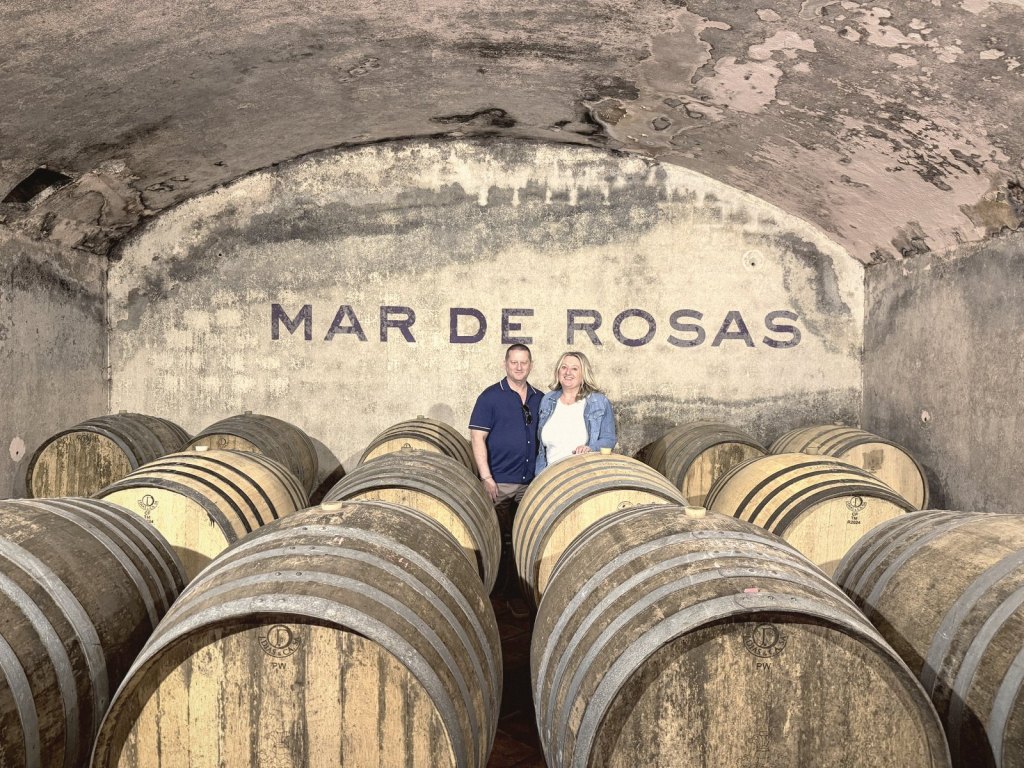
And then there are three that go out under names rather than grape varieties: 3000 Rosas, Mar de Rosas and Pêndulo. We had seen that list before we came and filed them as the house blends, the ones you skip past to get to the serious bottles.
Then we heard about the roses. Three thousand of them. A sea of them. Planted on this hillside for his wife.
Read the names again.
There is one more, Ramisco — the red grape Colares is actually famous for, the one every article about this region is really about. It is on the list. Both of them are, the DOC and a 2011 Grande Reserva. Both are struck through with a line. We did not need that explained. If you want Ramisco, ask well before you turn up, and do not assume.
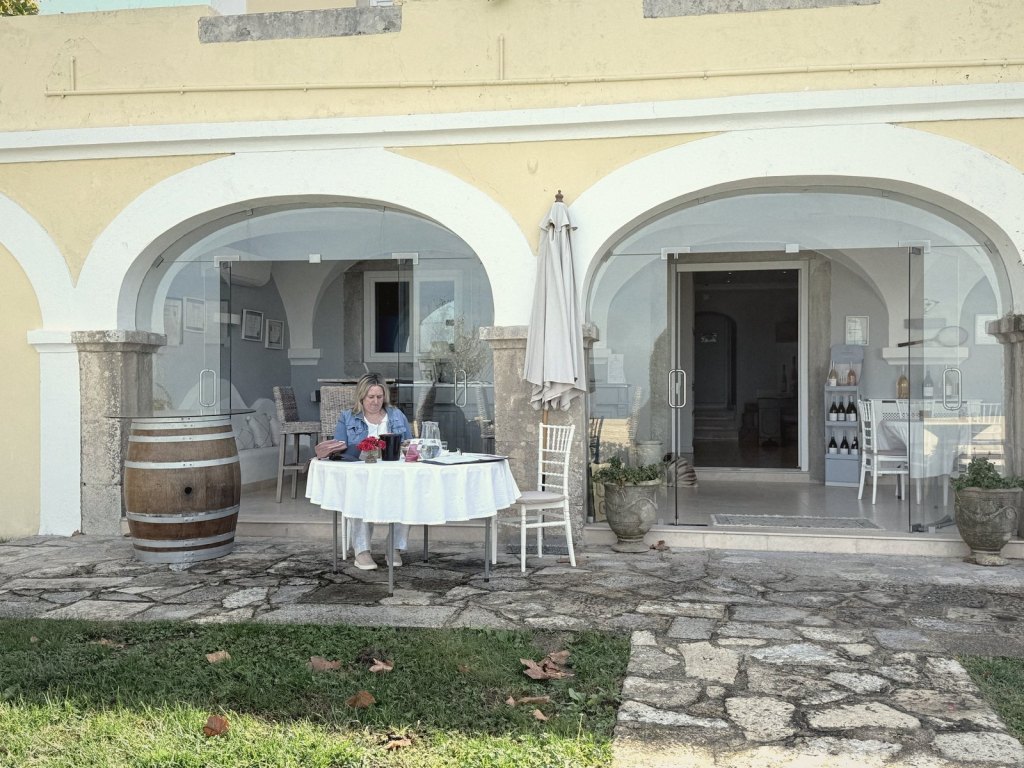
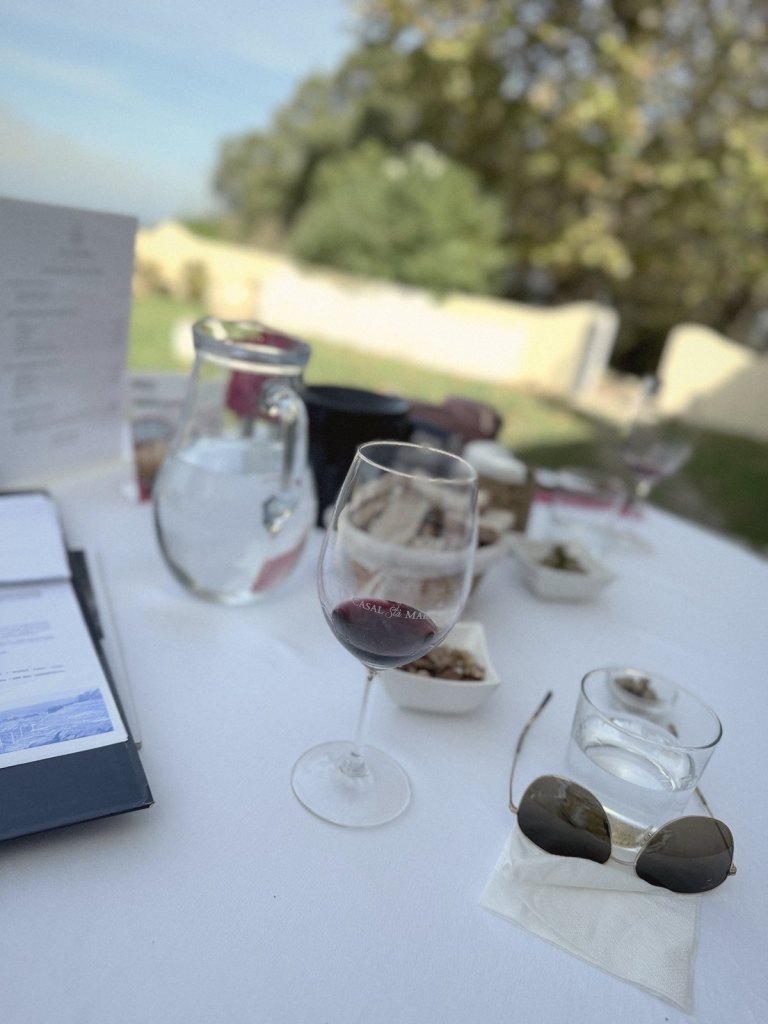
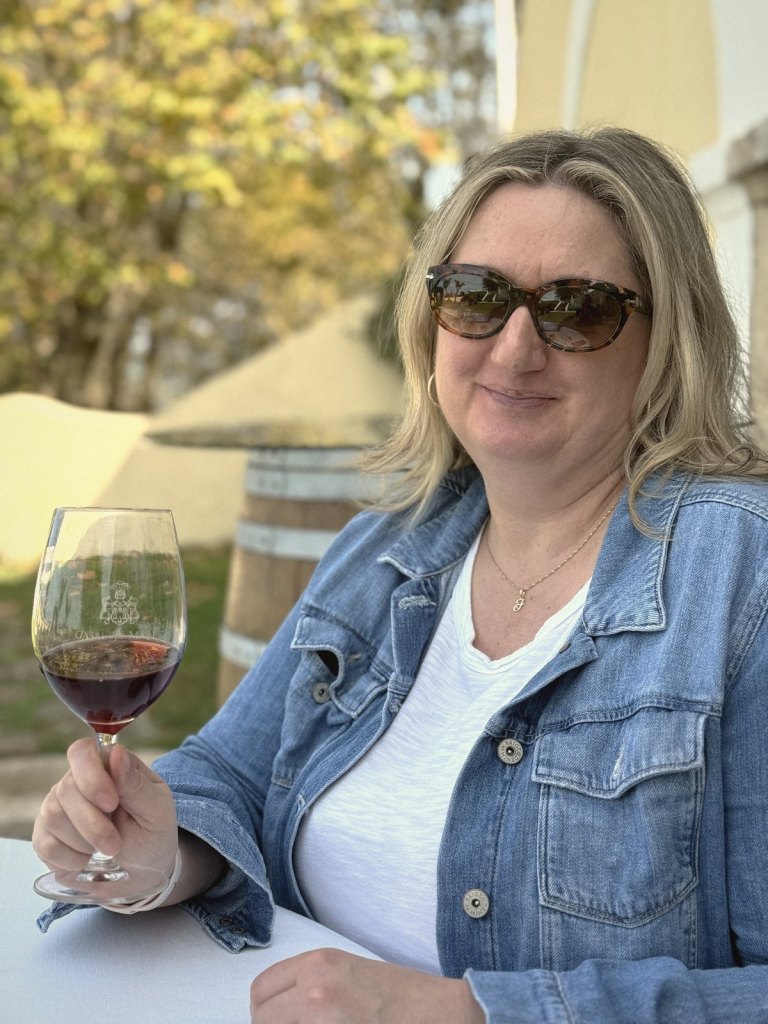
It is a private visit rather than a cellar door you wander into, and the difference shows. One table, set up outside under the arcade, with bread and olives and walnuts and a jug of cold water, and nobody standing over you waiting for the next group.
The guide who took us round was Portuguese with a long stretch of New York in the middle, and had come home with the accent and the delivery intact — quick, funny, hands going, the opposite of a recited script. If you have ever sat through a tasting read off a card you will know exactly how much difference that makes.
Go down to the cellar
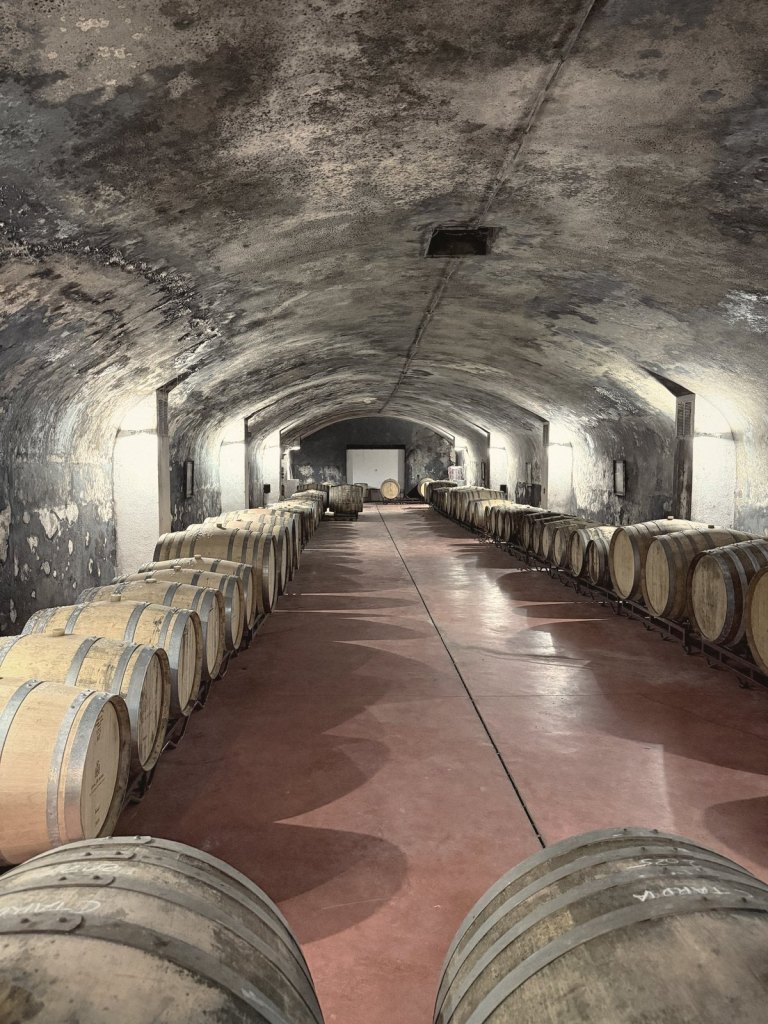
If you only do the tasting you will have had a lovely couple of hours and missed the best room on the property. The barrel cellar is a long stone barrel vault, two rows of French oak down either side, a deep red floor running the length of it, and a ceiling blotched black and grey with however many decades of cellar mould. It is dim and completely silent and it smells like you would want it to.
Management
Not mentioned on any website we read beforehand, and the single most important thing we can tell you.
What we’d tell you
- Do not try to do it on a cruise turnaround day. This was the thing we most wanted to know before booking and the answer is a flat no. Give it the whole day, before the ship or after it.
- Let the hotel book the car. We nearly did this with a taxi app and we would have missed the entire first half of this post. A driver who knows the estate and will talk for forty-five minutes is not a transfer, it is part of the visit.
- Book ahead, and book the cellar. It is a private visit, and the cellar is not a given. Ask for it by name.
- Autumn is a good time. The vines were turning, the hydrangeas were going over, and we had the place to ourselves.
- Ask about Ramisco before you travel if that is what you are coming for.
- You can carry it out yourself. They will ship, and it says so at the bottom of the list, but we walked out with six bottles and took them onto the ship by hand.


Leave a Reply