We got to the counter two hours early. That was the last thing that went to plan.
Orlando to New York to Istanbul to Málaga, Turkish Airlines, business class, booked and paid for months in advance. We had come down the night before and slept in Orlando so that nothing could go wrong on the morning. Then the agent tried to check us in, and couldn’t. Our reservation had somehow been issued more than one ticket number, and with several of them attached to it, not one would validate.
There is a particular kind of silence that follows watching someone type the same thing into a terminal for the fourth time. Nobody at the counter could fix it, Turkish Airlines customer service speaking directly with the gate agent, couldn’t free up the check-in before the required cutoff. So we did what you do — we booked ourselves onto Delta through Paris, ate the difference on our own card, and filed the paperwork later. Somewhere over the Atlantic, we decided it was going to be a good trip anyway.
It was. Mostly.
Málaga
Andalusia in late April is close to perfect — high seventies, jacaranda coming out, everyone eating outside. We stayed at the Gran Hotel Miramar, a Belle Époque pile on the Paseo Reding with a glass-ceilinged atrium that makes you want to enjoy a cocktail.
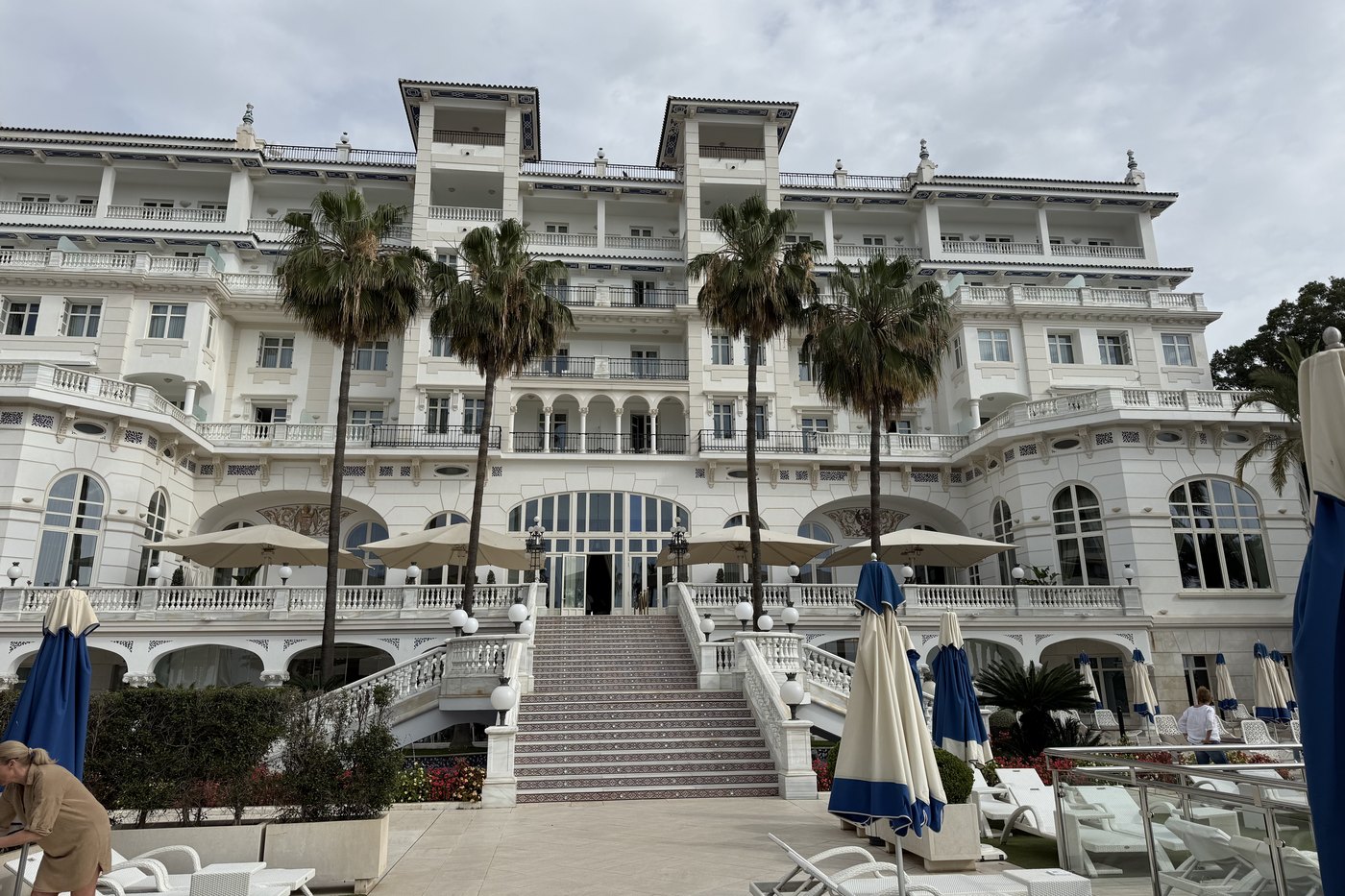
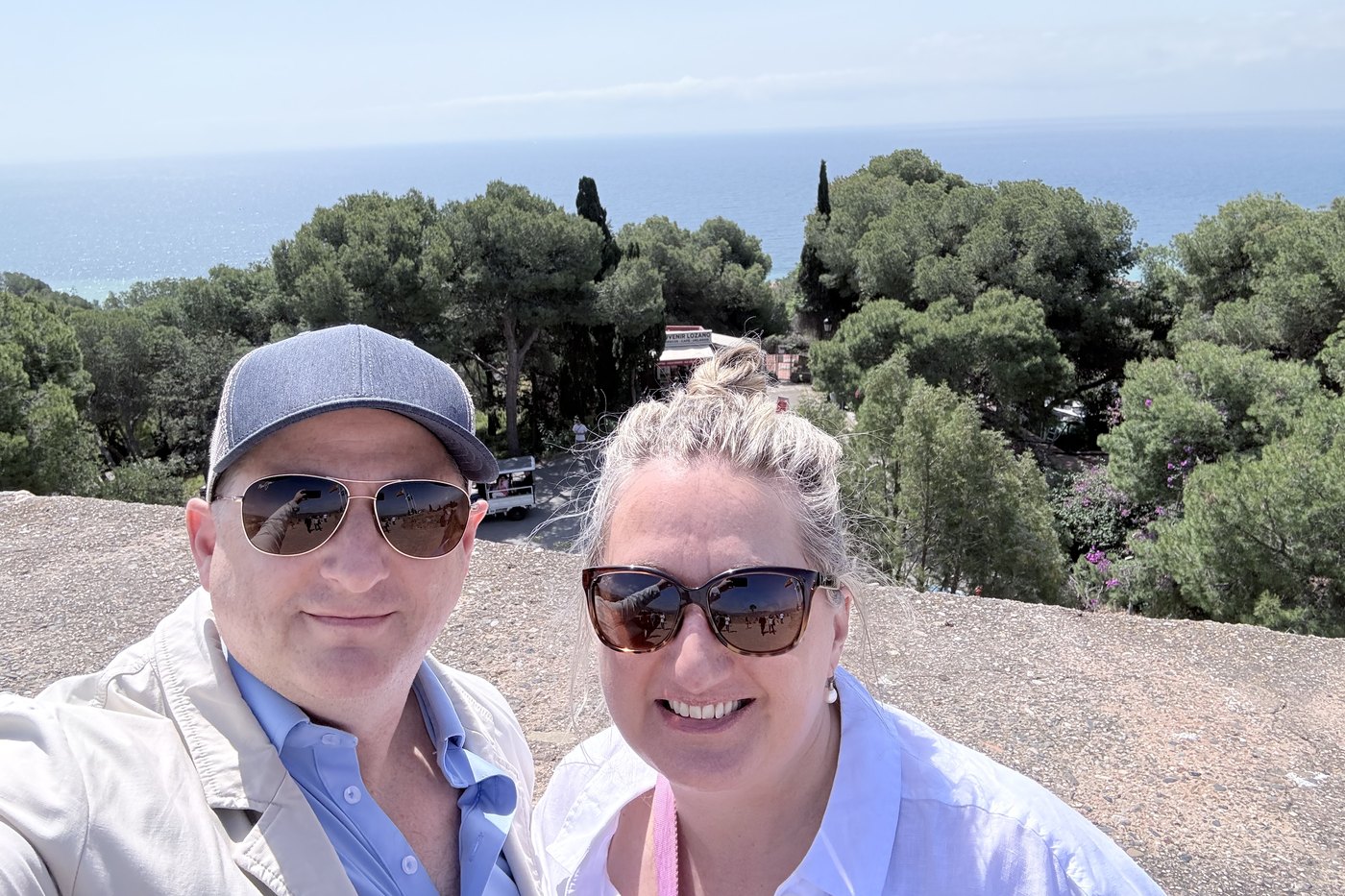
We walked most of two days. Up to the Alcazaba and the Gibralfaro for the view back over the port. Down the marble length of Calle Larios, which is less a street than a runway.
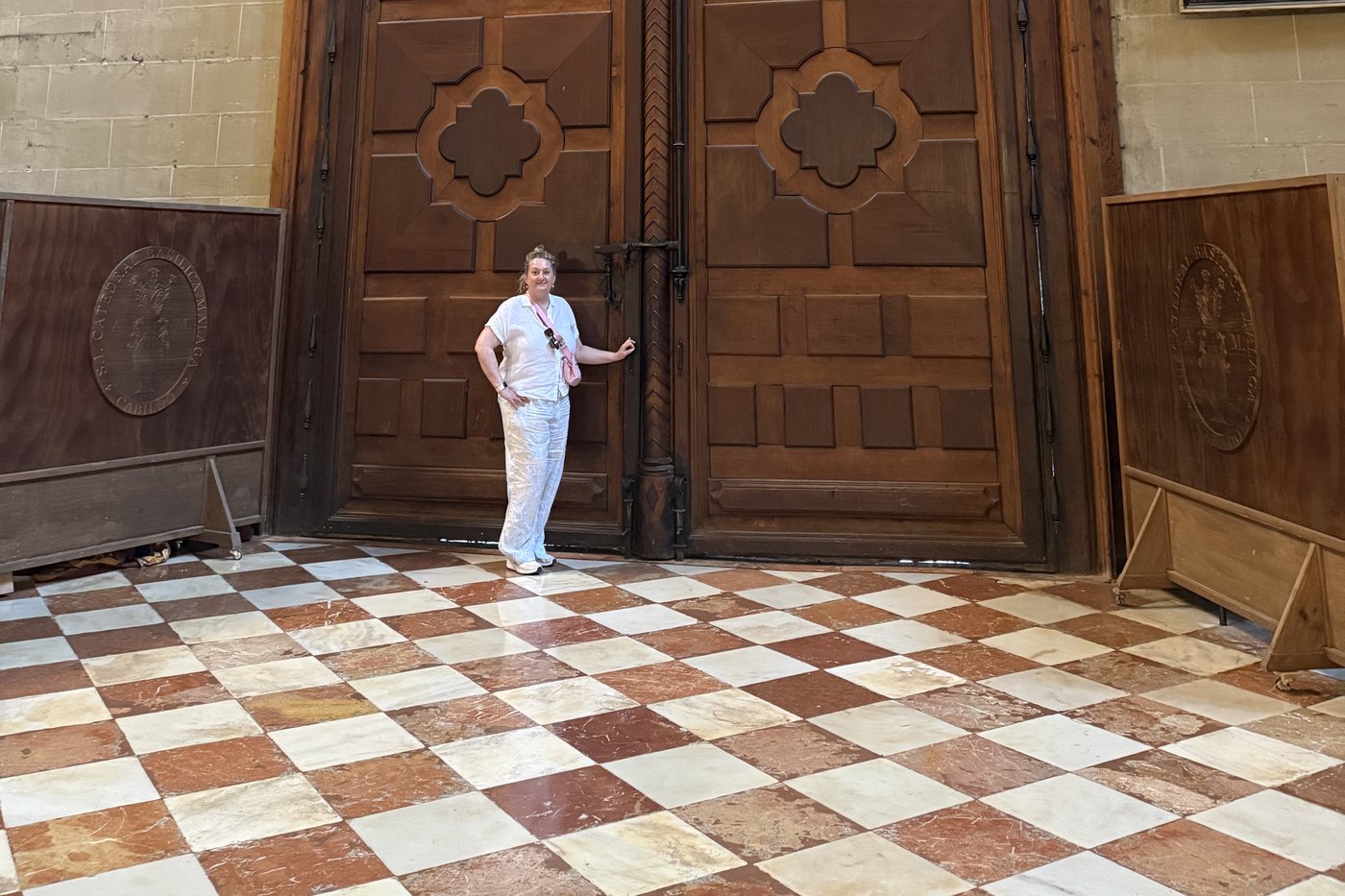
Into Málaga Cathedral, where the eighteenth-century carved wooden doors are so oversized they reduce you to about the height of a doorknob. The locals call the cathedral La Manquita — the little one-armed one — because the south tower was never finished. We of course could not tell.
Lunch was tapas at Taberna Casa Lola on Calle Granada. Dinner, much later, at La Cosmo on Calle Císter, in the shadow of the cathedral. Málaga eats at an hour that Florida considers the middle of the night, but we adjusted.
Le Bougainville
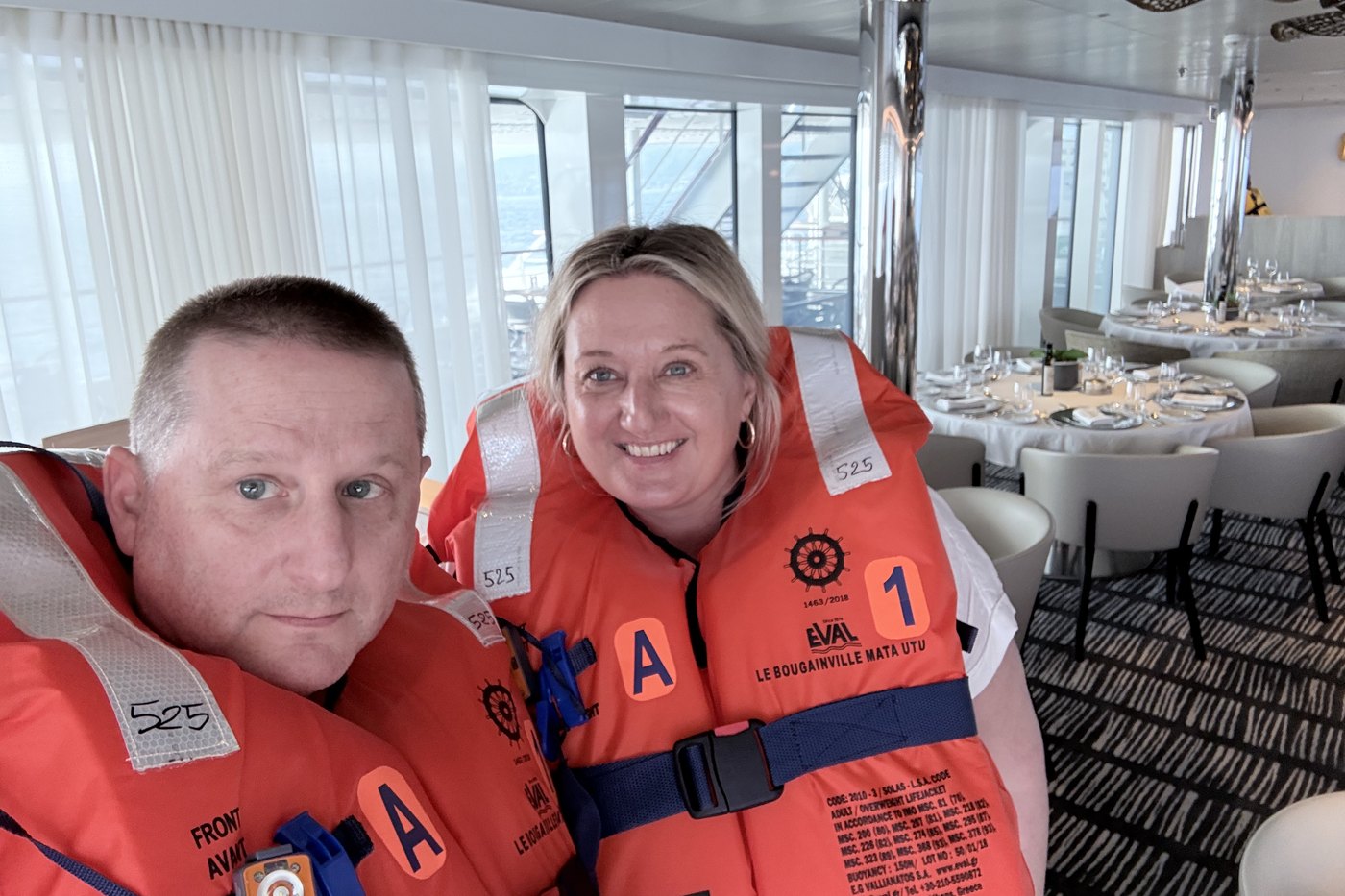
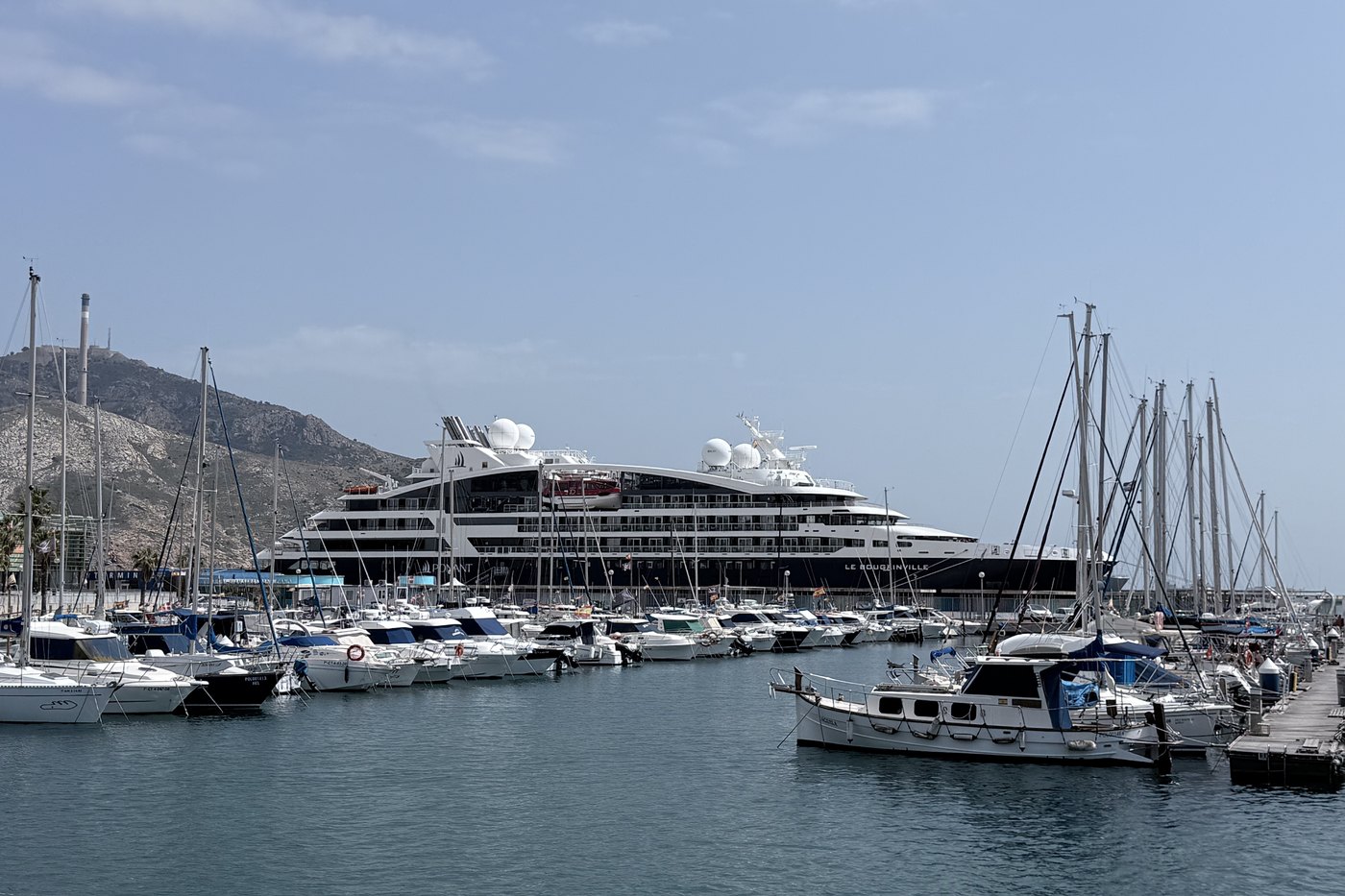
We boarded on the 28th. PONANT’s Le Bougainville carries 184 guests in 92 staterooms, which after years of larger ships felt less like boarding and more like being let in. No queues. No muster stampede — just everyone in orange life jackets in the dining room, faintly amused.
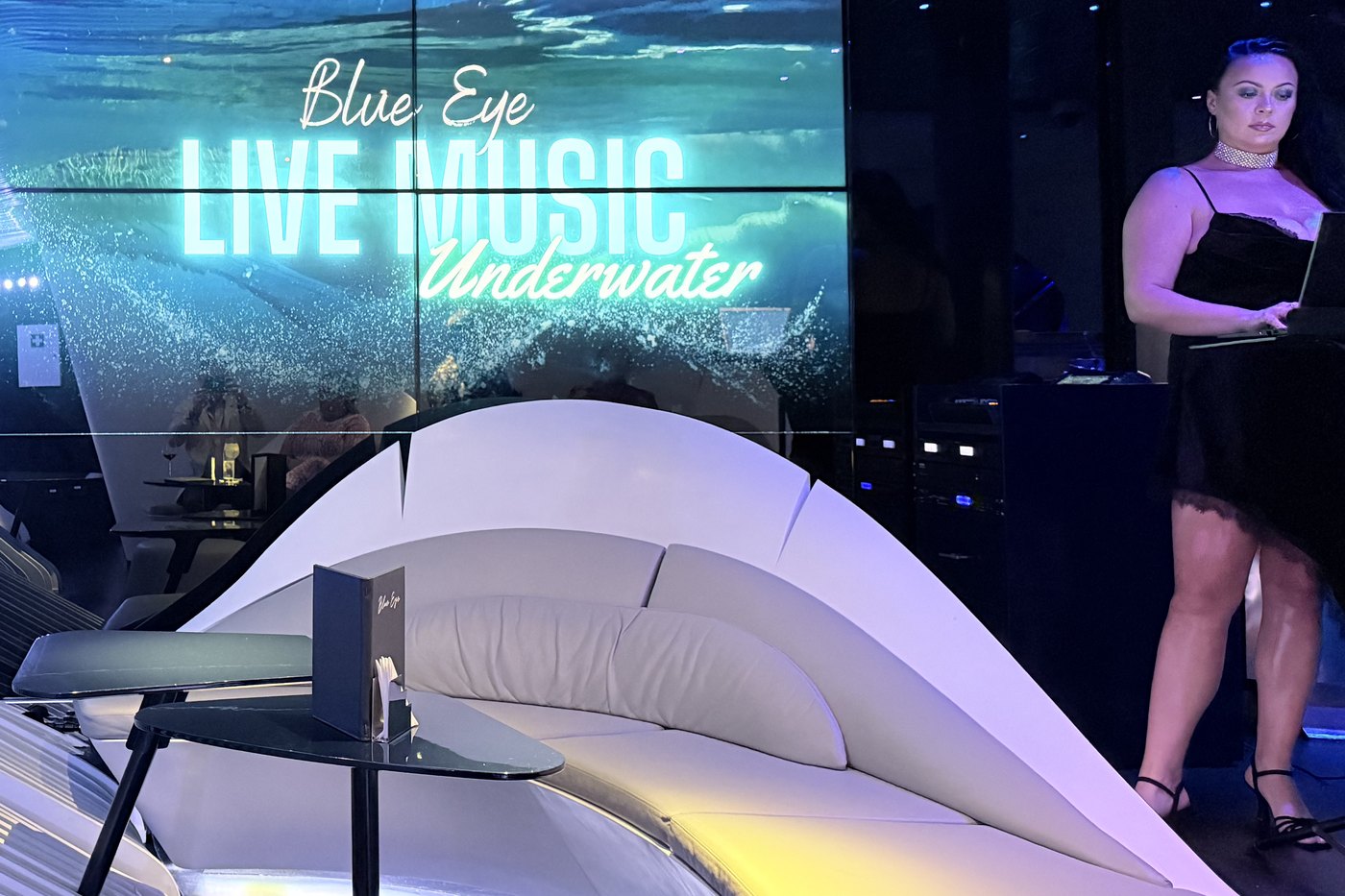
The ship has a Blue Eye lounge below the waterline: two windows shaped like a whale’s eye, hydrophones piping in whatever is out there, and sofas that vibrate along with it. We spent an evening in there off Valencia listening to the sea and drinking something cold. It sounds gimmicky. It isn’t.
Cartagena, Valencia, and the Balearics
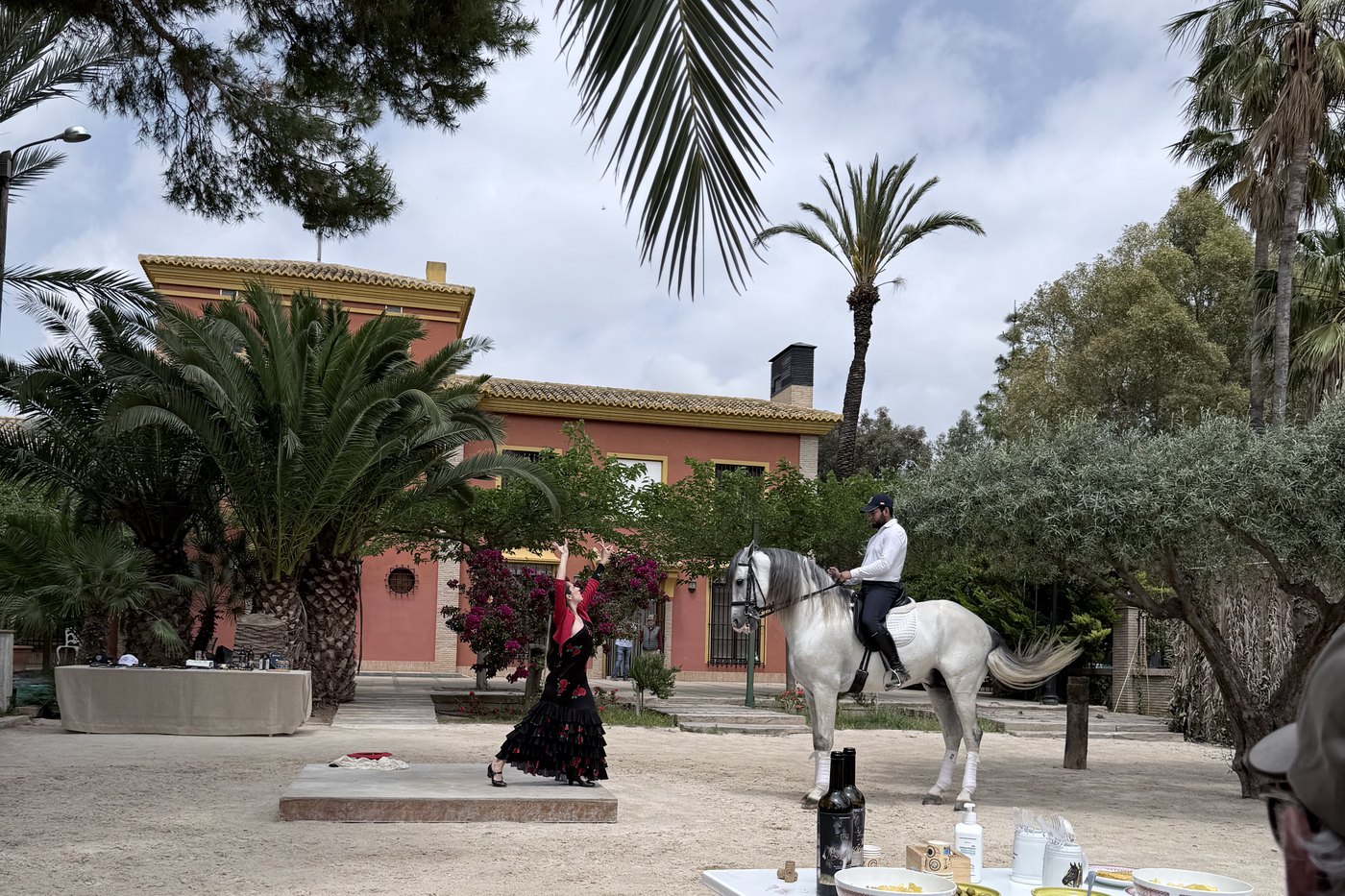
Cartagena gave us horses. The excursion put us in an Andalusian courtyard with three of them — two white, one black — and a flamenco dancer in black ruffles working through the heat with a tapas spread going in the shade.
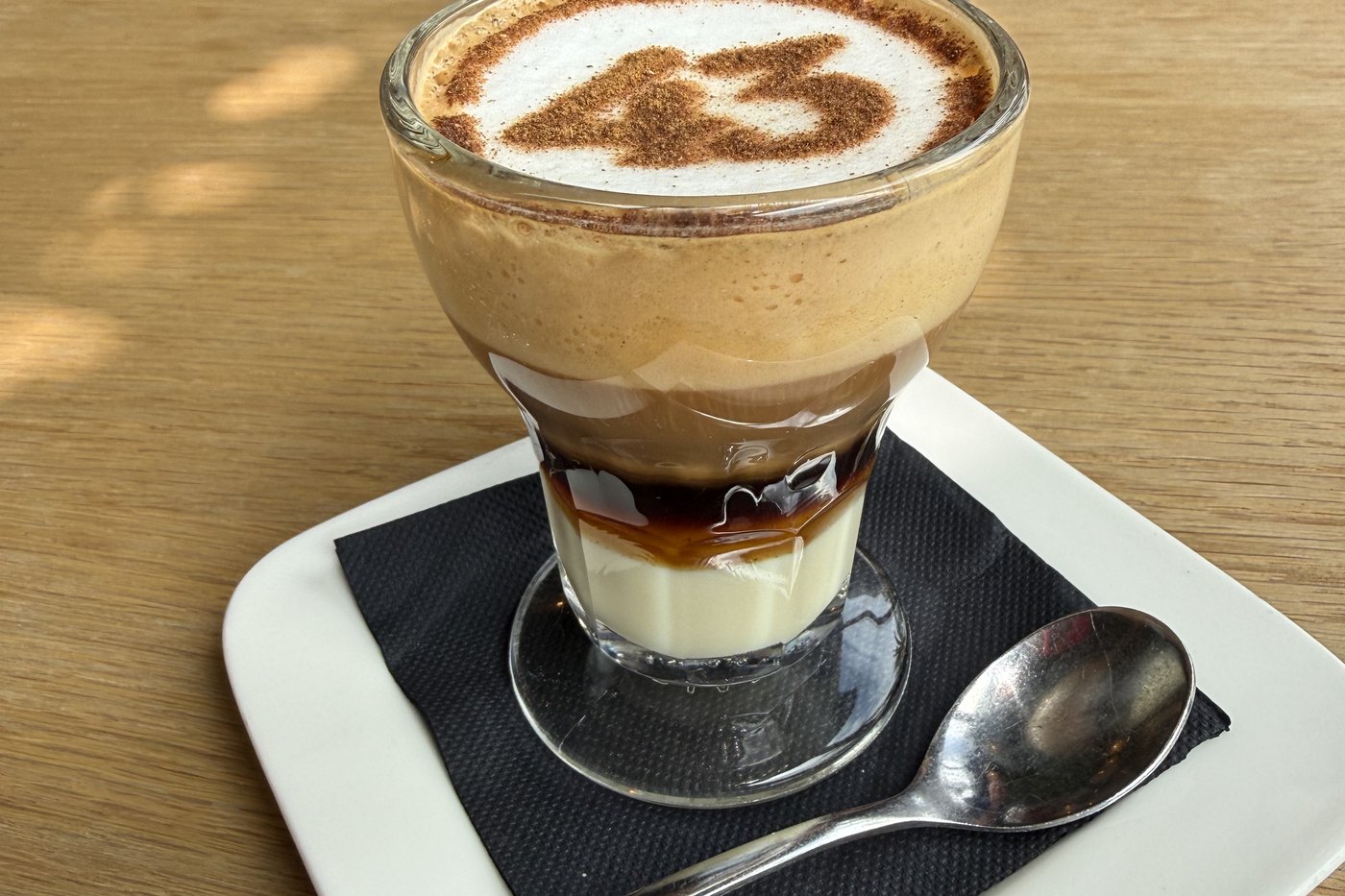
Afterward we found a café and ordered café asiático, Cartagena’s own invention: coffee, condensed milk, brandy and Licor 43, layered, dusted with cinnamon, served in its own squat glass. It is a dessert pretending to be a coffee, and we had two.
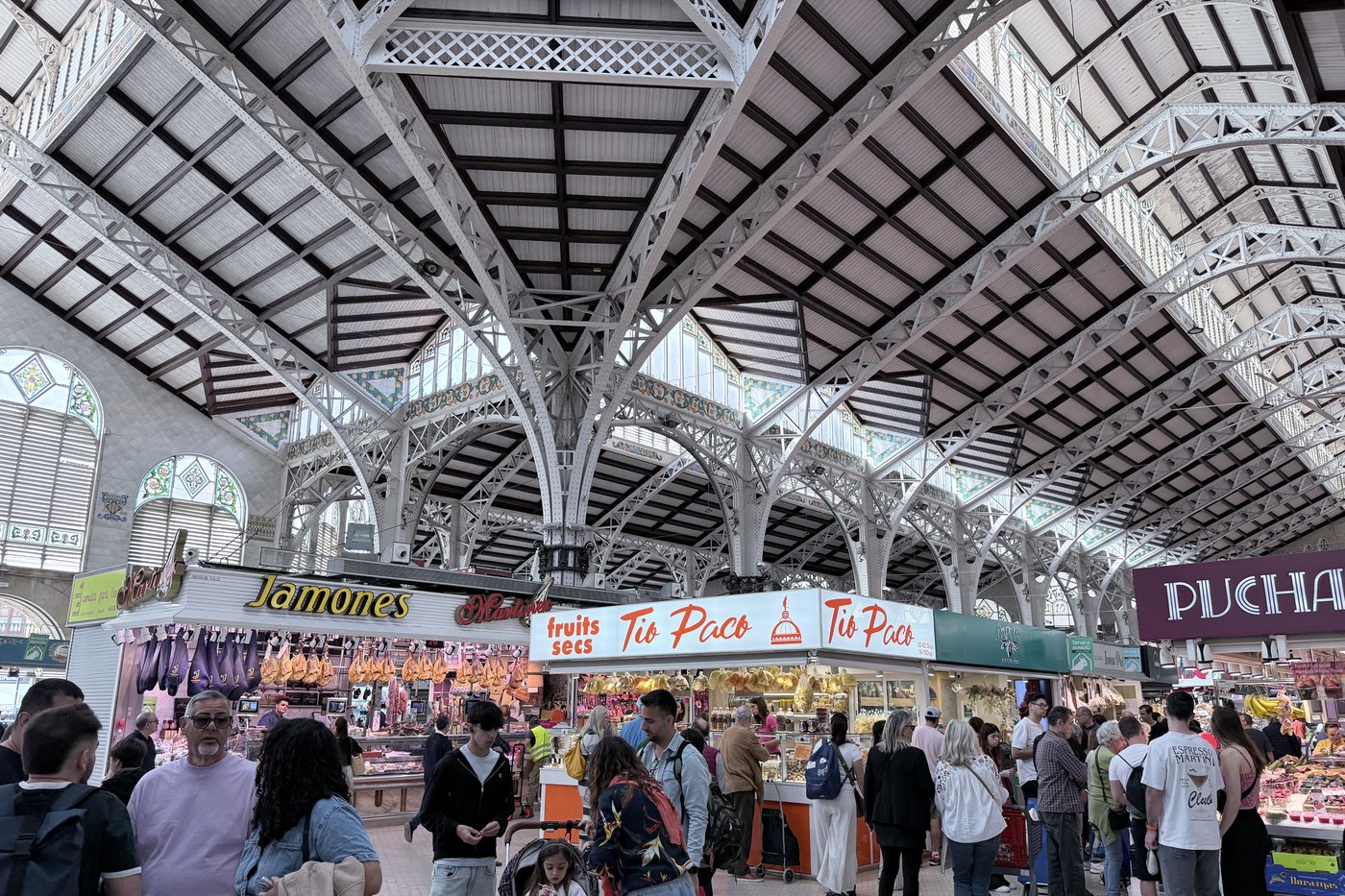
Valencia we did on foot. The Mercado Central first — a modernista cathedral of iron and glass and tile, built between 1914 and 1928, with jamón hanging in every direction and plenty of energy for Sunday-morning.
Then the actual cathedral, where a small agate cup sits behind glass in the old chapter house, claimed for centuries as the Holy Grail. Valencia is in the middle of a Grail Jubilee Year running through October, and the chapel has the quiet intensity of a place where a lot of people have wanted very badly to believe something.
Then we walked out into the riverbed.
In October 1957 the Turia came over its banks and drowned the city. Eighty-one dead officially — the real figure is generally assumed to be higher, since Franco’s censors were not in the business of counting. Valencia’s answer was to move the river. A new channel was cut three kilometres south through the farmland, paid for in part by a compulsory surcharge stamp on every letter posted in the province, and by the early seventies the water was gone. What it left behind was nine kilometres of dry riverbed running straight through the middle of the city.
The plan was to pave it and run a motorway down it. The city said no. The slogan was el llit del Túria és nostre i el volem verd — the Turia riverbed is ours and we want it green — and, remarkably, they won. The bed was handed over to the city in 1976 and the park opened in 1986. You can now walk eight and a half kilometres of gardens, orange trees and football pitches, below street level, passing under the old stone bridges, where the water used to be.
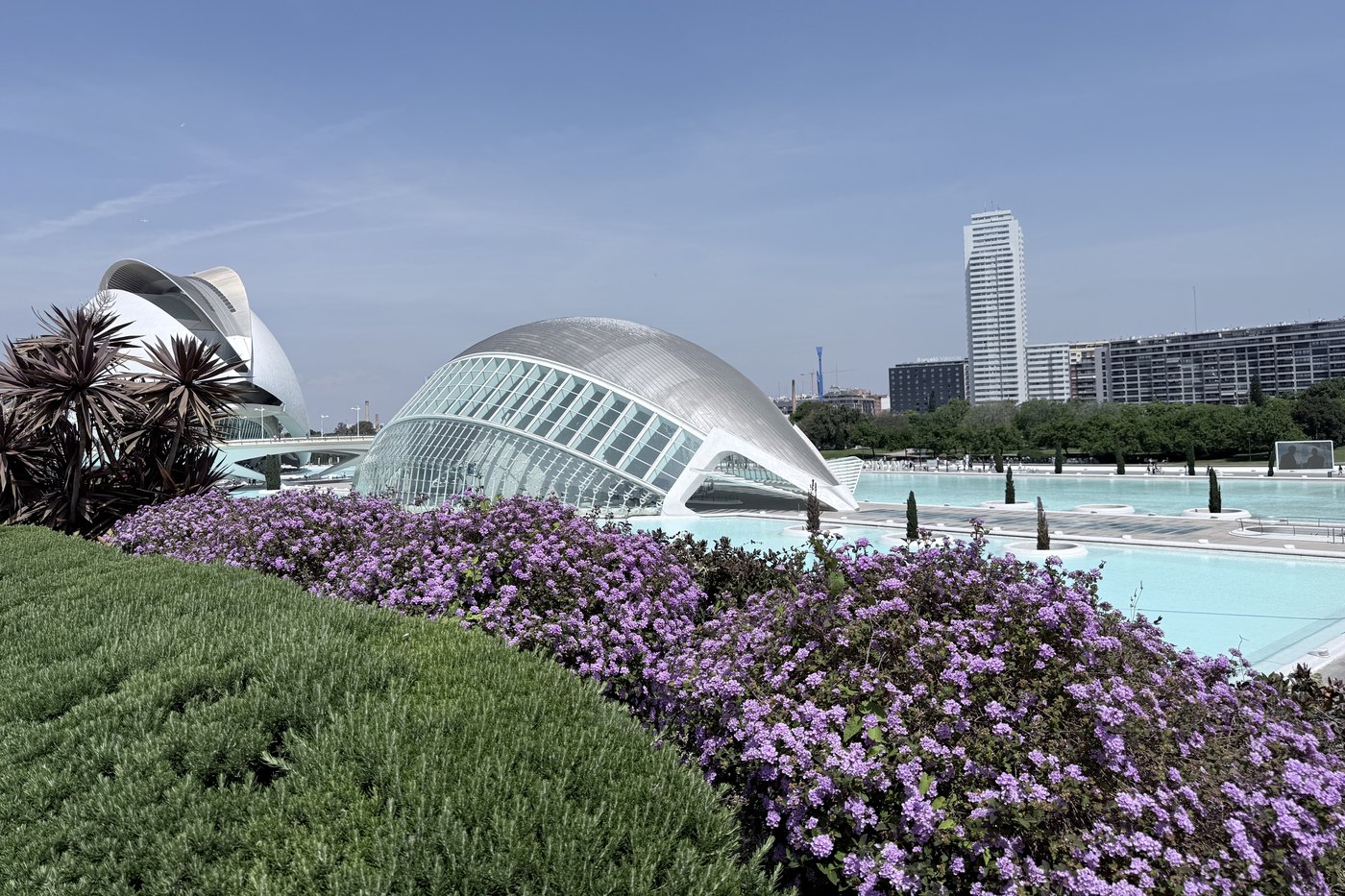
At the seaward end of it stands the City of Arts and Sciences. Santiago Calatrava was born in Benimàmet, on Valencia’s edge — he was six years old and in this city the year the river came through it. L’Hemisfèric opened in 1998, the first of the buildings: an ovoid shell over a hundred metres long, sitting in a shallow pool that reflects it into a complete eye, with a louvred roof that opens like an eyelid over a twenty-four-metre dome. It cost roughly four times what it was supposed to, and in 2014 the regional government sued Calatrava after pieces of mosaic began coming off the opera house. Standing in front of it you can hold both thoughts at once.
Nine hundred years of architecture in about four hours.
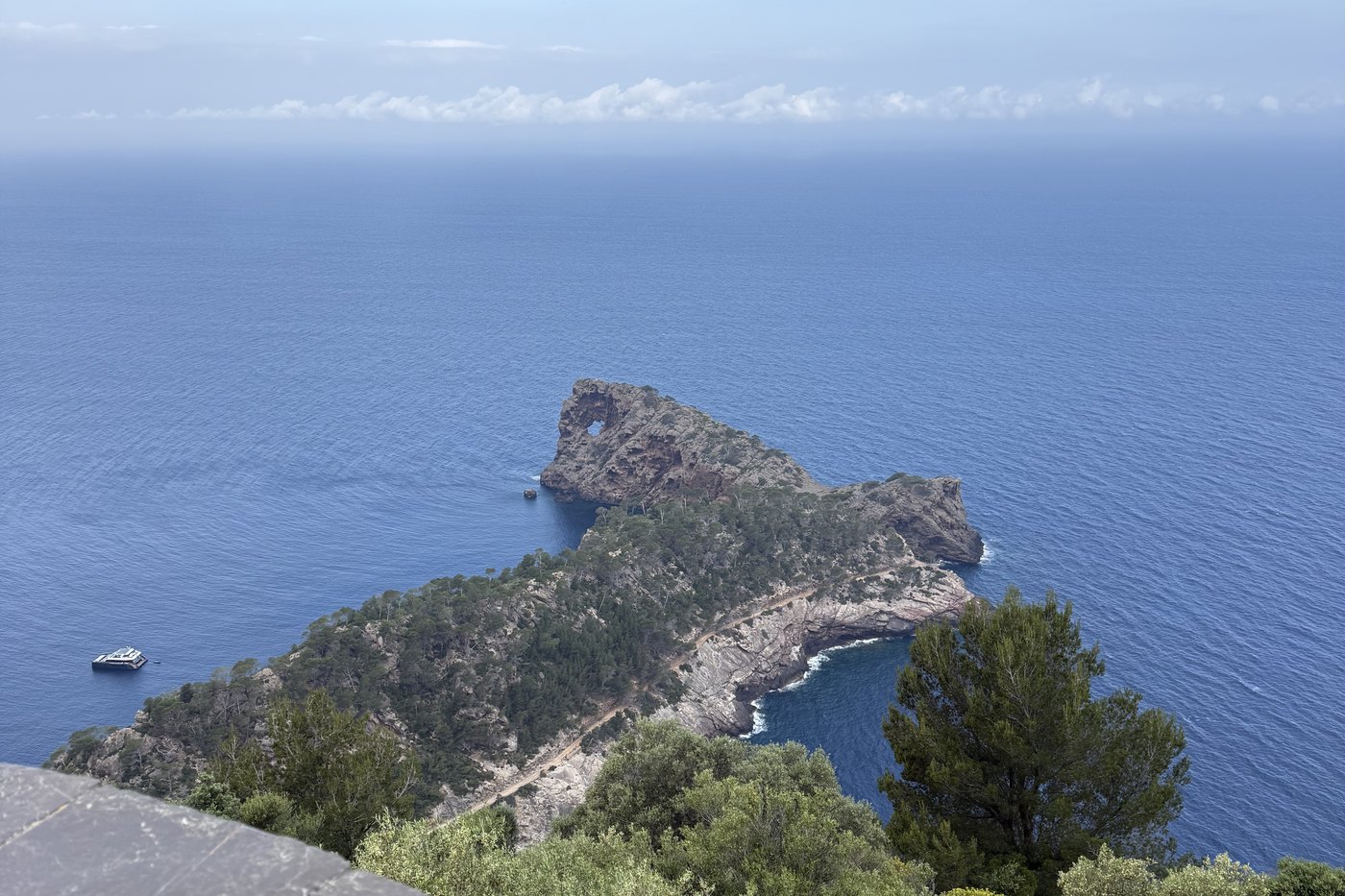
Mallorca was the surprise. We stopped above Deià where the coast drops into water so blue it looks colorized, then went up to Valldemossa — roses over stone doorways, mountains going in and out of mist.
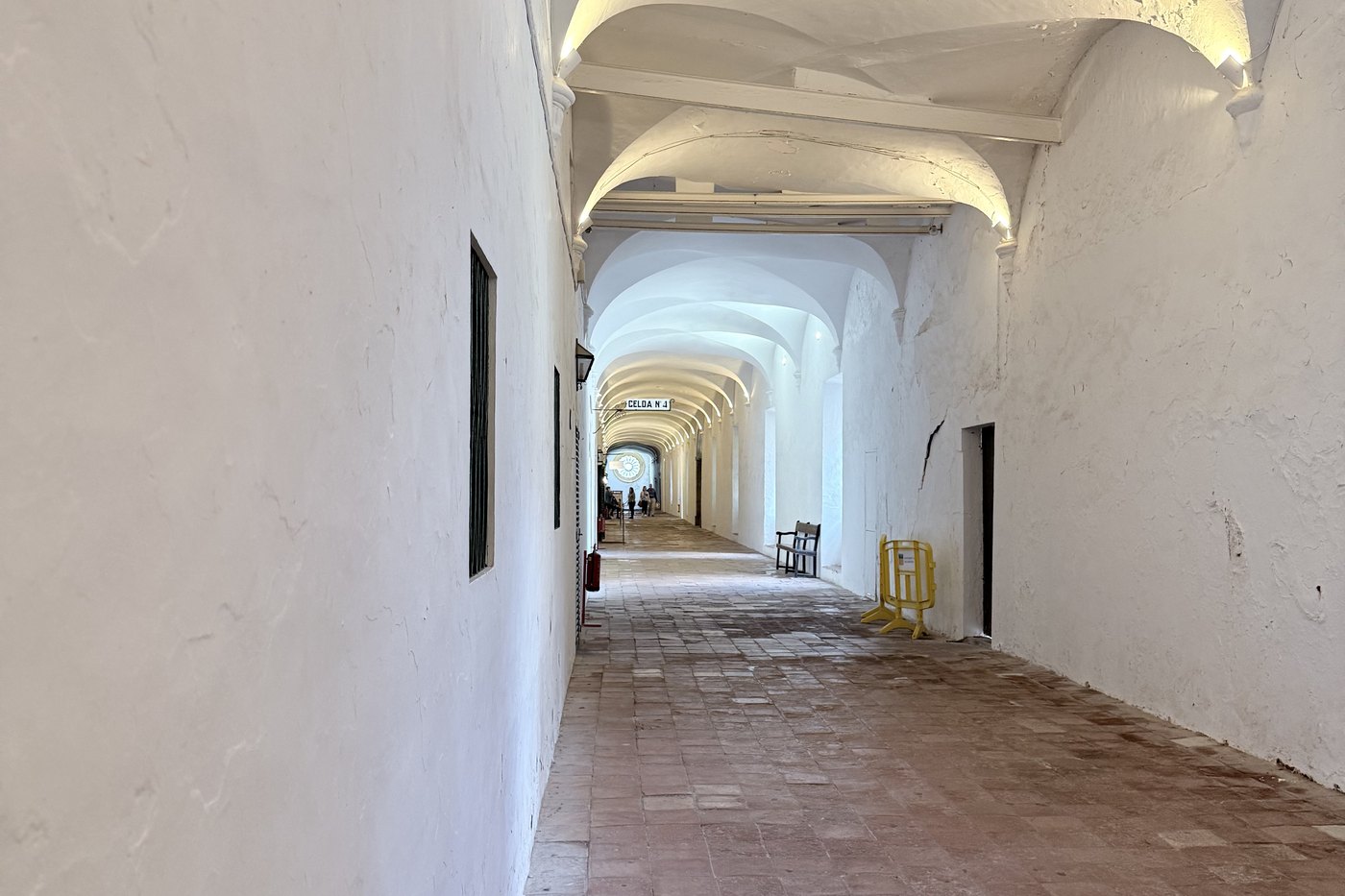
Chopin spent the winter of 1838 here with George Sand and her children, in a cell at the Real Cartuja, hoping the climate would help his tuberculosis. It did not. He wrote much of the Op. 28 Preludes anyway, including the one everyone calls the “Raindrop.” Sand wrote a book afterward complaining about the Mallorcans. The whitewashed corridor of the monastery runs away from you into light, and it is very easy to imagine being miserable and productive there.
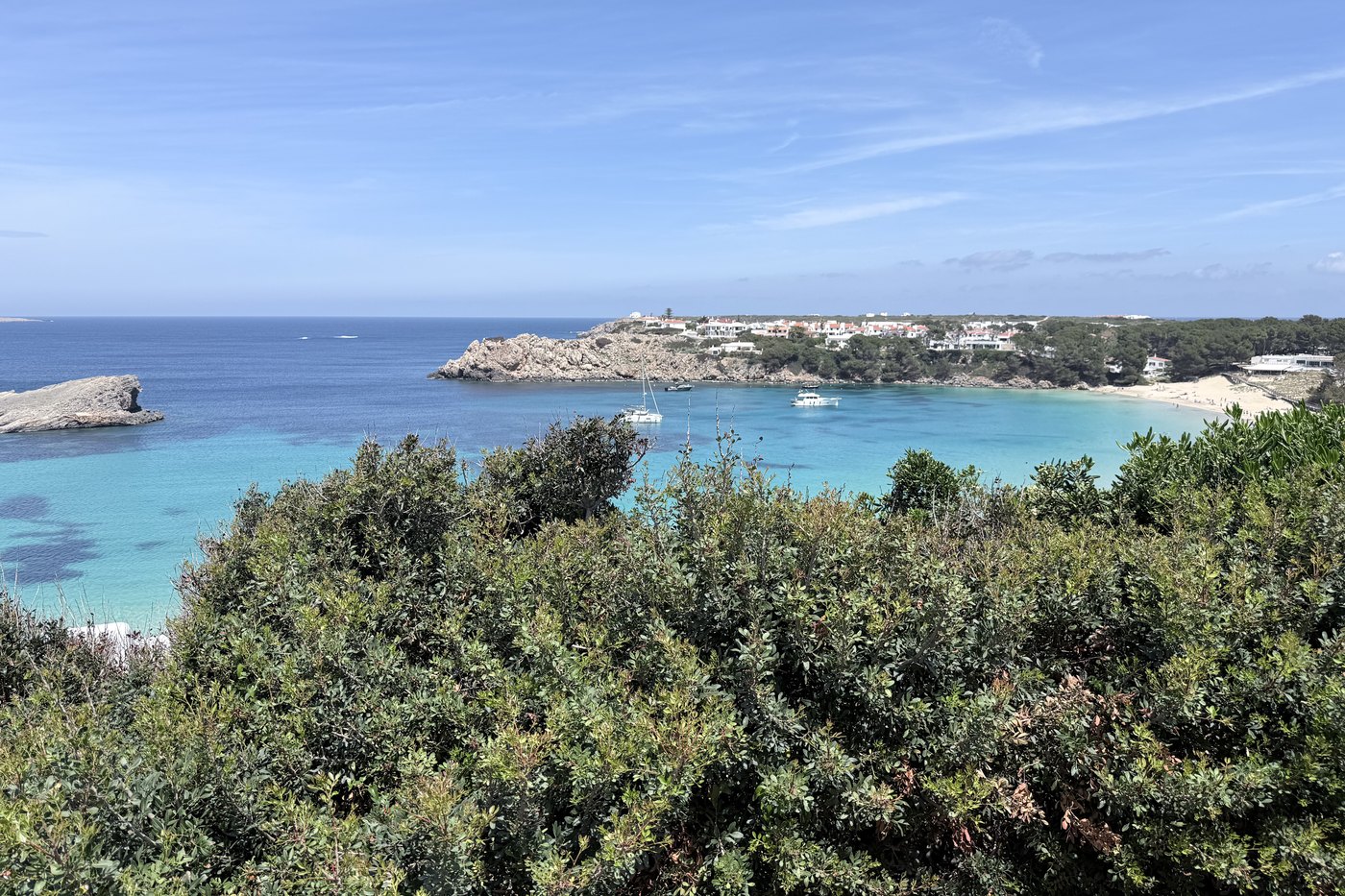
Menorca was the quiet one. Champagne on the teak deck in Maó harbour, then across the island to a beautiful cove with beautiful turquoise water, and up Monte Toro — at 358 metres the island’s highest point. From the top you can see both coasts. On the way back we stopped at Quesería Subaida for Mahón cheese and left with more of it than two people can reasonably carry.
Mahón is a cow’s-milk cheese, which on a Spanish island is strange — Manchego, Idiazábal, Majorero, the whole dry-country tradition, is sheep and goat. Menorca is green and walled and wet enough for cattle, and the reason there are Friesians on it at all is that Britain held the island for most of the eighteenth century, brought its own dairy cows, and built the export trade that carried the cheese out through the port of Mahón. Which is why a cheese made all over the island is named after one harbour. The island’s own red Menorquina nearly disappeared under the imported herds — down to 184 head in 1991. There are a couple of thousand now.
The shape gives away the method. The curd is gathered in a square cloth, the fogasser, and the four corners are knotted and hung, which is what makes the finished cheese a square with rounded edges and a puckered pleat on top the Menorcans call the mamella. The orange rind comes from being rubbed, over and over through the ageing, with oil or butter and paprika. Ask for semicurado and you get butter and hazelnut; curado, past five months, goes hard and crystalline and starts tasting of old wood. Subaida has been in the same family for six generations on 350 hectares near es Mercadal — the grandfather founded the company that created El Caserío, the processed cheese in every Spanish supermarket, sold it in 1992, and started making this instead.
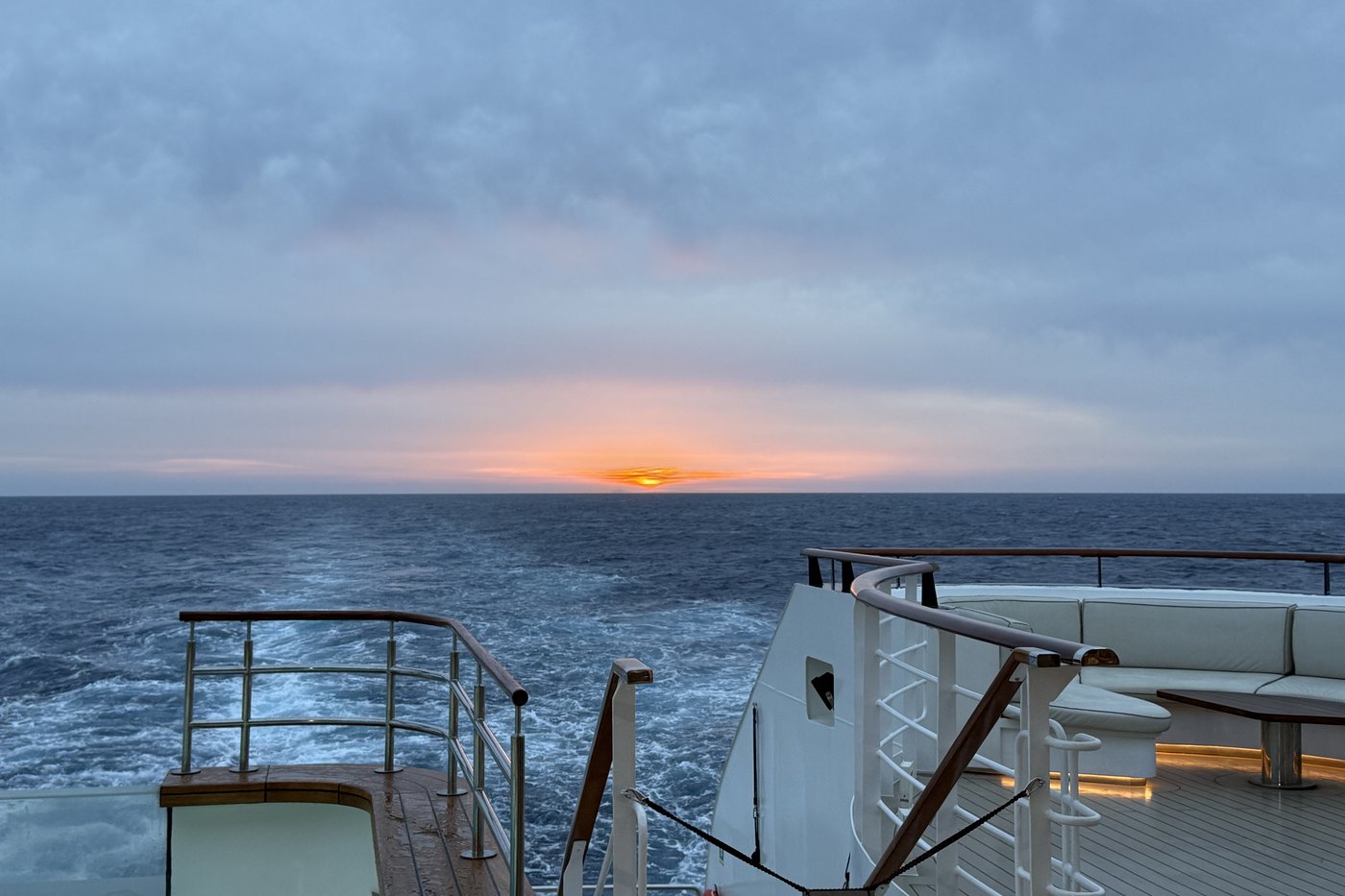
That evening the sun went down through a wall of storm cloud off the stern as we dined just inside.
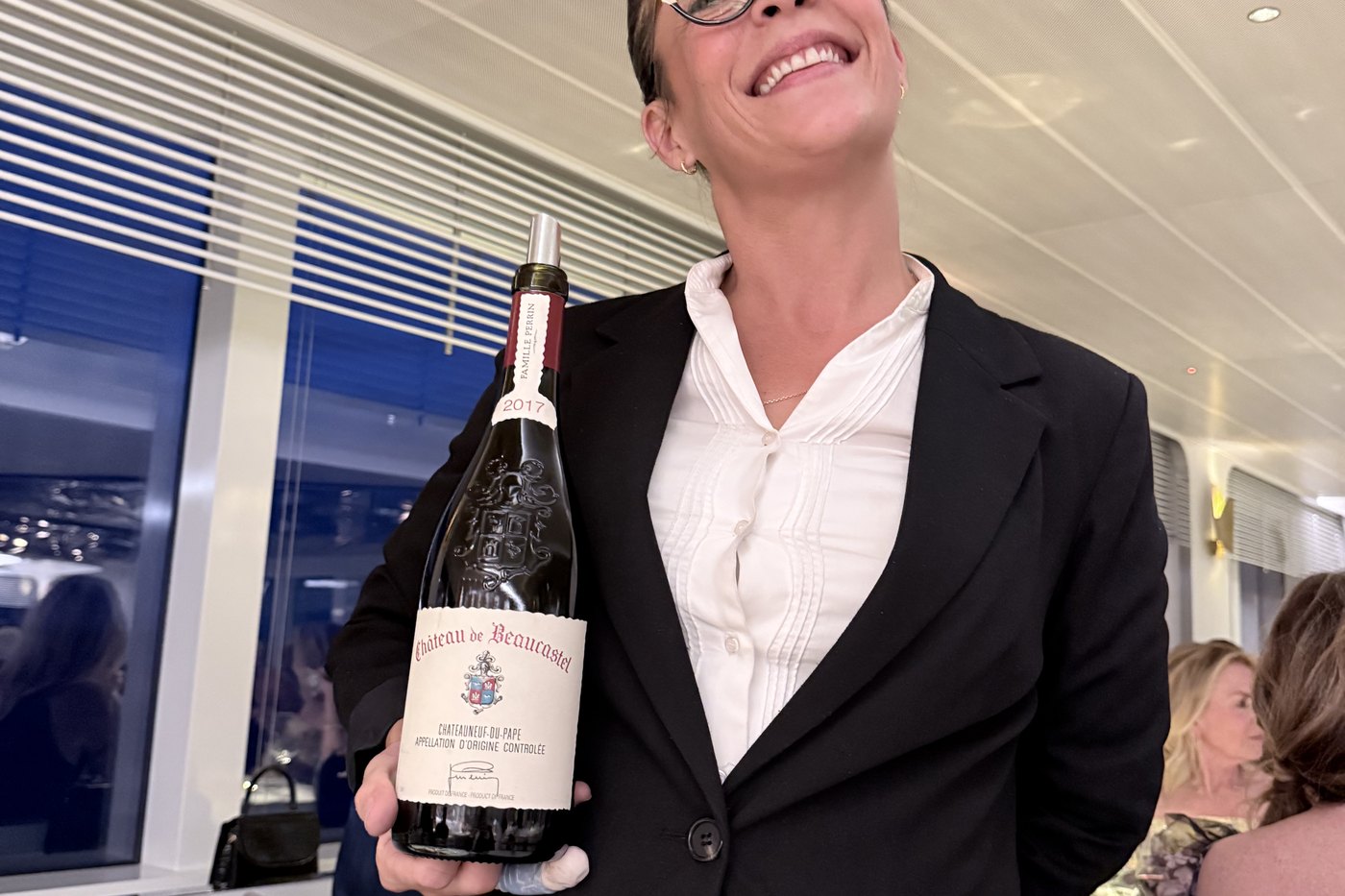
The sea day was a sea day: spa, pool, a lecture, and a 2017 Beaucastel that the sommelier presented like a woman introducing an old friend.
Erice
Of everywhere we went, Erice was one of the most interesting and you cannot discount the frostbite. Cool temps and wicked wind made for a challenging stop.
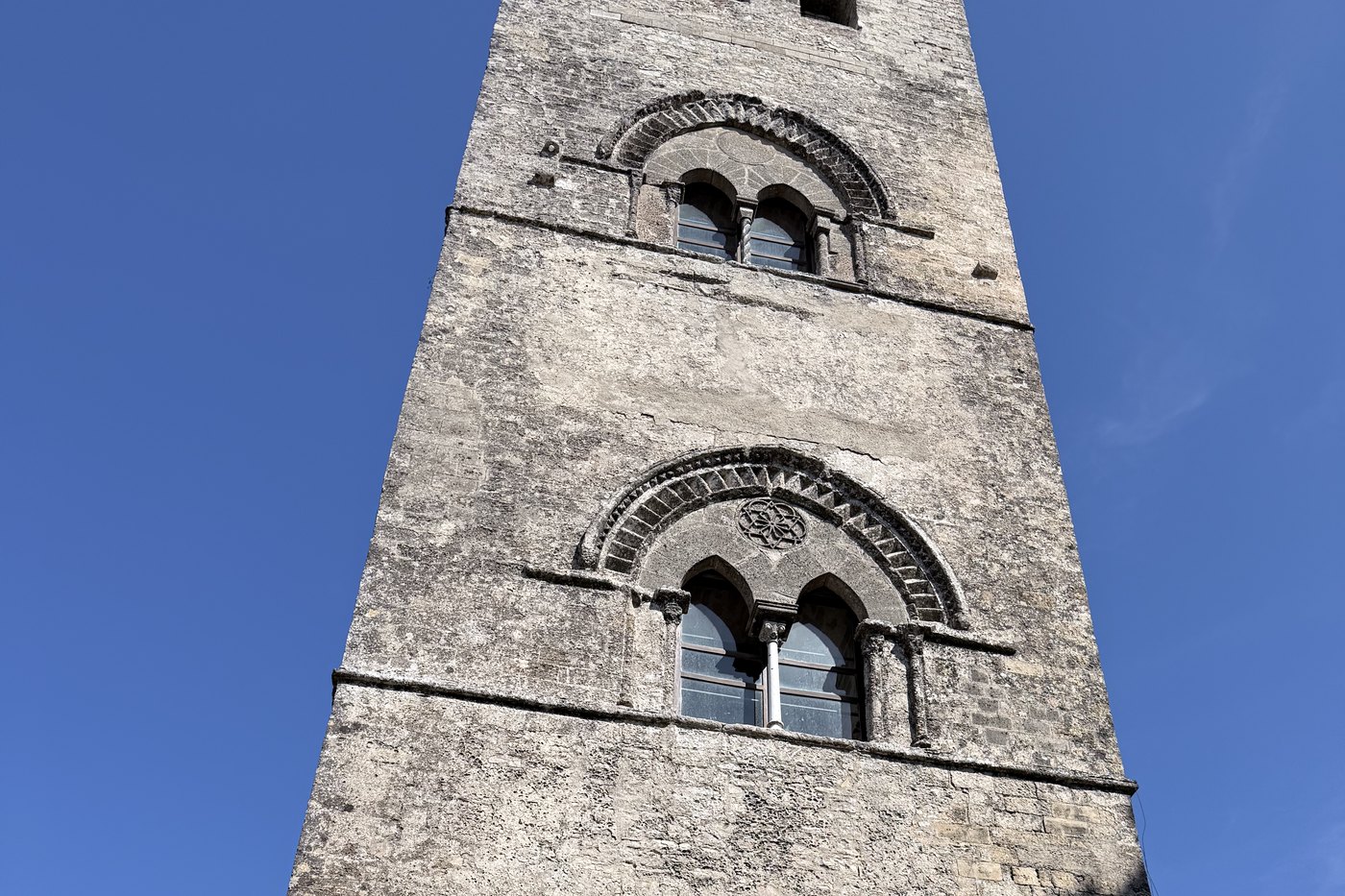
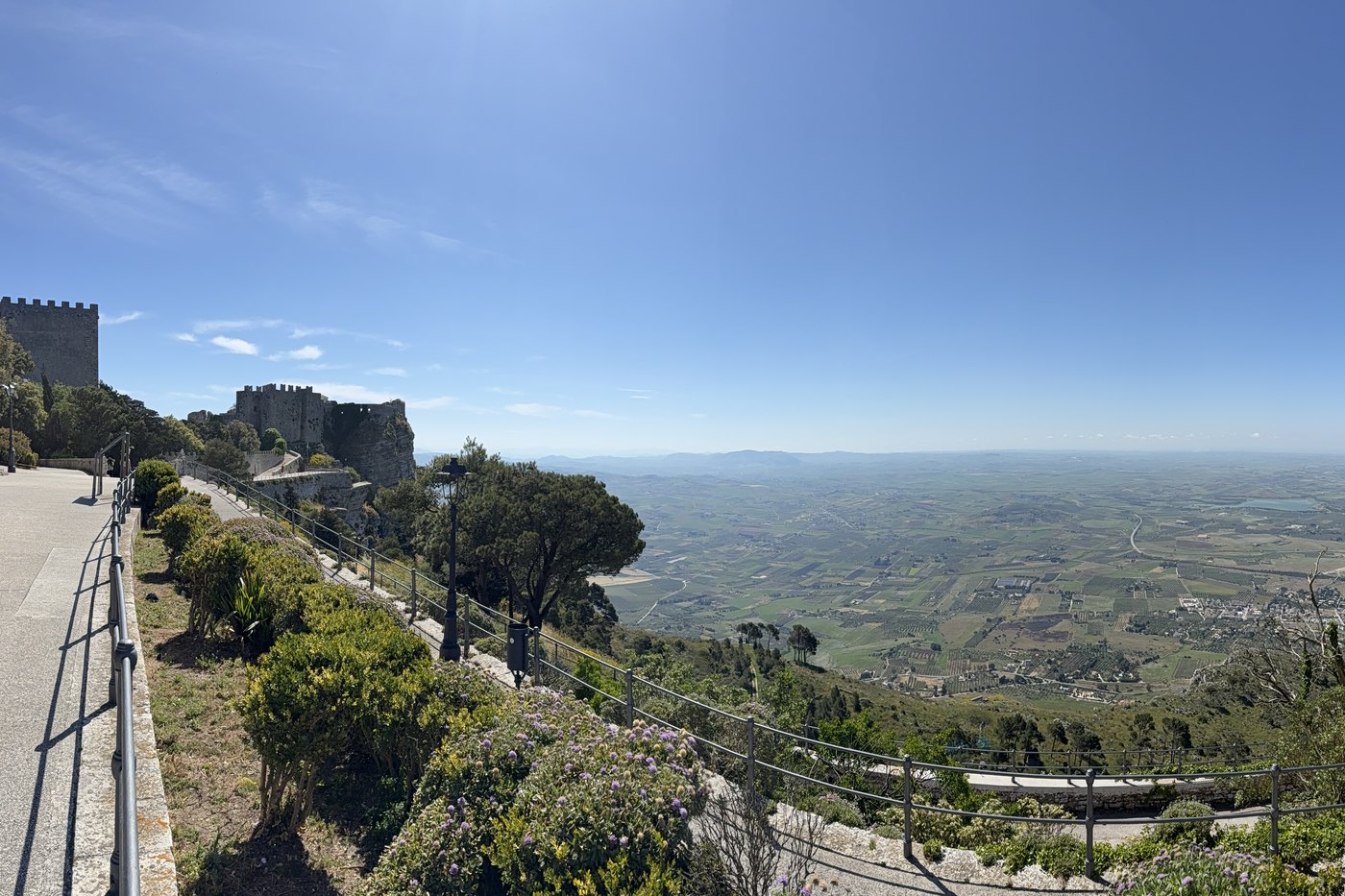
You climb to it — a medieval town at 750 metres above Trapani, cobbled and grey. We walked the Chiesa Madre, the Real Duomo, with its freestanding bell tower and Gothic vaults, and then out to the Castello di Venere, Norman, twelfth-century, built on the ruins of the Temple of Venus Erycina using her own stones.
From the battlements you look down over the salt pans, the Egadi Islands, and the whole coastal plain toward Trapani.
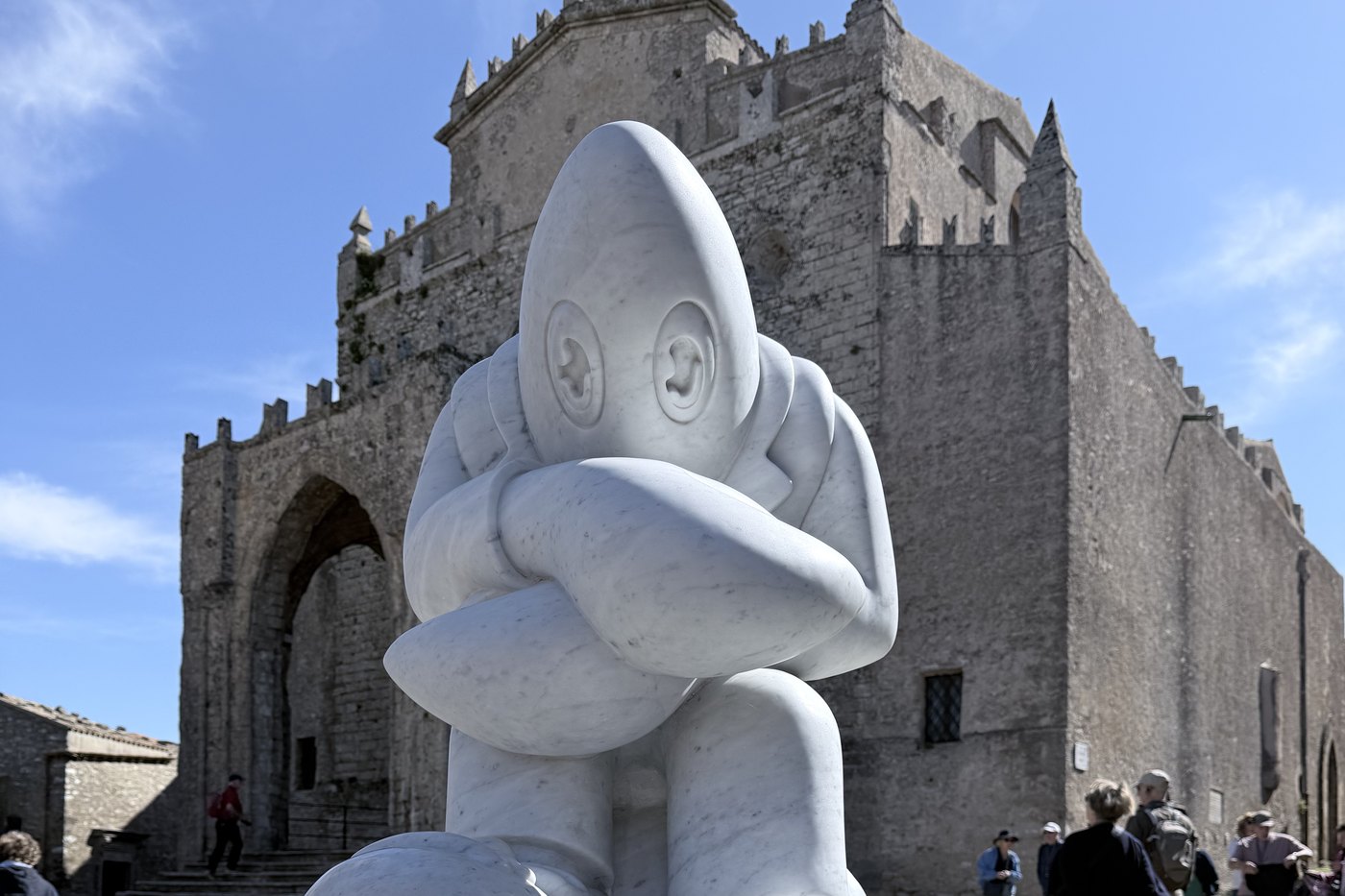
And scattered through all of it: enormous white marble cartoon lobsters. Philip Colbert’s sculptures, planted in medieval piazzas and on castle terraces — a lobster king, a skull, a surreal grinning thing outside a church that has been standing since 1314. It should have been ridiculous. Somehow it was the best thing we saw all week.
Malta
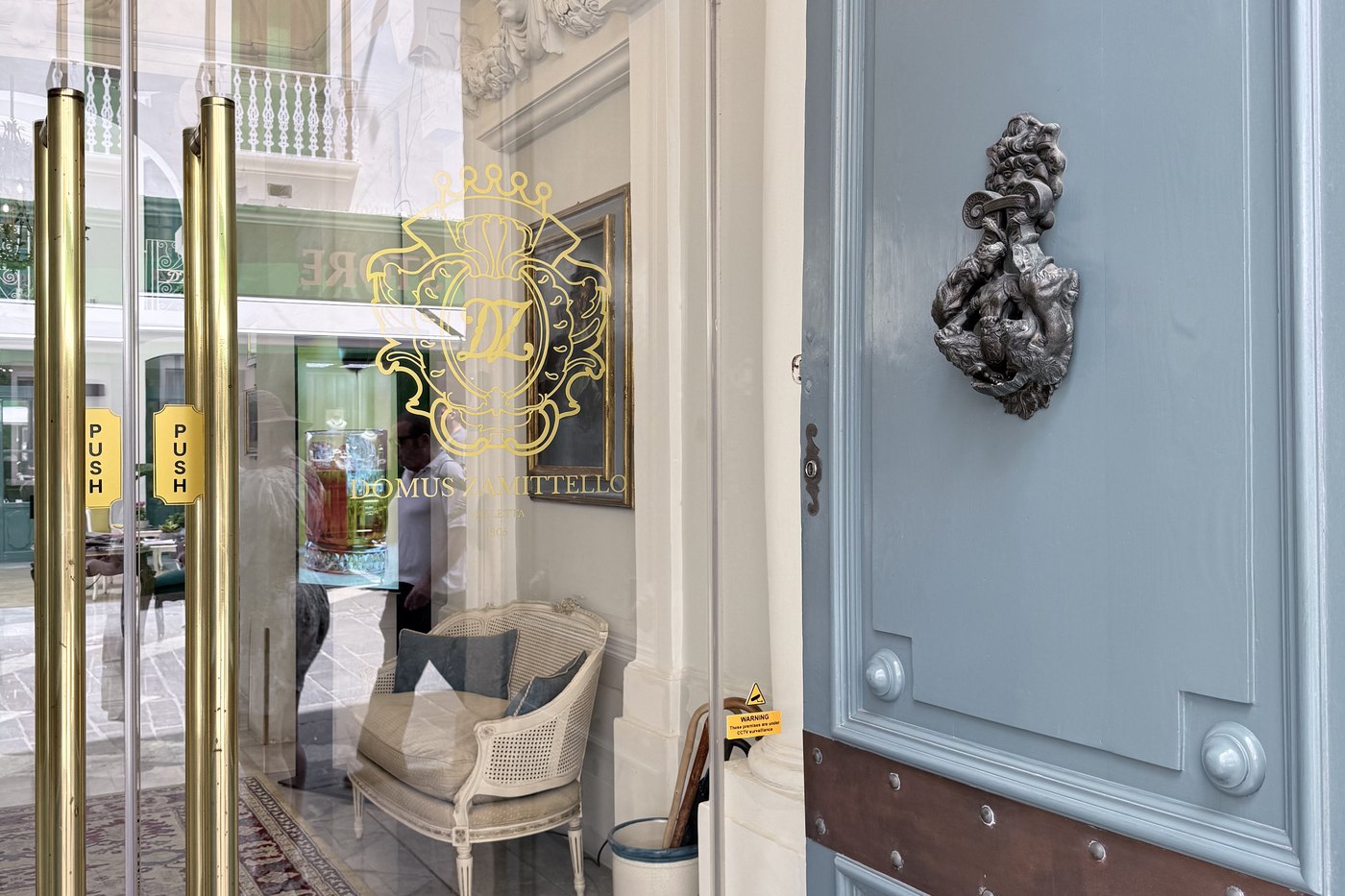
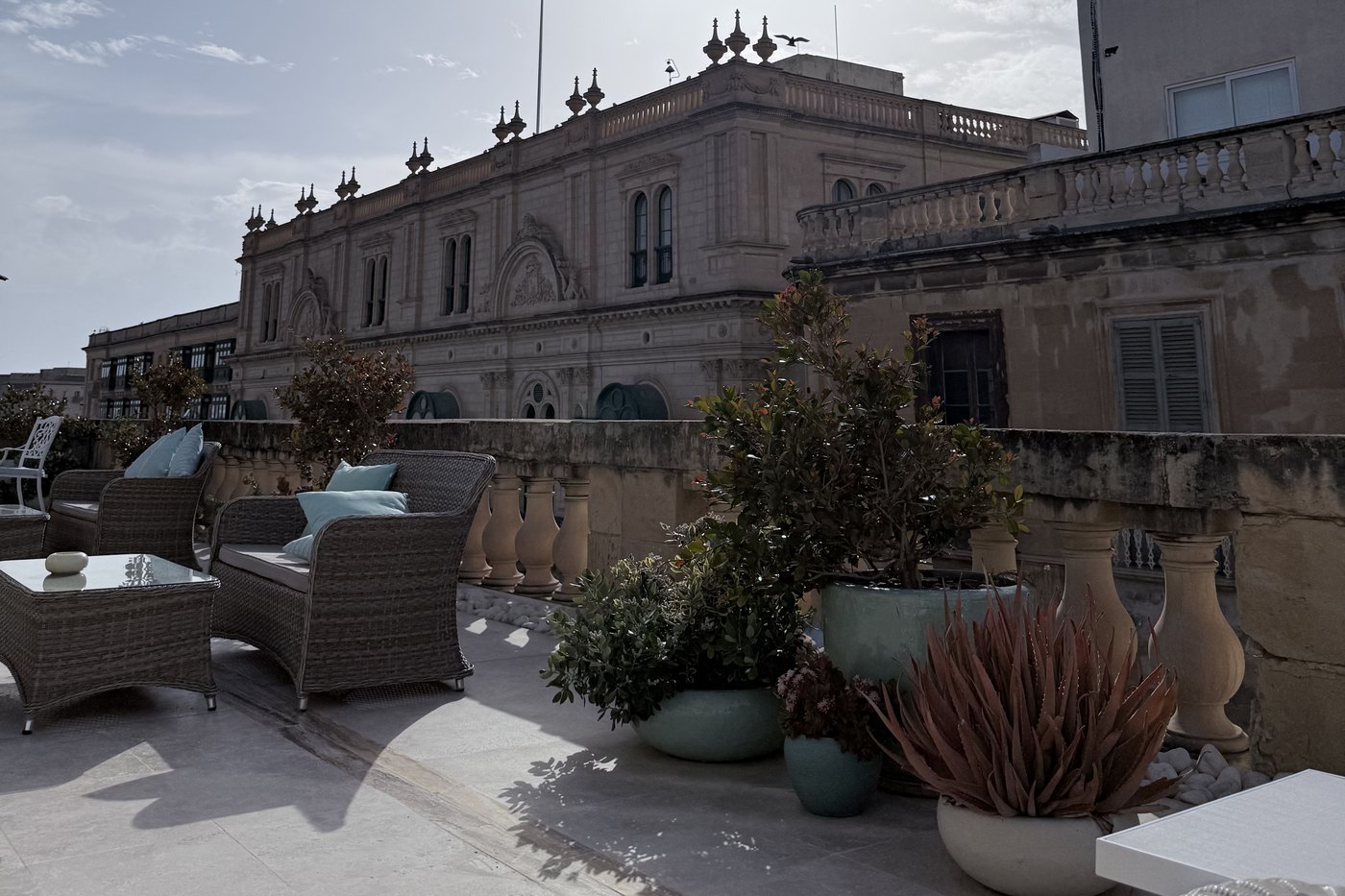
We came into Valletta on the morning of the 5th and stayed three nights at Domus Zamittello, a 1630s palazzo on Republic Street that picked up a Michelin Key in 2025 — brass doors, walled garden, the kind of place where the staff learn your name before lunch.
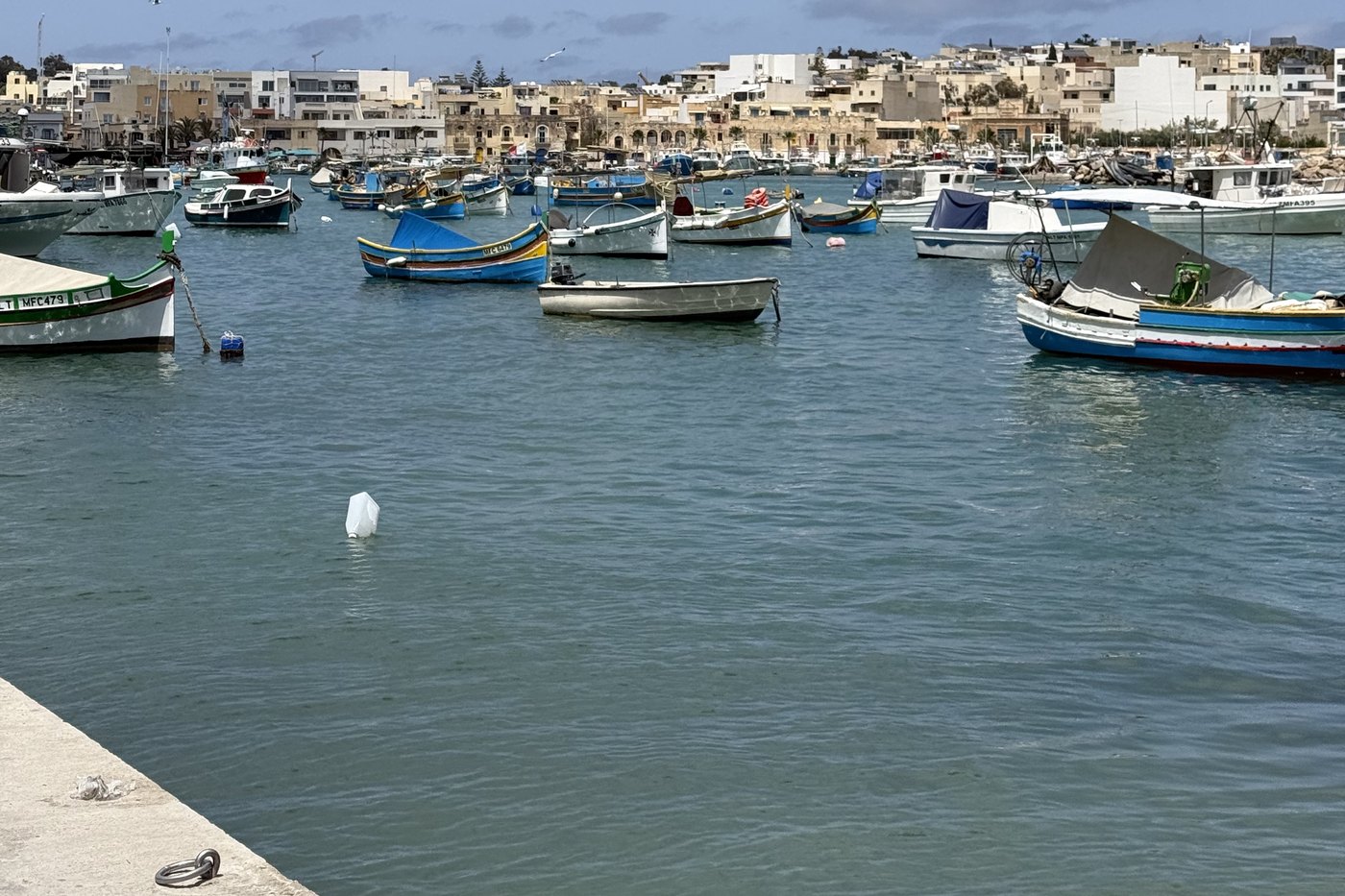
Malta rewards wandering. We took the open-top bus out through Floriana’s baroque gate, walked the marina at Birgu — Vittoriosa, one of the Three Cities — and had lunch at Marsaxlokk among the luzzijiet, the painted fishing boats with the Eye of Osiris on their prows, watching a harbour full of yellow and red and blue bob in unison.
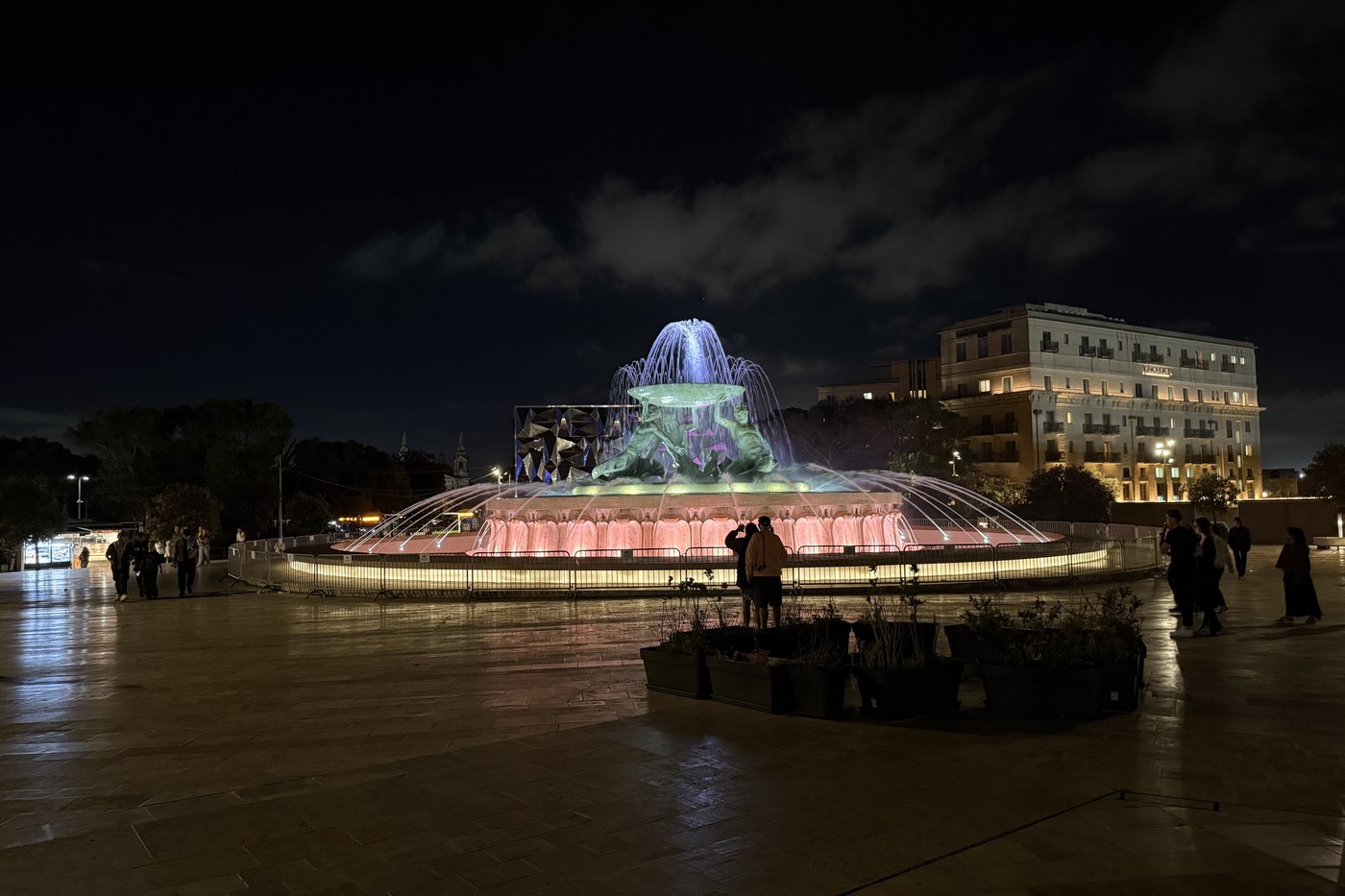
Valletta at night is genuinely lovely: paper lanterns over the side streets, the Triton Fountain lit pink and blue at City Gate, limestone holding the day’s heat.
Ħad-Dingli
On our last full morning we went out to a winery. Twelve and a half kilometres from the hotel as the crow flies, which in Malta means most of the way across the country — Valletta on one coast, Ħad-Dingli up on the plateau near the other.
The driver dropped us at the end of a paved road with a dirt path off to the side and left. No building in sight, nobody about, nothing but limestone rubble walls, wild poppies coming up through them, and a signpost reading Divinus. So we walked. It is the kind of walk where you check the pin on your phone twice, and then start quietly working out whether any rideshare on this island would come this far out to collect you.
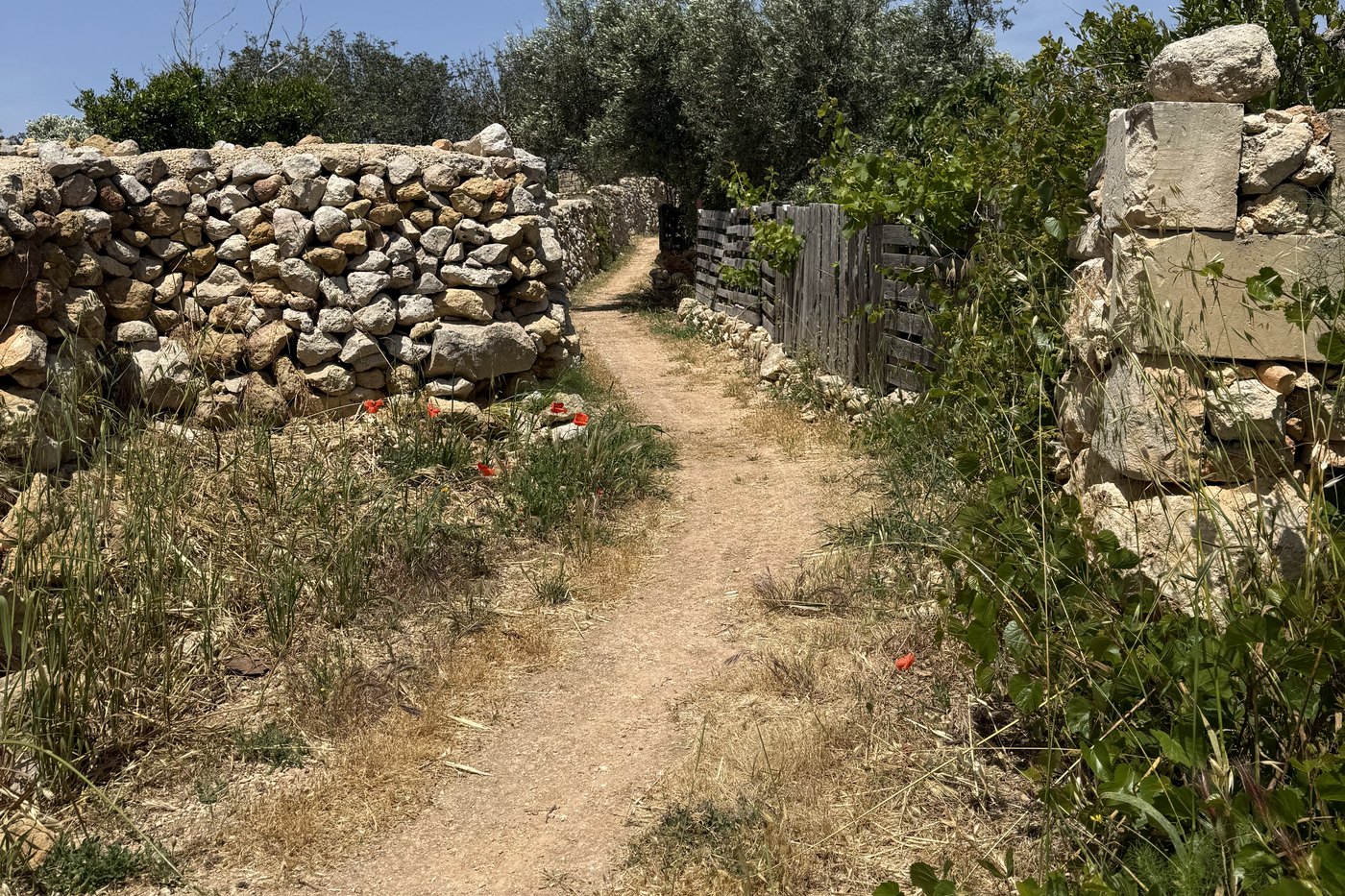
Those walls deserve a sentence of their own. Ħitan tas-sejjieħ — built entirely dry, no mortar, two skins of stone packed with rubble down the middle and battered slightly inward as they rise. They terrace impossible ground into something farmable, hold the soil and the water in place, and have been protected by Maltese law since 1997.
Malta has under 450 hectares of vines in total and drinks more than ninety-nine per cent of what it makes, which is a polite way of saying that if you want Maltese wine you have to come to Malta. There are two indigenous grapes: Ġellewża, a light red of cherry and liquorice, down to fewer than fifty hectares and genuinely at risk; and Girgentina, a lean, high-acid white named after Girgenti — the old name for Agrigento, across the water in Sicily, which tells you roughly how it got here.
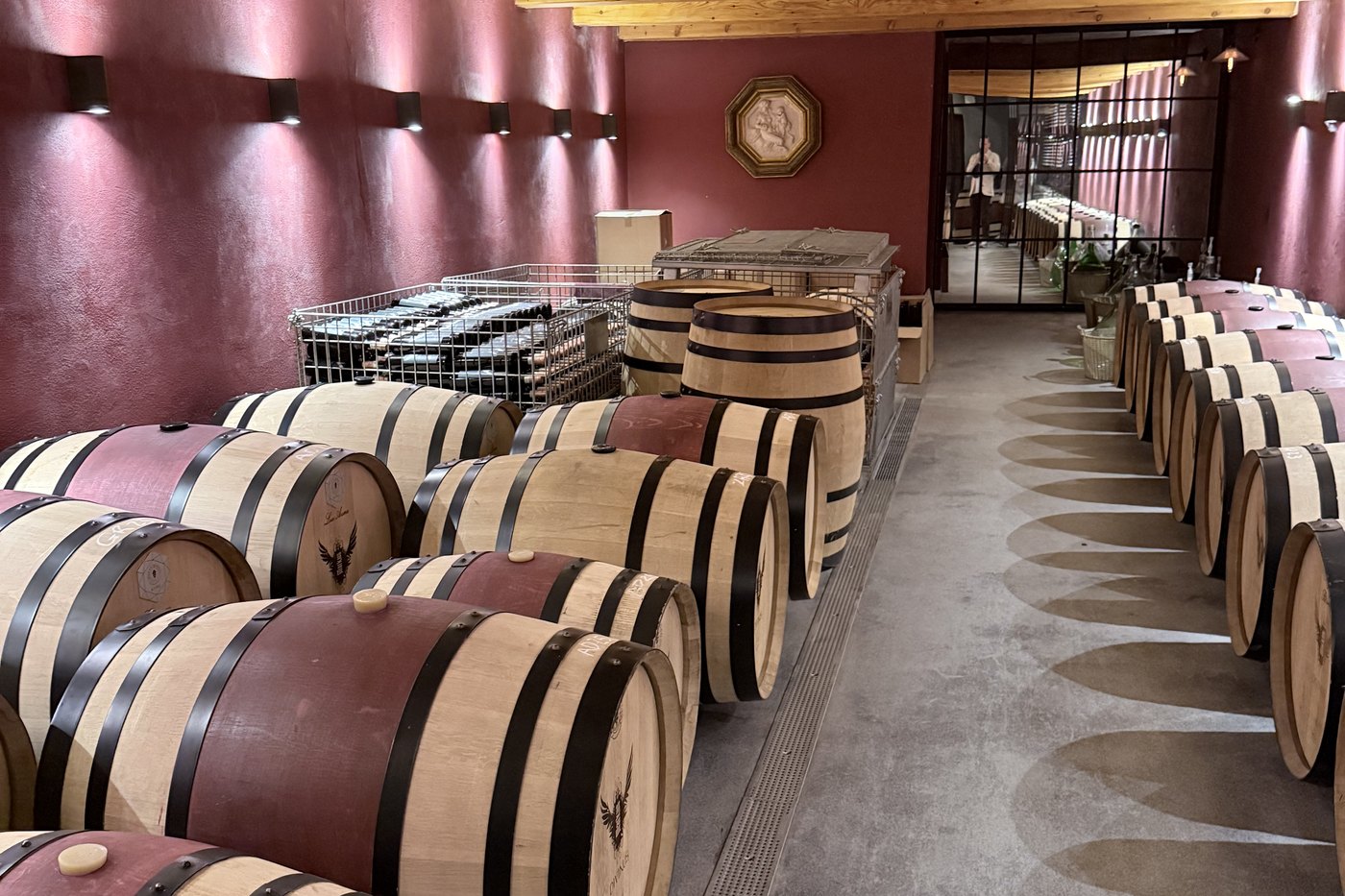
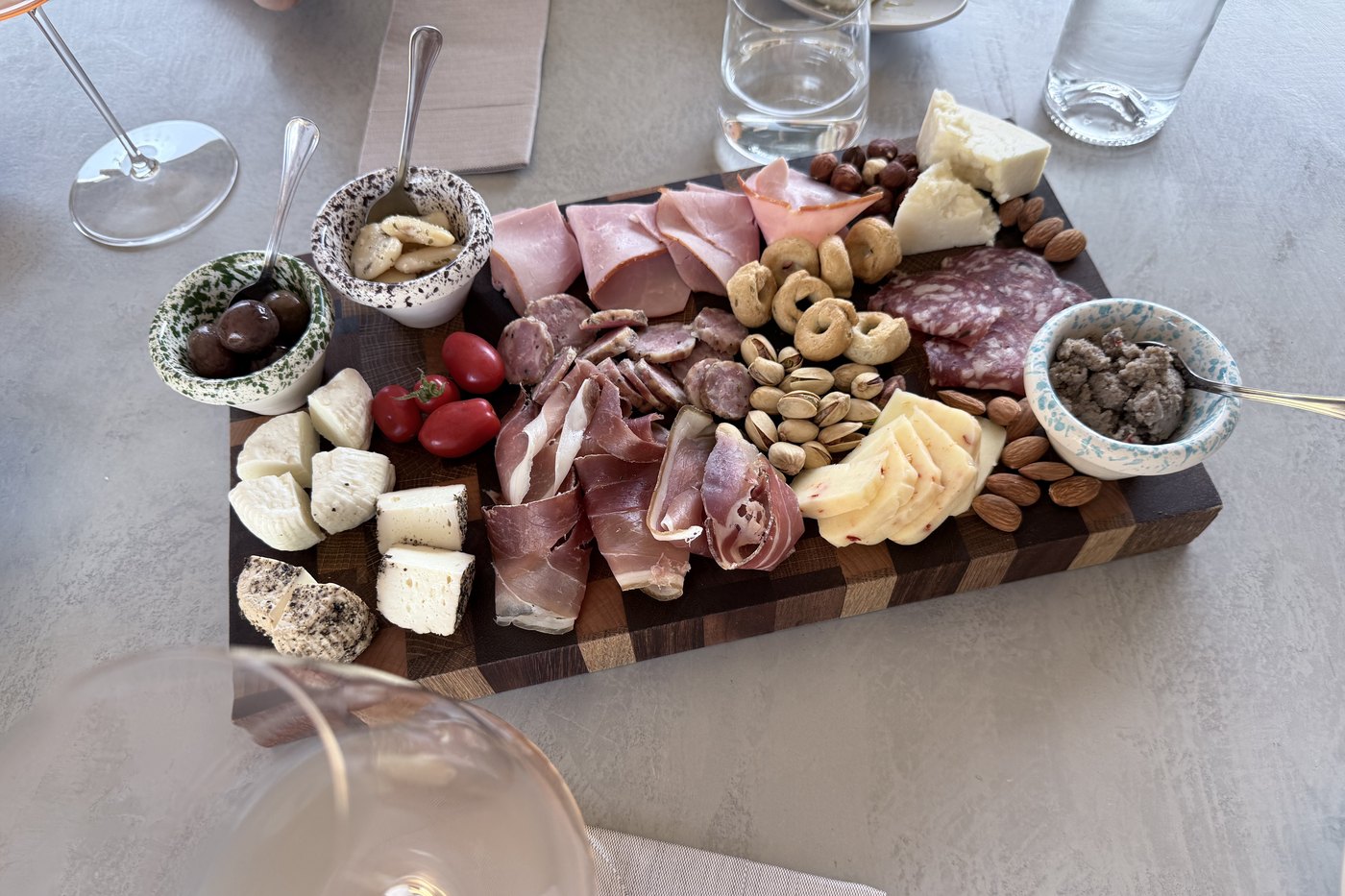
Markus Divinus is tiny even by that standard. Mark Borg started in a garage twenty years ago and still makes only a few thousand bottles a year, each one numbered by hand — the 2023 vintage of the estate white, the Zafrana, ran to 1,434 bottles. We tasted outside in open country, with local cheese and cured meat, at eleven in the morning, and regretted nothing.
The last night
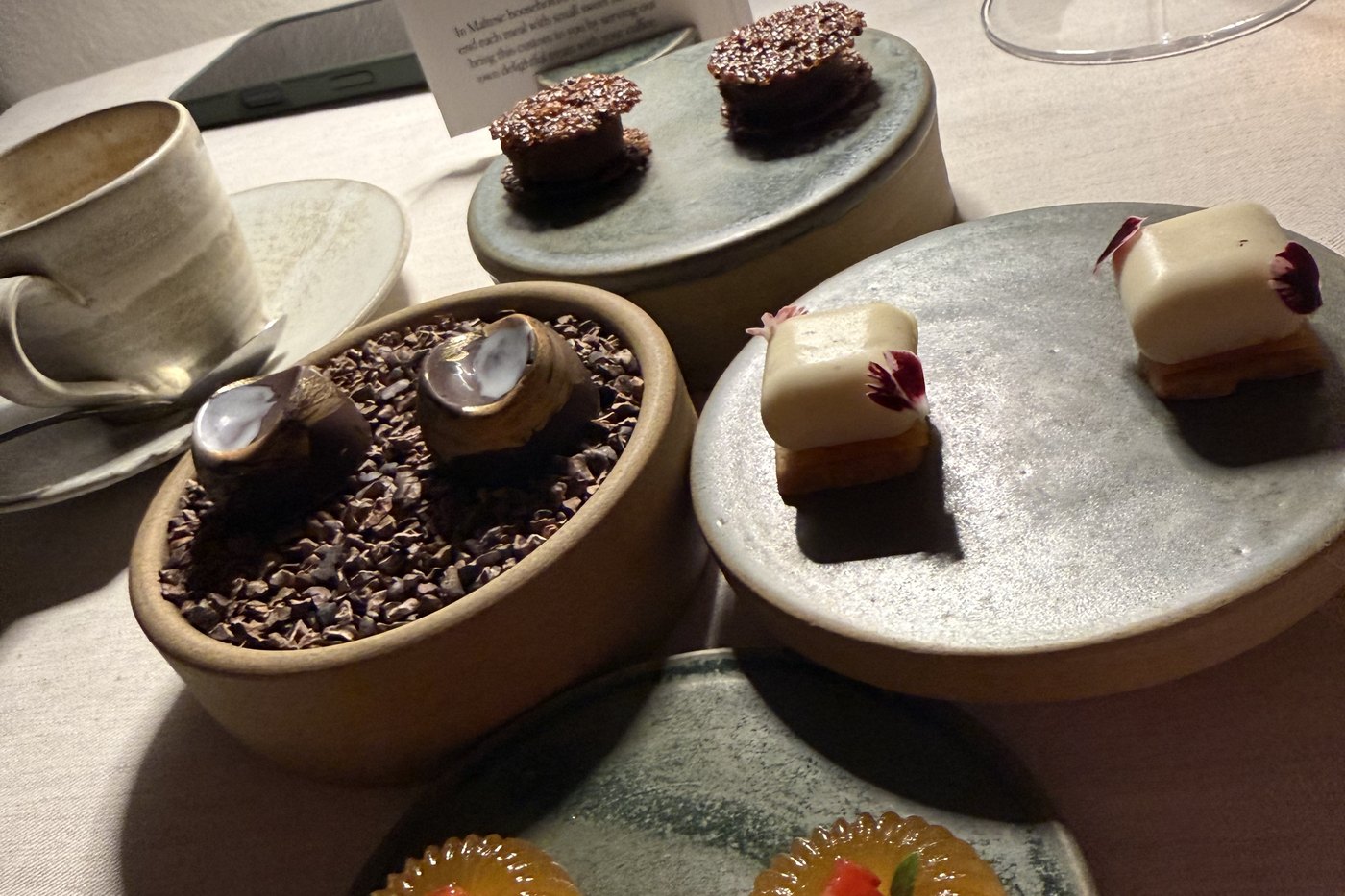
We ate extremely well. Fifty Nine Republic one night; Noni, the Michelin-starred room on Republic Street, the next — petit fours we photographed instead of eating.
Then Chris spent twelve hours throwing up.
Not queasy. Twelve hours, start to finish, from somewhere around midnight until the following afternoon. It cost us our last day in Malta — Mdina, Sliema, the walk we had been saving. The last photograph either of us took on this trip is of those petit fours.
What we’d tell you
Small ships win. One hundred and eighty-four people is the difference between a port call and an afternoon.
Book direct, or at least know what you’ll do when the booking falls apart at the counter. Ours did, and the trip survived it, but only because we stopped waiting for someone else to fix it.
And go in late April. The Mediterranean is warm, the light is long, and the crowds haven’t arrived yet.
Fifteen days. Seven ports. Two countries and change. One ticket that never worked.
Worth every bit of it.


Leave a Reply